How To Settle A Rescue Dog Into Your Home: Why Slowing Down Matters
Bringing a rescue dog home is an exciting moment. After weeks, months, or sometimes years of waiting, you've finally found your new companion.
Many owners imagine this will be the start of a happy new chapter - and it is. But it's also important to remember that for your dog, life has just changed dramatically.
They may have left behind familiar people, routines, smells, sounds, and environments. Some dogs have spent time in foster homes, some have spent weeks, months or even years in rescue kennels, and others may have travelled hundreds or even thousands of miles from overseas before arriving in the UK.
Even when the outcome is positive, change can feel overwhelming. Understanding this can help us set realistic expectations and provide the support our dogs need during those early weeks and months.
Let’s explore how to settle your rescue dog into your home.

Rescue dog relaxing in a comfortable resting area at home.
Every Rescue Dog Brings Their Own History
Not all rescue dogs arrive with the same life experiences. Some may have spent time living in rescue kennels before joining their new family. Rescue organisations do incredible work caring for dogs while they wait for homes, but kennel life can still be very challenging for some individuals. Unfamiliar routines, noise from other dogs, changing people, reduced freedom, and limited opportunities for uninterrupted rest can all contribute to stress.
Others may have travelled from overseas as part of an international rescue programme. For some of these dogs, the adjustment can be even more significant.
Many street dogs from abroad have grown up in environments that are very different from life in the UK. Rather than walking on pavements, they may have spent their early lives navigating open spaces, villages, beaches, fields, or rural communities with far greater freedom of movement. This matters because development begins long before puppies are born.
During pregnancy, puppies are already developing in response to their environment. Research suggests that factors such as maternal stress, nutrition, health, and the environment experienced by the mother can influence the development of the puppies growing inside her.
While we should be careful not to overstate these effects, it does mean that puppies are not born as completely blank canvases. Their development is already underway before they enter the world.
Once born, their brains continue to adapt rapidly to the environment around them. Throughout puppyhood, they are constantly gathering information about what is familiar, what is safe, what is normal, and what is worth paying attention to.
This means that puppies raised in different environments can develop very different expectations about how the world works.
A puppy raised in a busy town may learn that traffic, bicycles, crowds, pavements, and lead walking are simply part of everyday life. A puppy raised in a quiet rural setting, on the streets of another country, or in a remote village may learn something entirely different. Neither experience is right or wrong. They simply create different foundations from which the dog will continue learning.
This can sometimes help explain why imported rescue dogs may struggle with things such as:
Walking on a short lead
Busy roads and traffic
Crowded footpaths
Fast-moving vehicles
Limited freedom of movement
Being unable to create distance from things they find worrying
From the dog's perspective, these situations may feel completely unfamiliar. Sometimes what appears to be stubbornness or refusing to walk is actually uncertainty, confusion, or a dog trying to process an environment that makes little sense to them.
For these dogs, allowing more space can often be incredibly helpful. Using a comfortable harness alongside a longer training lead or longline can provide opportunities to sniff, explore, and move more naturally while still remaining safe. The additional freedom allows many dogs to gather information about their surroundings, make choices, and navigate the environment in a way that feels less restrictive.
Often, what these dogs need is not more obedience but more time, understanding, and opportunities to learn that their new world is safe.
Rescue Puppies Need Time Too
When people adopt a rescue puppy, there can sometimes be an assumption that they are a blank canvas.
In reality, no puppy is.
Every puppy arrives with a unique combination of genetics, early experiences, maternal influences, and learning history that begins shaping them long before they come home. This can be particularly relevant for rescue puppies.
Some may have experienced disruption during important developmental periods. Others may have had limited exposure to everyday sights, sounds, people, or environments. Some may have experienced illness, poor welfare, multiple moves, or long journeys at a very young age.
That doesn't mean they are damaged. Nor does it mean they are destined to struggle.
It simply means that, like adult rescue dogs, they arrive with experiences that may influence how they view and respond to the world. This is one reason why patience, gentle exposure, positive experiences, and realistic expectations are so important.
Many rescue puppies grow into confident, well-adjusted adults, but they often benefit from the same things as their older counterparts:
Predictability
Choice
Appropriate social experiences
Plenty of rest
Positive reinforcement
Understanding and support
Just because a dog is young does not mean they are starting from scratch.
Not Every Rescue Dog Comes From Abuse
When people adopt a rescue dog and notice signs of fear or anxiety, one of the first thoughts is often: "They must have been abused."
While some rescue dogs may sadly have experienced neglect, poor welfare, or traumatic events, fear and behavioural difficulties can develop in many different ways. The truth is that we rarely know the full story.
Some dogs may have experienced obvious negative events. Others may have simply missed out on important experiences during puppyhood. Some may have lived in environments where they had little opportunity to learn about the world around them.
A dog does not need to have been deliberately harmed to find life difficult. Dogs are excellent at forming associations.
A frightening experience involving another dog may create worries around dogs generally. A loud noise may create concern around similar sounds. A single negative event can sometimes influence how a dog feels about an entire category of people, places, sounds, or situations.
Genetics, early development, health, pain, maternal influences, and life experiences all contribute to how an individual dog responds to the world.
Whilst it may be tempting to focus on what may or may not have happened in the past, it is often more helpful to focus on the dog standing in front of us today.
What are they communicating?
What situations do they find difficult?
What helps them feel safe?
Give Your Dog Time To Decompress
If there is one piece of advice I could give to anyone bringing home a rescue dog, it would be this:
Slow everything down.
Many owners have wonderful intentions. They want their new dog to feel included, loved, and part of the family immediately.
They introduce visitors.
They take them to new places.
They begin training.
They visit cafés, pubs, parks, pet shops, and dog-friendly venues.
The problem is that while these experiences may be exciting for us, they can sometimes feel overwhelming for a dog who has only just arrived.
I've seen dogs returned to rescue organisations within days or weeks because owners felt they were struggling with behaviour that may simply have reflected a dog who had not yet had an opportunity to settle.
That doesn't mean those owners were uncaring. Quite the opposite. Often, they cared deeply and were trying hard to help.
Sometimes they were simply expecting too much, too soon. When we slow things down, we give dogs the opportunity to:
Learn that they are safe
Recover from recent changes
Understand household routines
Build trust
Develop confidence
Form relationships
Your rescue dog does not need to experience everything in the first week or the first month. The world will still be there when they are ready.
Sleep Is Not A Luxury – It's A Biological Need
Many rescue dogs arrive in their new homes carrying a significant amount of stress. For some, the first few weeks in a home environment may be the first opportunity they have had for consistent, uninterrupted rest in quite some time.
Dogs need far more sleep than many people realise. Adult dogs often sleep for 12–16 hours per day, and some may require even more while adjusting to a major life change. Unfortunately, well-meaning owners can sometimes unintentionally interrupt this process.
Friends and family want to meet the new dog.
Children are excited.
People want cuddles, training sessions, walks, and interaction.
Many rescue dogs benefit from having plenty of opportunities to simply rest undisturbed. A dog that is not getting enough quality sleep may appear:
More reactive
More excitable
More easily startled
More mouthy
Less able to cope with frustration
Less able to learn
Sometimes, one of the kindest things we can do for a newly adopted dog is simply let them rest.
Their Real Personality May Take Time To Emerge
One of the most common things I hear from owners is: "They were completely different when we first got them."
This is often entirely normal. Some rescue dogs arrive home appearing quiet, withdrawn, sleepy, or unusually compliant. Others may seem confident before later showing signs of uncertainty.
As dogs begin to feel safer, they often become more comfortable expressing their needs, preferences, emotions, and personality. This can take weeks, and sometimes months.
Many owners are amazed when, months after adoption, they suddenly see behaviours that weren't present before:
Picking up toys
Zooming around the garden
Initiating play
Seeking affection
Barking at visitors
Becoming more confident about communicating discomfort
This doesn't necessarily mean things are getting worse. Often, it means the dog is becoming comfortable enough to show you who they really are.
The playful dog may not appear immediately.
The affectionate dog may not appear immediately.
The dog who suddenly discovers they love toys, zoomies, cuddles, scent games, or exploring may have been there all along, but simply didn't feel safe enough to show it yet. Allow your dog the time they need to become themselves.
Predictability Helps Rescue Dogs Feel Safe
One of the simplest ways to help a rescue dog settle is to make life as predictable as possible. Predictability allows dogs to learn what happens next.
When events become more predictable, the world often feels less overwhelming. This doesn't mean following a rigid timetable every minute of the day.
Instead, try to keep key aspects of life reasonably consistent:
Feeding times
Walking routines
Rest periods
Bedtime routines
Care-giving responsibilities
Over time, your dog begins to learn what to expect.
That predictability can help reduce uncertainty and build feelings of safety and security.
Safety Before Training
Many owners want to start training immediately. While training certainly has its place, helping your dog feel safe should come first.
Learning happens most effectively when dogs feel secure enough to engage with the world around them. This doesn't mean doing nothing.
Keep interactions light, positive, and enjoyable.
Reward behaviours you like.
Create opportunities for success.
Allow your dog to explore at their own pace.
Avoid putting them into situations they are not ready for.
Remember, the first few weeks are not about creating the perfect dog. They are about helping your dog feel safe enough to begin learning.
Advocate For Your Dog
One of the kindest things you can do for a rescue dog is advocate for them.
Allow them time to approach and investigate people rather than allowing people to approach them.
Many nervous dogs are placed under pressure when visitors crouch down, reach out, stare, or offer food from their hand.
While well-intentioned, this can create conflict. The dog may want the food but feel uncomfortable approaching the person.
Instead, consider allowing visitors to gently toss treats towards the dog and then give them space. This "Treat and Retreat" approach can help dogs form positive associations without feeling pressured.
Remember:
Trust cannot be rushed.
It is perfectly acceptable to tell people:
"He's still settling in."
"Please give her some space."
"Let him come to you if he wants to."
Many rescue dogs gain confidence when they are allowed to investigate people at their own pace rather than being expected to interact.
Create Safe Spaces At Home
Every dog should have somewhere they can retreat to if they need a break.
This might be:
A crate with the door left open
A quiet room
A bed in a low-traffic area
A covered den-style space
Multiple resting places throughout the home
If your dog chooses to retreat or hide, allow them that choice.
Many owners worry when their dog hides. Often, hiding is simply a coping strategy while the dog processes a huge amount of change.
Giving dogs the option to retreat often helps them build confidence more quickly than repeatedly encouraging them to come out and interact.
Equally important is ensuring family members leave dogs undisturbed when resting.
If your dog is asleep, let them sleep.
If your dog has chosen to retreat, allow them that space.
A dog that knows they can truly relax often settles far more quickly than one who feels they must remain alert.
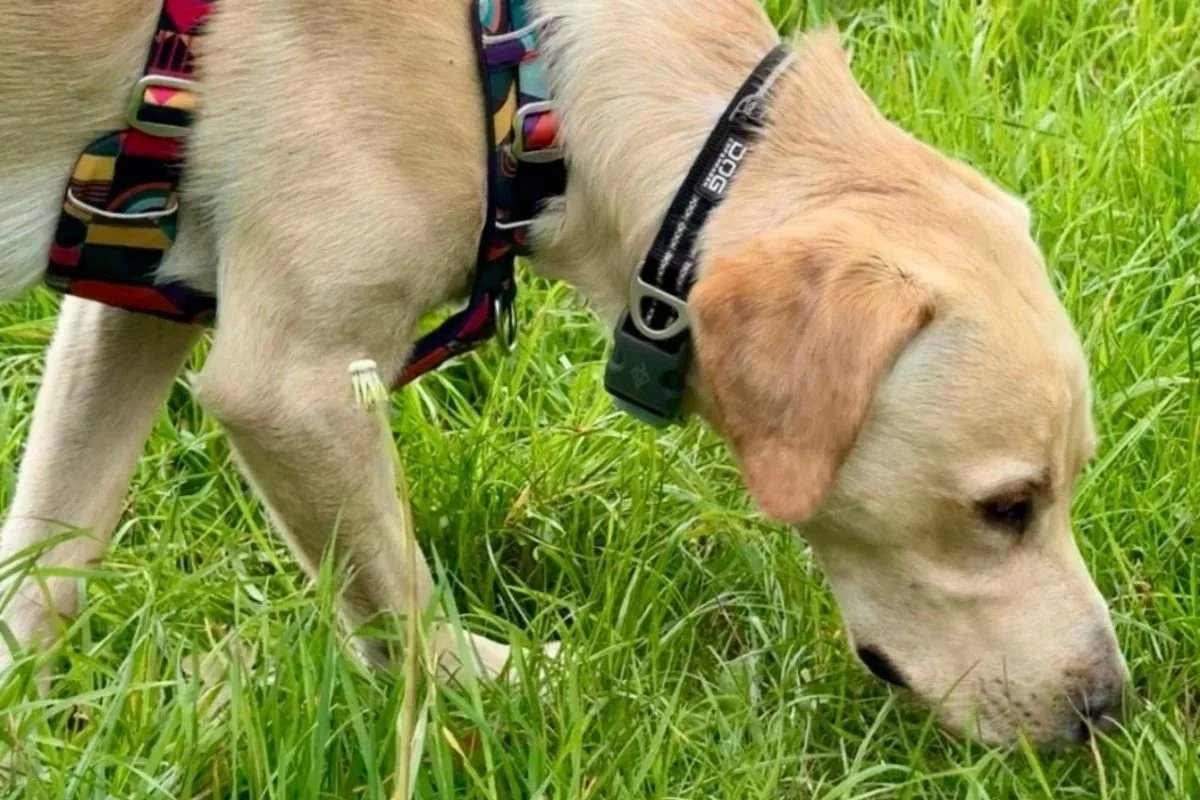
Sniffing allows dogs to gather information about the world around them and can be an important part of helping them feel safe.
Let Your Dog Use Their Nose
One of the simplest ways to support a rescue dog's emotional wellbeing is to encourage natural behaviours.
For most dogs, sniffing is one of the most important.
Dogs experience the world primarily through their sense of smell. Sniffing allows them to gather information, explore safely, and engage with their environment in a way that feels natural and rewarding.
Where appropriate, allow your dog time to sniff on walks rather than feeling pressured to keep moving.
For dogs who are not yet comfortable exploring outside, opportunities to use their nose can be provided at home too.
Simple activities might include:
Scatter feeding food or treats in the grass
Snuffle mats
Scent games
Food enrichment toys
ACE Free Work
These activities are not simply about keeping dogs occupied. They provide opportunities for exploration, problem-solving, and choice, all of which can support emotional wellbeing.
Don't Forget The Importance Of Chewing
Chewing is a natural and important behaviour for dogs.
Many dogs find chewing calming and relaxing, particularly during periods of change or uncertainty.
Providing a variety of safe, appropriate chew options can help support relaxation and emotional wellbeing while your dog adjusts to their new life.
Every dog has individual preferences, so it can be worth experimenting with different options to find what your dog enjoys.
"My Rescue Dog Doesn't Know How To Play"
This is something I hear frequently from owners.
"My dog doesn't know how to play."
In reality, it is rare that a dog doesn't know how to play.
Play is a behaviour that generally occurs when a dog feels sufficiently safe, comfortable, and relaxed. When a dog first arrives in a new home, their priorities are often very different.
They may be busy:
Assessing their environment
Learning household routine
Understanding the people around them
Working out where they feel safe
Recovering from stress associated with recent changes
For some dogs, play may be one of the last things to emerge.
Many owners are amazed when, weeks or even months after adoption, they suddenly see behaviours that weren't present before:
Picking up toys
Zooming around the garden
Initiating games
Play bows
Playfully interacting with other dogs
Often these behaviours appear as confidence grows.
The dog who seemed serious and withdrawn may reveal a wonderfully playful side once they begin to feel secure.
If your dog shows little interest in toys initially, try not to worry. Offer opportunities without pressure.
Leave toys available.
Experiment with different types.
Most importantly, give them time.
Play often appears when dogs begin to feel safe enough to simply enjoy being themselves.
Management Is Your Friend
Many behavioural challenges can be avoided entirely through good management.
In the early days, focus less on teaching your dog not to do something and more on preventing unnecessary mistakes from happening in the first place.
For example:
Keep food away from the edges of worktops and tables
Put tempting items out of reach
Use baby gates if needed
Store shoes, remote controls, and other valuable items safely
Manage interactions between pets carefully
Every time a dog rehearses a behaviour, it becomes more familiar.
Preventing rehearsal is often easier than trying to undo it later.
Good management also helps reduce conflict.
Rather than repeatedly taking items away, telling a dog off, or constantly saying "leave it", we can often arrange the environment so those situations arise less frequently.
This creates a calmer experience for everyone.
Avoid Too Much Handling Too Soon
Many owners understandably want to get their new dog clean, tidy, and settled into a grooming routine straight away.
However, where possible, it can be beneficial to avoid unnecessary handling procedures during the first days or weeks.
For some dogs, things such as:
Bathing
Nail clipping
Grooming
Ear cleaning
Introducing new equipment may feel overwhelming when they are still adjusting to a new environment.
Whenever possible, allow these experiences to happen gradually.
If your dog needs to wear a harness, take time to introduce it positively and at a pace they are comfortable with. Allow them opportunities to investigate equipment voluntarily rather than immediately placing it on them if they appear worried. Building positive associations early can help prevent future handling concerns.
Of course, there will be occasions where care cannot wait, particularly if welfare or health is involved. In those situations, proceed as gently as possible and seek professional guidance if needed.
Be Mindful Of Car Travel
For some rescue dogs, particularly those who have travelled long distances or arrived from overseas, cars and transport can carry strong emotional associations.
Many imported rescue dogs have experienced lengthy journeys involving transport vans, ferries, or multiple changes of environment before arriving in their new home.
As a result, some dogs may initially find car travel worrying.
You may notice:
Reluctance to approach the vehicle
Hesitation getting in
Panting, drooling, or trembling
Vocalising during journeys
Signs of travel sickness
Difficulty settling
Where possible, try to avoid unnecessary journeys during the early settling-in period.
Allow your dog time to build positive experiences around the vehicle and avoid assuming that reluctance to travel is simply stubbornness or disobedience.
For some dogs, sitting in a stationary vehicle, exploring around the car, or taking very short journeys can help build confidence gradually.
A Brief Word On House Training
Even if a rescue dog appears house trained in foster care or kennels, accidents can still happen during the settling-in period.
Changes in routine, environment, stress levels, and toileting opportunities can all influence behaviour.
If accidents occur, avoid punishment.
Instead, focus on creating plenty of opportunities for success and calmly rewarding toileting in appropriate locations.
Remember, your dog is learning an entirely new environment and routine.
I've written a separate blog on house training rescue dogs, which explores this topic in more detail.
Leaving Your Rescue Dog Home Alone
One question many new owners ask is:
"How soon can I leave my rescue dog alone?"
Unfortunately, there isn't a simple answer.
Some dogs cope well with short periods alone from the outset. Others may find being left very difficult, particularly if they have experienced multiple changes, uncertainty, or previous losses.
Whenever possible, it can be helpful to plan for somebody to be around more than usual during the early days and weeks after adoption.
This gives your dog an opportunity to become familiar with their new environment, establish routines, and begin building relationships before being asked to cope with periods of isolation.
However, this doesn't mean never leaving the house.
Life still needs to happen.
The key is to observe your individual dog and introduce periods of separation gradually where appropriate.
Some dogs may happily settle and sleep when left for short periods. Others may show signs of distress such as:
Vocalising
Pacing
Following owners constantly
Difficulty settling
Destructive behaviour
Attempts to escape
These behaviours do not mean your dog is being difficult. They may indicate that your dog is finding separation challenging and requires additional support.
Keep Your Rescue Dog Safe
The first few days and weeks after adoption are often when dogs are at greatest risk of becoming lost.
Even dogs who seem settled can be startled by unfamiliar sights, sounds, or situations. A frightened dog may behave very differently to how they would at home and can cover surprising distances if they panic.
For this reason, it is sensible to take a few simple precautions:
Ensure your dog's microchip details are transferred and updated as soon as possible
Make sure fences, gates, and garden boundaries are secure
Keep your dog on lead in unfamiliar environments
Consider using a secure harness
Ensure your dog wears a collar with a clearly legible identification tag
For particularly nervous dogs, some rescue organisations recommend using both a secure harness and a collar during the settling-in period to reduce the risk of escape.
It can be tempting to let a rescue dog off lead once they appear settled, particularly if they seem friendly, calm, or attached to their new family. However, it is important to remember that your dog is still learning about their new world.
Even dogs who appear confident may become startled by something unfamiliar or decide to investigate something interesting. If they become frightened, disorientated, or overwhelmed, they may not know how to find their way home.
For many dogs, a longer training lead or longline provides a good compromise, allowing them greater freedom to explore while remaining safe.
There is no prize for rushing off-lead freedom.

Successful canine relationships are rarely built overnight. Given time, space, and positive experiences, many dogs learn to comfortably share their lives with one another.
Introducing A Rescue Dog To Existing Dogs
If you already have dogs at home, it is natural to hope that everyone will become friends immediately. Sometimes that happens.
Often, however, relationships take time to develop. Just like people, dogs need opportunities to get to know one another and work out how they feel about sharing space, resources, routines, and family members.
A lack of immediate friendship does not necessarily indicate a problem. Many successful canine relationships develop gradually over weeks or months. Dogs communicate with one another constantly through body language, movement, space, and subtle social signals.
As they get to know each other, they begin gathering information about:
How the other dog communicates
What they enjoy
What they find uncomfortable
How much space they prefer
Whether they enjoy play
How they respond to resources
In the early stages, it is often best to avoid forcing interactions.
Allow dogs opportunities to observe one another, share space at comfortable distances, and gradually become familiar with each other's presence.
Many dogs benefit from simply coexisting before they become companions.
Use Management To Prevent Conflict
Stair gates can be particularly useful when introducing dogs.
They allow dogs to see, smell, and hear one another while maintaining a safe physical barrier.
This can:
Reduce pressure
Prevent unwanted interactions
Allow dogs to choose whether to engage
Support positive experiences around one another
It is also sensible to manage high-value items, food, toys, chews, and resting places during the early stages while relationships are still developing.
The goal is not to test the dogs.
The goal is to help them succeed.
If you are seeing signs of tension, avoidance, conflict, guarding, fear, or repeated disagreements, seeking support early is often far easier than waiting for problems to become established.
Learn To Read Your Dog's Body Language
One of the most valuable things you can do for your rescue dog is learn how they communicate.
Dogs are constantly giving us information about how they feel. The challenge is that much of this communication is subtle and easily missed.
Many owners only recognise that their dog is uncomfortable when they bark, growl, lunge, hide, or try to escape. However, dogs often show earlier signs that they are finding a situation difficult.
These may include:
Looking away
Turning their head
Lip licking
Yawning
Sniffing the ground
Paw lifting
Becoming still or hesitant
Moving away
Shaking off
Changes in posture, facial expression, or tail carriage
These behaviours can be signs that a dog is feeling uncertain, uncomfortable, or under pressure.
Recognising these signals early allows us to support our dogs before they become overwhelmed.
For example, we may choose to:
Create more distance
End an interaction
Reduce demands
Allow the dog to retreat
Give them more time to process what is happening
When dogs learn that their communication is listened to, they often become more confident because they no longer feel the need to escalate their behaviour to be understood.
This is particularly important for rescue dogs, who may still be learning that the people around them are safe and trustworthy.
Understanding canine body language is one of the most valuable skills any dog owner can develop.
If you're unsure what your dog may be communicating, an ethical, qualified behaviour professional can help you interpret their behaviour and support them appropriately.
For a more detailed guide, you can also read my blog on understanding canine stress signals and body language.
Appetite Changes Can Be Normal
Many owners become concerned when their newly adopted dog shows little interest in food.
Others find themselves living with a dog who appears permanently hungry.
Both can be normal during the adjustment period.
Stress can affect appetite in different ways. Some dogs may eat very little initially, while others may seek food constantly, particularly if food has been unpredictable in the past.
Try not to panic if your dog doesn't immediately eat with enthusiasm.
Give them time, maintain a predictable feeding routine, and monitor for gradual improvement.
Of course, if appetite changes are significant, prolonged, or accompanied by signs of illness, always seek veterinary advice.
Don't Flood Your Dog With Affection
This can sometimes be a difficult one for new owners.
After all, you've waited a long time to welcome your rescue dog home and it is natural to want to cuddle, fuss, and spend every possible moment with them.
Some dogs love this. Others don't. At least not yet.
Rather than assuming your dog enjoys affection in the same way we enjoy giving it, pay attention to what your dog is telling you.
Do they choose to approach?
Do they remain relaxed during interaction?
Do they move closer, lean in, or seek more contact?
Or do they move away, become still, lip lick, yawn, or appear uncomfortable?
Allow your dog to set the pace.
Many rescue dogs form incredibly strong bonds with their families, but those relationships are often built through repeated experiences of safety, understanding, and choice rather than constant physical interaction.
Children And Rescue Dogs
If you have children, it is important to remember that even kind, well-meaning children can feel overwhelming to a dog who is still adjusting to a new environment.
Ensure your dog has safe places where they can rest without being approached or disturbed.
Supervise interactions carefully and teach children how to respect a dog's space and body language.
Many rescue dogs benefit from having opportunities to observe family life from a distance before deciding they would like to participate.
Giving dogs the choice to engage often results in more positive and trusting relationships over time.
Progress Is Rarely A Straight Line
Many owners worry when their rescue dog appears to take a step backwards.
Perhaps they seemed confident during the first week and are now showing signs of worry.
Perhaps they were eating well and have suddenly gone off their food.
Perhaps they managed something easily one day and struggled the next.
This does not necessarily mean things are going wrong.
Adjustment is rarely linear.
Like people, dogs can have good days and more challenging days.
As they become more comfortable expressing themselves, new behaviours may emerge and previously hidden worries may become more visible.
Try to focus on overall trends rather than day-to-day fluctuations.
Small setbacks are often a normal part of the process.
Be patient with your dog, and just as importantly, be patient with yourself.
Choosing Behaviour Support Carefully
Many rescue dogs settle beautifully with time, patience, and understanding.
However, some dogs arrive with more complex emotional or behavioural needs.
If your dog is showing signs of significant fear, anxiety, aggression, separation-related distress, or is struggling to adapt despite your best efforts, seeking support early can make a huge difference.
If you decide to seek professional help, it is worth taking time to choose somebody who uses ethical, evidence-based methods.
The dog training and behaviour industry is largely unregulated, which means qualifications, experience, and approaches can vary considerably.
Look for professionals who:
• Use reward-based, positive reinforcement methods
• Prioritise welfare and emotional wellbeing
• Are happy to explain the reasoning behind their recommendations
• Work collaboratively with veterinary professionals where appropriate
• Avoid the use of fear, intimidation, pain, or coercion
Research consistently shows that reward-based approaches are associated with better welfare outcomes and lower levels of fear and stress than aversive training methods.
Good behaviour support should help your dog feel safer, more confident, and better able to navigate their world—not simply suppress behaviour.
Final Thoughts
Many rescue dogs have experienced more change in a matter of weeks than most of us experience in years.
Some have travelled across countries.
Some have spent time in kennels.
Some have lost the only home they have ever known.
They don't need us to rush them.
They need us to help them feel safe enough to begin again.
Your rescue dog's first few weeks are not an assessment of how successful the adoption will be.
They are simply the beginning of a relationship.
Trust takes time.
Confidence takes time.
Relationships take time.
And often, the most meaningful progress happens quietly, one small moment at a time.
The world will still be there when they are ready. ❤️
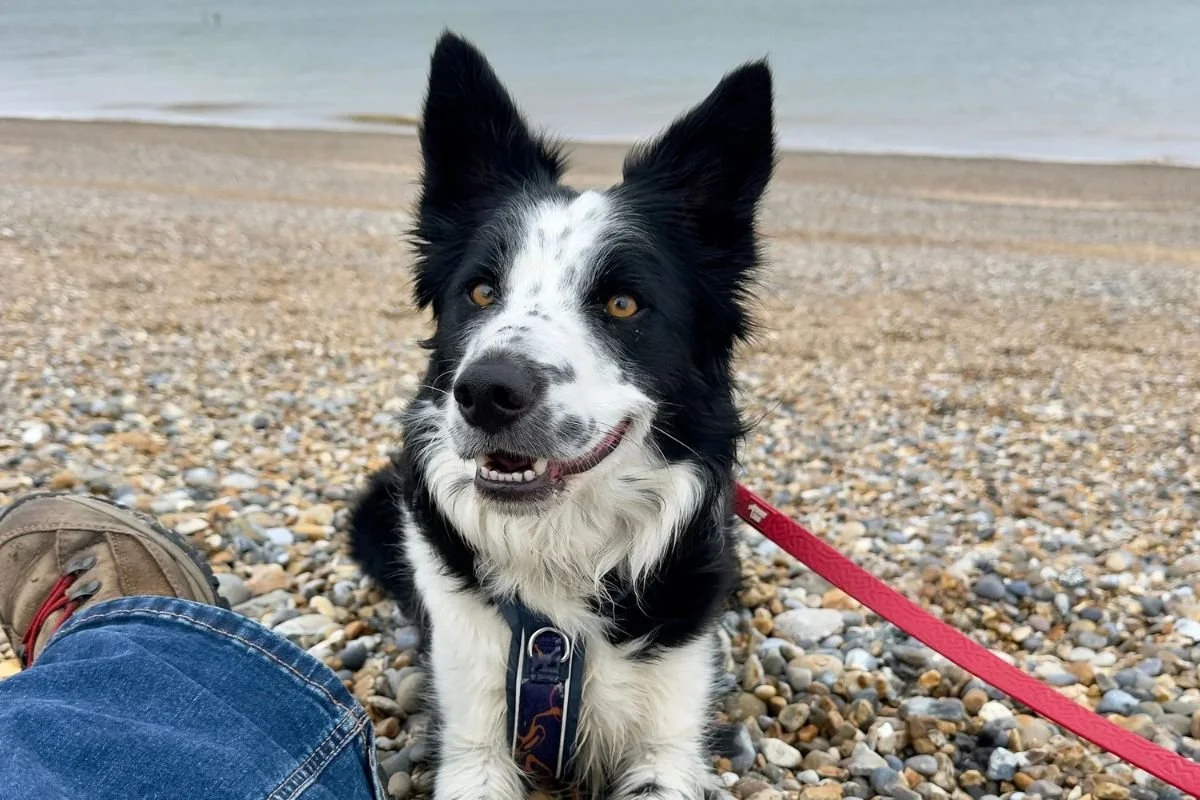
Confidence, trust, and connection are rarely built overnight. They grow through many small, positive experiences.
Recently Adopted A Rescue Dog And Need Support?
I offer rescue dog behaviour consultations across Norfolk and online throughout the UK.
Get in touch via phone to discuss how I can help.
Need personalised support for your dog?
If you're not sure where to start, my 1-1 Intro Training Session provides personalised guidance and a clear plan tailored to your dog.
Book Your First Session
About The Author
Vivienne Moore ACB-KSA, PCT-A is an Accredited Canine Behaviourist and Trainer based in Norfolk, specialising in rescue dogs, reactivity, and behaviour support. Through Walkies Dog Behaviour & Training, Viv works with dogs and their families using ethical, evidence-based methods that prioritise welfare, emotional wellbeing, and positive reinforcement.
Viv is a member of the UK Dog Behaviour & Training Charter and a KAD (Kids Around Dogs) Approved Professional. She offers behaviour and training consultations across Norfolk and online throughout the UK.
Further Reading And References
Beerda, B., Schilder, M.B.H., van Hooff, J.A.R.A.M., de Vries, H.W. & Mol, J.A. (1999). Chronic stress in dogs subjected to social and spatial restriction. Physiology & Behavior, 66(2), 233–242.
Coppola, C.L., Grandin, T. & Enns, R.M. (2006). Human interaction and cortisol: Can human contact reduce stress for shelter dogs? Physiology & Behavior, 87(3), 537–541.
Hiby, E.F., Rooney, N.J. & Bradshaw, J.W.S. (2004). Dog training methods: Their use, effectiveness and interaction with behaviour and welfare. Animal Welfare, 13, 63–69.
Horowitz, A. (2009).Inside of a Dog: What Dogs See, Smell, and Know. Scribner.
Horowitz, A. (Ed.) (2014).Domestic Dog Cognition and Behavior: The Scientific Study of Canis familiaris. Springer.
Panksepp, J. (1998).Affective Neuroscience: The Foundations of Human and Animal Emotions. Oxford University Press.
Panksepp, J. (2010). Affective neuroscience of the emotional BrainMind: Evolutionary perspectives and implications for understanding depression. Dialogues in Clinical Neuroscience, 12(4), 533–545.
Rooney, N.J. & Cowan, S. (2011). Training methods and owner–dog interactions: Links with dog behaviour and learning ability. Applied Animal Behaviour Science, 132(3–4), 169–177.
Ziv, G. (2017). The effects of using aversive training methods in dogs – A review. Journal of Veterinary Behavior, 19, 50–60.
