Why Is My Dog Still Hyper After Exercise?
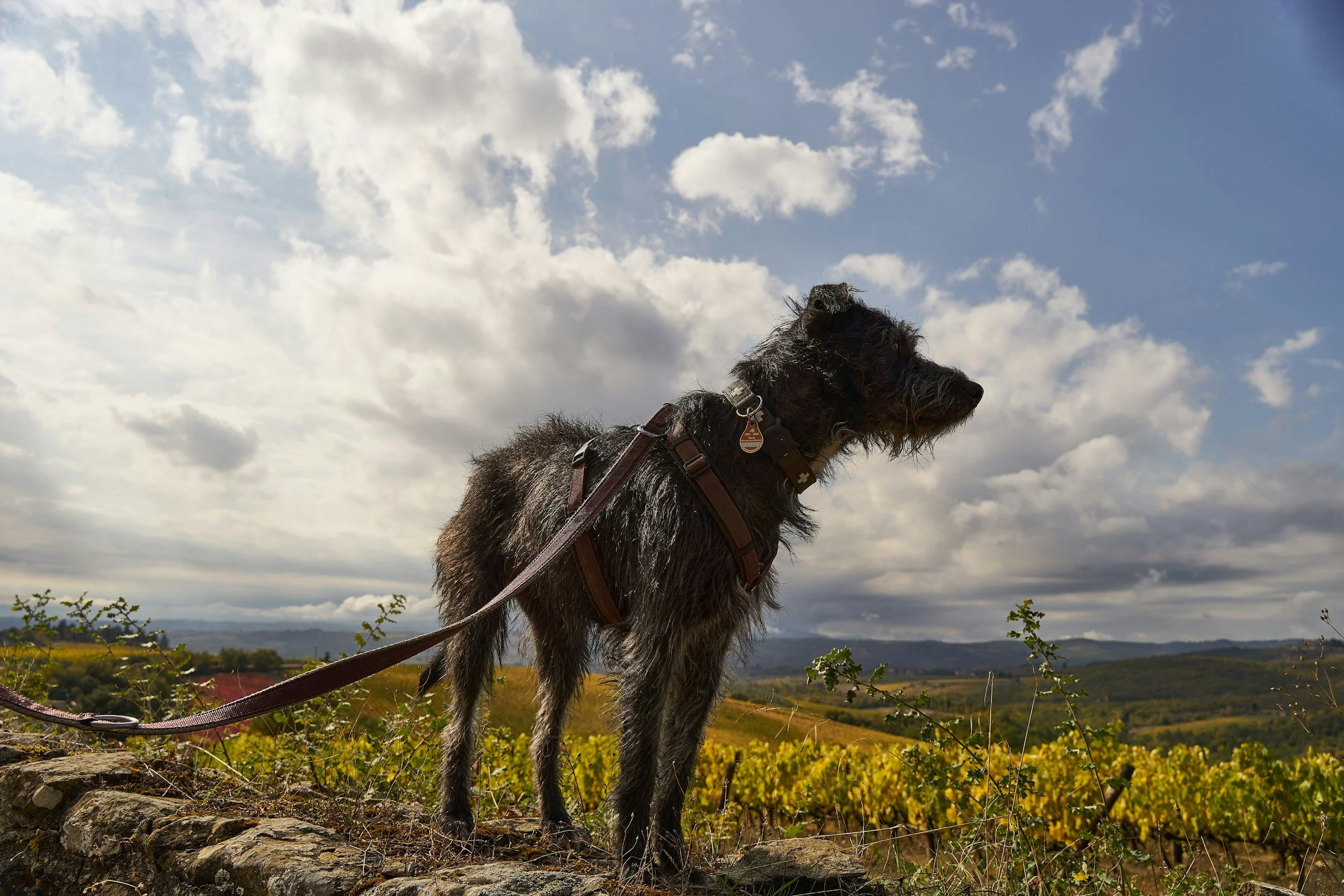
Wire haired dog outdoors on lead during a countryside walk
Got a dog who feels endlessly energetic?
You’ve probably heard the advice:
“Just walk them more.”
“They need tiring out with more exercise.”
“Throw the ball longer.”
“Burn off the energy.”
It’s incredibly common advice — and usually well-meaning.
Because yes, dogs absolutely need opportunities to move, explore, and behave like dogs.
But more exercise is not always the answer.
In some cases, it can actually make things harder.
If your dog seems to become more frantic, more reactive, more restless, or harder to settle despite plenty of activity, there may be more going on than simply “not enough exercise.”
Exercise Matters — But So Does the Type of Exercise
Dogs need physical activity for health, mobility, fitness, exploration, and emotional wellbeing.
But not all exercise affects dogs in the same way.
A slow, sniff-heavy walk through woodland feels very different to the nervous system than repetitive high-speed ball chasing.
A calm exploratory walk is very different from a highly stimulating dog park session.
And importantly, the goal isn’t simply to create an exhausted dog who collapses afterwards.
A physically depleted dog and a dog whose needs have been appropriately met are not always the same thing.
A dog who has had the right kind of activity often appears calmer, more settled, and better able to rest.
A dog who has simply been pushed into exhaustion may still struggle to switch off.
The Arousal Factor
Some activities are naturally highly arousing.
Think:
repetitive ball throwing
chase games
rough high-energy play
repeated excitement around other dogs
constant high-intensity movement
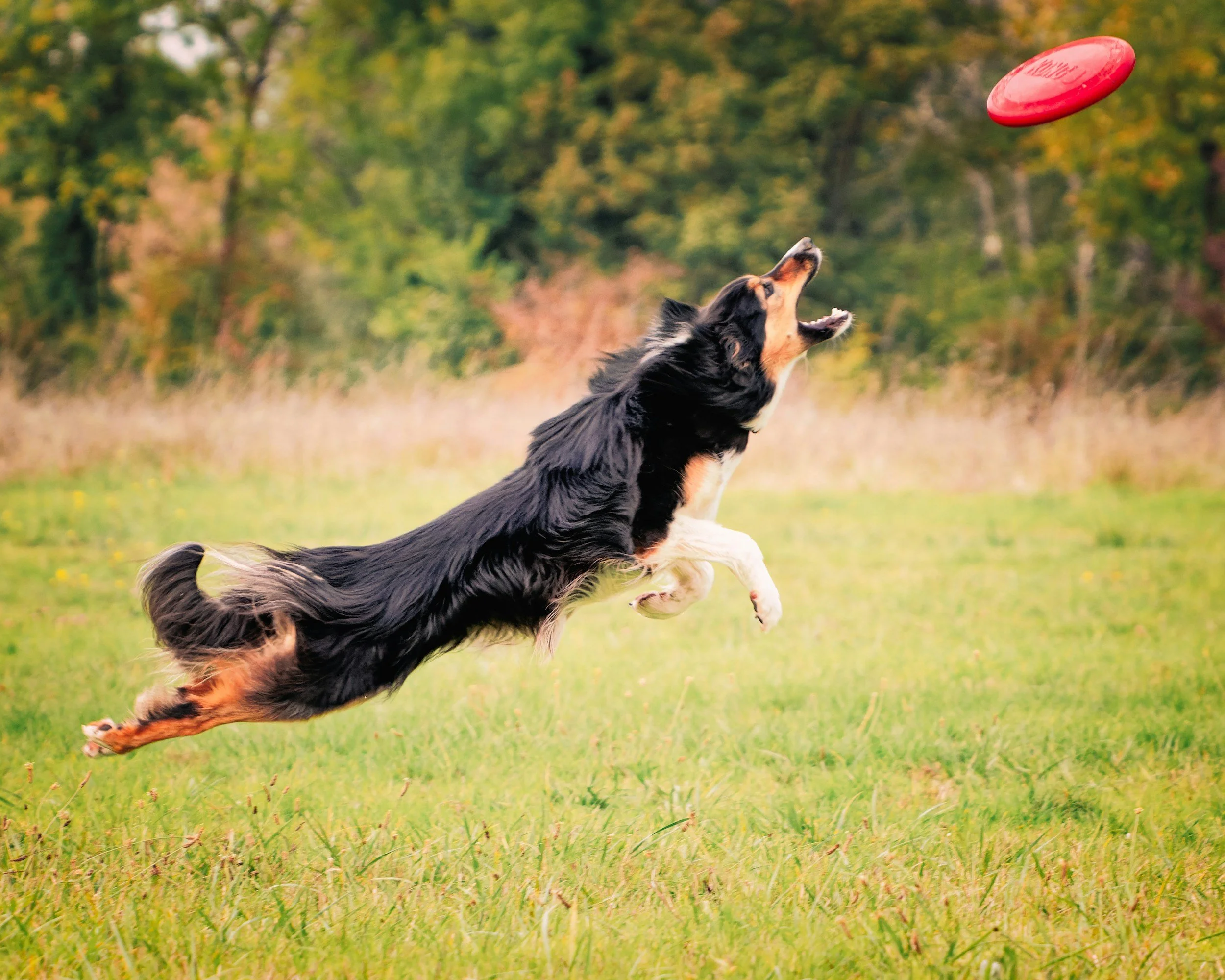
Dog chasing a frisbee during high arousal play
These activities can absolutely be enjoyable for some dogs.
But they can also significantly activate the nervous system.
When dogs become highly aroused, the body releases stress and arousal hormones like adrenaline.
That’s not automatically a bad thing — arousal is a normal part of life.
But repeated intense stimulation without enough opportunity for recovery can leave some dogs struggling to come back down again.
This might look like:
pacing
panting
difficulty settling
restlessness
barking
frustration
grabbing or mouthing
hypervigilance
reactivity
seeming constantly “wired”
From an owner’s perspective, this can look like:
“They still have loads of energy.”
But sometimes what we’re seeing is not a dog who simply needs more exercise.
It’s a dog whose nervous system is still activated.
That’s an important distinction.
And just to be clear — this isn’t to say games like fetch should never be played.
The bigger question is how often, how intensely, and how your individual dog responds.
The Fitness Trap
This is something many owners understandably fall into.
Your dog seems energetic.
So you increase exercise.
They cope.
So you increase it again.
And again.
Over time, some dogs simply become fitter athletes.
That doesn’t necessarily mean they’re becoming calmer.
It may simply mean they’re becoming physically conditioned for more intensity.
Owners can end up in a cycle of trying to out-exercise a dog whose ability to regulate, recover, or settle hasn’t actually improved.
Not All Exercise Meets the Same Need
Movement itself isn’t the issue.
The type of activity — and what it means to that dog — matters hugely.
Some dogs genuinely benefit from active outlets involving movement, engagement, and play.
But the right kind of activity depends on the dog in front of you.
For example, a Border Collie with strong movement sensitivity may not necessarily benefit from endless repetitive ball throwing.
While fetch can feel like “good exercise,” repetitive high-speed chase can increase arousal, strengthen fixation on movement, and leave some dogs feeling more wired rather than more settled.
That doesn’t mean active dogs shouldn’t have outlets.
It means the outlet may need to better match what they actually need.
For some collies, that may look more like structured games that engage both body and brain — activities involving controlled movement, problem-solving, and thinking, rather than frantic chasing.
Other breeds may thrive on activities that tap into natural searching, scenting, finding, and retrieving behaviours.
That might include:
hiding toys or food to find
scent games
calmer retrieve games involving searching rather than endless repetitive throwing
problem-solving activities
A Terrier may enjoy appropriate chase-style games, structured tug, or interactive play that allows them to channel natural drive in a healthy, controlled way.
And for many dogs — regardless of breed — some of the most valuable exercise is actually slower, calmer, exploratory movement.
A longline walk where the dog has space to sniff, investigate, pause, and move at a more natural pace can be incredibly beneficial.
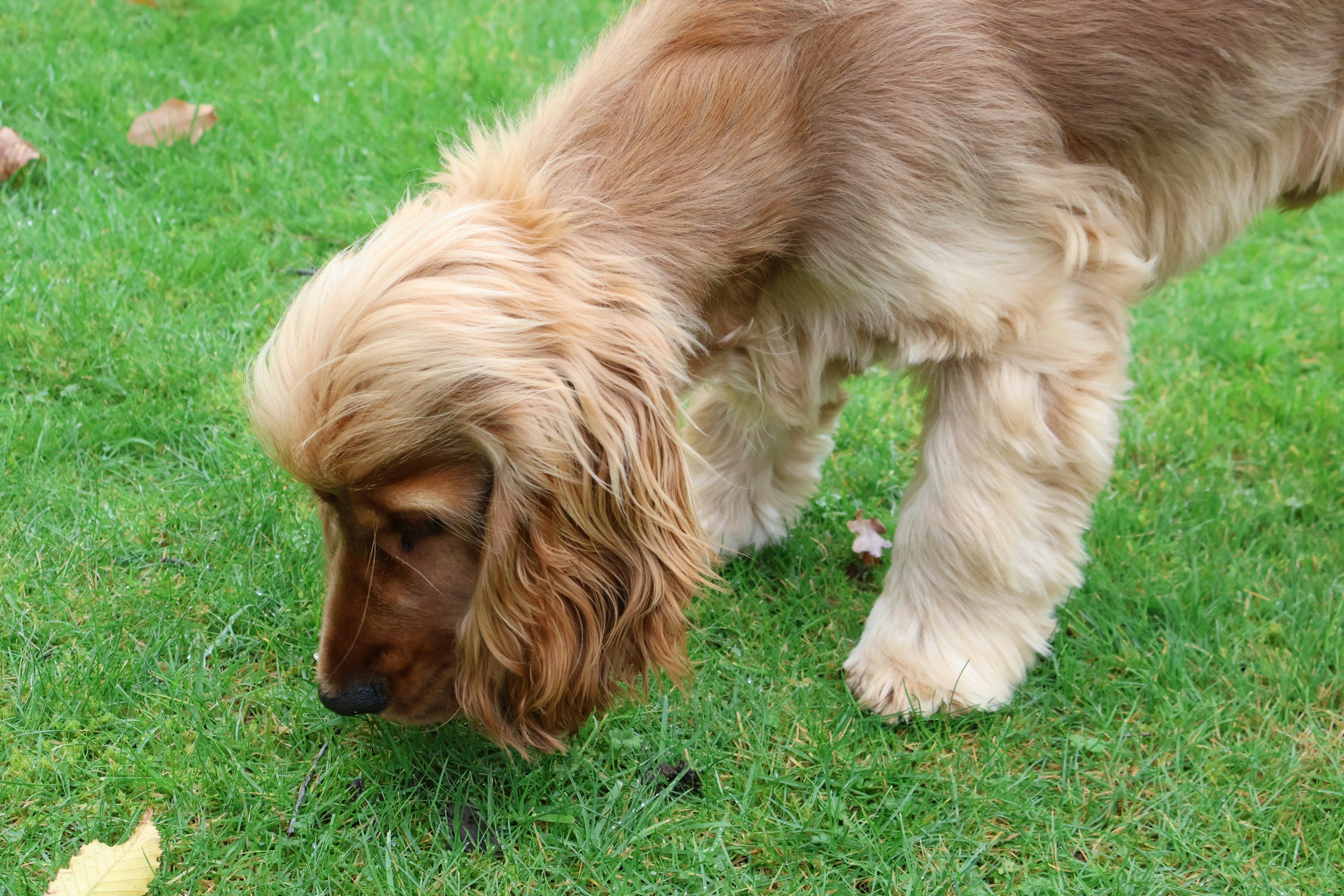
Spaniel sniffing during calm exploration
Sniffing often gets dismissed as “just mooching,” but for dogs it’s doing important behavioural work.
It’s species-appropriate behaviour.
It engages the brain, supports exploration, allows choice, gathers information, and for many dogs helps them process the environment in a calmer, more regulated way.
For dogs who are sensitive, easily aroused, frustrated, or prone to becoming overwhelmed, this kind of lower-pressure activity can often be far more helpful than simply trying to physically tire them out.
Of course, these are broad examples — individual dogs vary hugely.
The question is not simply:
“How do I exercise my dog more?”
But:
“What kind of activity actually helps this dog feel fulfilled, regulated, and able to recover well afterwards?”
Some Dogs Find This Harder Than Others
Dogs vary enormously in how they experience arousal and recovery.
Some cope effortlessly with stimulating activity and bounce back easily.
Others don’t.
Dogs who may find high-arousal lifestyles harder can include:
anxious dogs
frustration-prone dogs
movement-sensitive dogs
some working breeds with strong movement/chase tendencies
This obviously doesn’t mean these dogs shouldn’t exercise.
It means they may need more thoughtful choices around how that exercise looks.
Puppies and Adolescents Need Special Consideration
Young dogs are still developing physically, emotionally, and neurologically.
It can be tempting to assume that a bouncy puppy or chaotic adolescent simply needs more exercise to burn off energy.
But younger dogs often struggle with regulation because their brains and bodies are still maturing.
More stimulation does not automatically create calmer behaviour.
In fact, too much excitement, constant activity, or insufficient recovery can sometimes leave younger dogs feeling even more wired.
Puppies and adolescents need appropriate exercise for their developmental stage, alongside sleep, exploration, learning opportunities, and calm species-appropriate outlets.
Sometimes what looks like endless energy is actually a young dog who is overtired, overstimulated, or struggling to switch off.
Sometimes “Hyper” Isn’t About Energy At All
Behaviour is rarely that simple.
A dog who seems restless, hyper, unable to settle, or constantly “on” is not always under-exercised.
Sometimes we’re seeing:
stress
frustration
poor recovery
sensory overload
over-arousal
emotional dysregulation
And sometimes physical discomfort plays a role too.
Pain does not always look like obvious limping.
Discomfort can sometimes show up as:
panting (when the dog isn’t hot or hasn’t just exercised)
pacing
agitation
restlessness
difficulty settling
increased reactivity
reluctance with certain movement
changes in behaviour
If your dog’s behaviour has changed, movement seems less comfortable, or something simply feels different, physical wellbeing is always worth considering alongside behavioural factors. A veterinary check is an important part of that picture.
So What Helps?
If more exercise doesn’t seem to be improving things, it can be helpful to step back and ask:
What does my dog actually need?
Quality over quantity
More is not automatically better.
Protect rest and recovery
Dogs need downtime too.
Constant outings, stimulation, excitement, or activity without enough genuine rest can make regulation much harder.
Build calm skills
Movement matters — but so does learning how to settle.
That might look like:
calm mat work
quiet decompression time
appropriate chewing opportunities
calm exploratory work
helping dogs learn that relaxation is safe
Think about a cool-down
After exciting activity, many dogs benefit from support transitioning back down rather than being expected to simply switch off.
For example:
a short sniff-focused wander after tug or play
scattering a few treats in the grass for calm searching
a simple finding game
an appropriate chew afterwards
a quiet decompression period at home
This isn’t about suppressing excitement.
It’s about helping the nervous system shift gears.
Just as human athletes benefit from a cool-down after intense exercise, some dogs benefit from help moving from high arousal back towards regulation.
Offer species-appropriate outlets
Sniffing, chewing, foraging, exploring, problem-solving, and breed-relevant activities all matter.
Support decompression and recovery
Not all useful activity looks like physical exercise.
For some dogs, opportunities to calmly explore, make choices, use their senses, and move at their own pace can be incredibly regulating.
This is one reason I often use ACE Free Work in my behaviour work.
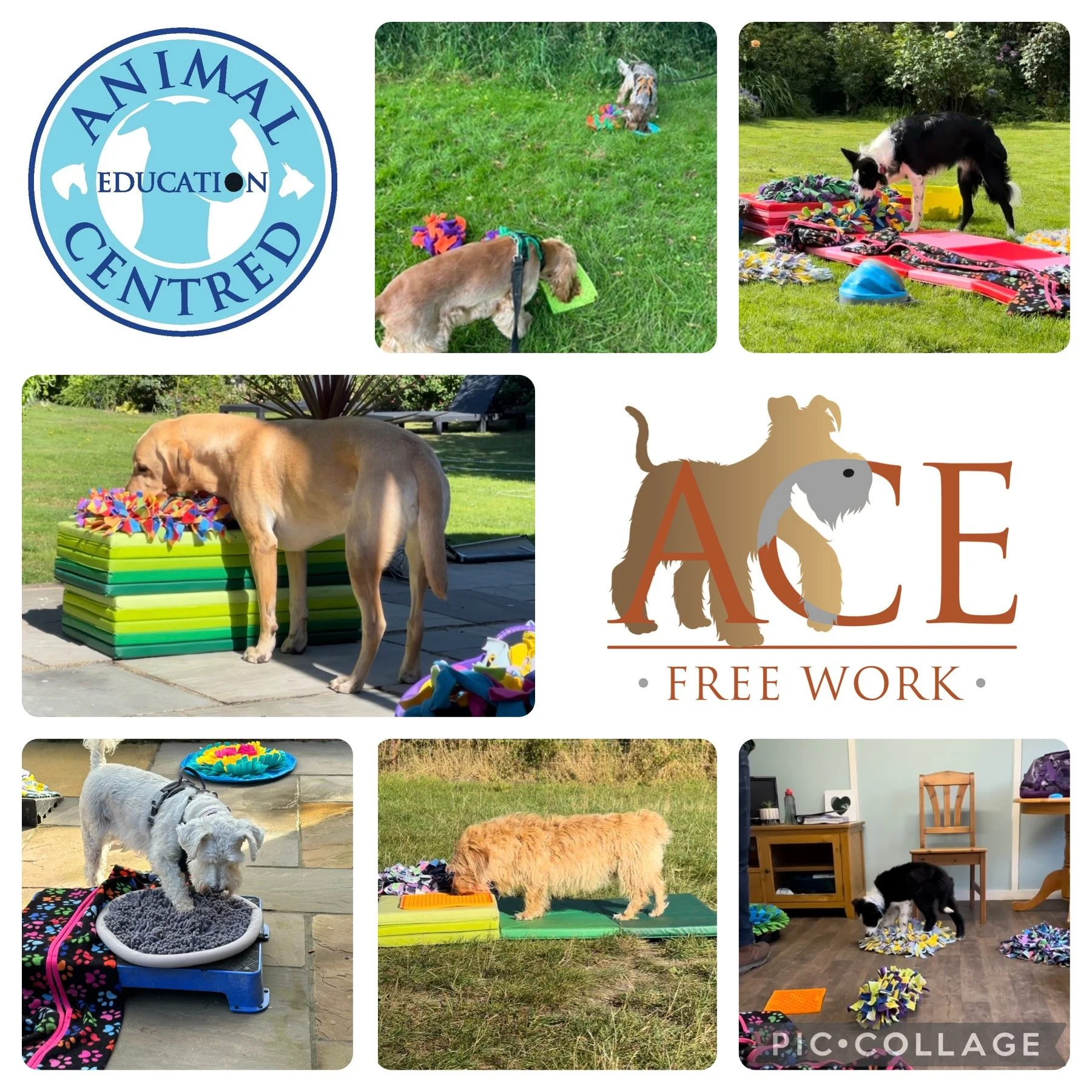
ACE Free Work gives dogs opportunities to explore at their own pace and make their own choices.
ACE Free Work gives dogs opportunities to explore thoughtfully, make choices, process information, and move in a way that feels manageable rather than constantly being directed or stimulated.
For many dogs, even 15–20 minutes of calm exploratory work can help support settling far more effectively than another highly stimulating outing.
Following this with an appropriate chew or rest opportunity can help further support recovery.
Chewing itself is also a valuable natural behaviour for many dogs.
Depending on the individual dog, this might include:
natural chews
olive wood or coffee wood chews
appropriate longer lasting natural chews
raw bones (where appropriate and safely managed)
other suitable long-lasting chews
Chewing engages the jaw, provides focused activity, and for many dogs supports decompression.
Interestingly, emerging research has even suggested that chewing after learning may support memory consolidation in dogs — meaning that calm recovery time after activity or training may be more valuable than many owners realise.
This isn’t about giving a chew to “keep them quiet.”
It’s about recognising chewing as a normal behavioural need.
Consider emotional state
Is your dog excited? Frustrated? Overwhelmed? Constantly scanning?
Consider physical comfort
If something feels off, involve your vet.
A Different Approach Might Look Like…
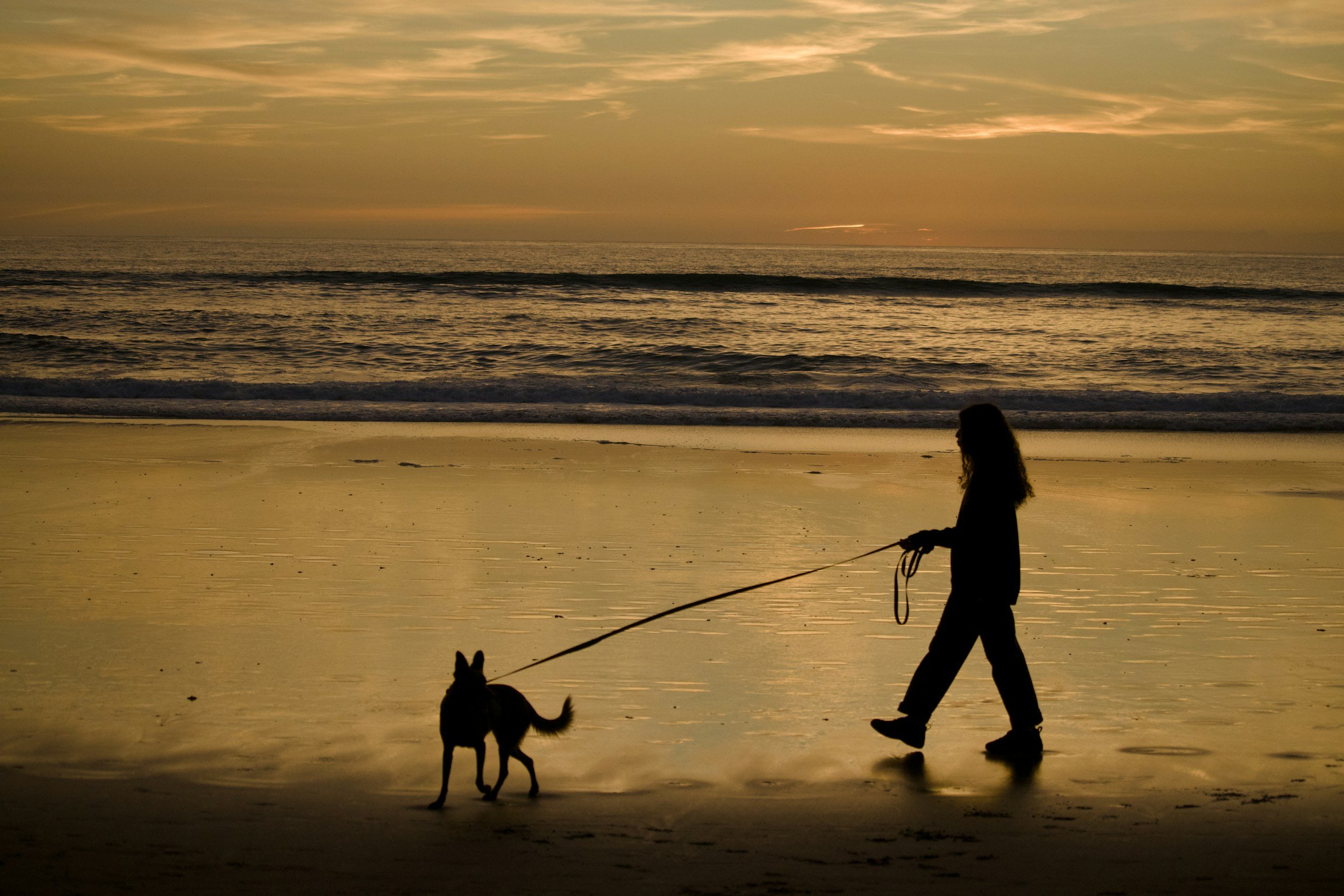
Calm walk along the beach at sunset
Instead of:
One frantic hour of repetitive ball throwing
It might look more like:
a slower sniff-focused longline walk
a short breed-appropriate thinking game
some calm exploratory ACE Free Work
an opportunity to chew afterwards
genuine downtime
It’s Not About Doing Less — It’s About Doing What Helps
Dogs need exercise.
But they also need regulation, recovery, emotional safety, appropriate outlets, and opportunities to simply behave like dogs.
If your dog seems to become more wired, more reactive, or harder to live with despite plenty of activity, the question may not be:
“How do I tire them out more?”
It may be:
“What does my individual dog actually need?”
Need personalised support for your dog?
If you're not sure where to start, my 1-1 Intro Training Session provides personalised guidance and a clear plan tailored to your dog.
Book Your First Session
About the author
Vivienne Moore is a Certified Dog Behaviourist and Trainer (ACB-KSA, PCT-A) based in Norfolk, helping dogs and their people navigate behaviour challenges with practical, compassionate, evidence-based support.
