Why Does My Dog Ignore Me Outside? Understanding What’s Really Going On
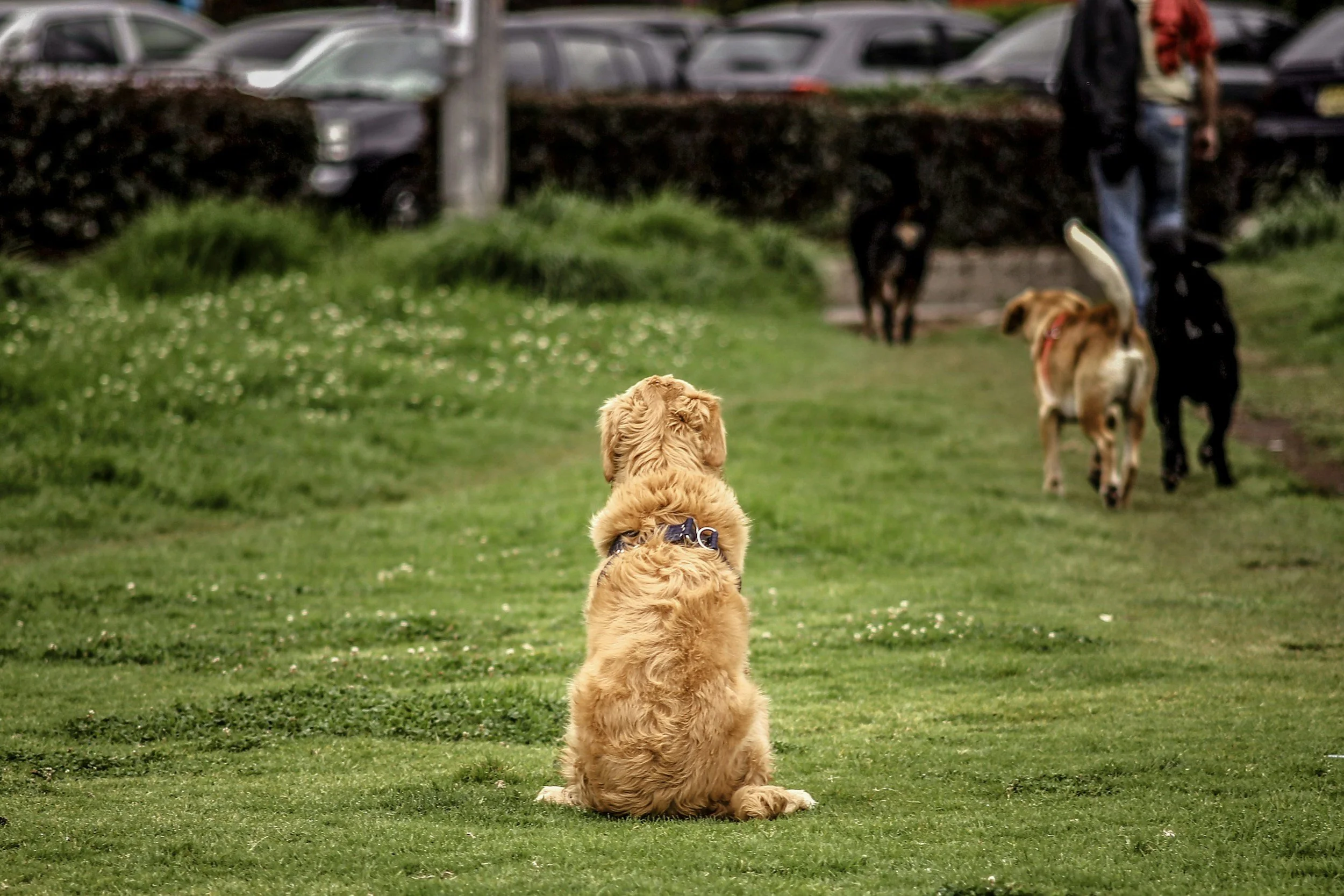
A dog distracted by other dogs in a park.
You ask your dog to sit.
Nothing.
You call their name.
Still nothing.
Meanwhile, at home? They seem to know exactly what you mean.
It’s easy to assume your dog is being stubborn, selective, naughty, or simply choosing not to listen.
But in many cases, what looks like ignoring is something very different.
Understanding what’s really happening can completely change how we approach training — and often leads to much better outcomes for both dogs and their people.
Dogs Don’t Automatically Generalise Learning
One of the biggest misunderstandings in dog training is assuming that once a dog has learned something, they can automatically do it everywhere.
Dogs don’t learn in quite the same way we often imagine.
A behaviour learned in your kitchen does not automatically transfer to:
the front garden
the pavement outside your house
a busy park
a beach
the presence of other dogs
an environment full of exciting smells, sounds, movement, and distractions
Many of us naturally begin teaching skills at home — especially with puppies.
And that makes complete sense.
Home is where many dogs first begin learning things like sit, down, recall foundations, waiting, settling, or loose lead walking.
Because these behaviours are often practised repeatedly in familiar settings, it’s easy to assume the dog fully understands them.
But from the dog’s perspective, learning a cue in one environment doesn’t automatically mean they understand how to apply that same skill everywhere else.
So “sit in the kitchen” and “sit beside a busy footpath while another dog walks past” may feel like completely different tasks.
Learning a behaviour in one environment is only the beginning.
Dogs need opportunities to practise those same skills gradually in different contexts if we want them to truly understand what the cue means and be able to use it in the real world.
Think of it a little like this:
A child may confidently answer questions at the kitchen table.
That doesn’t automatically mean they’ll perform the same way in a noisy classroom, an exam hall, or in front of a group of people.
Context matters.
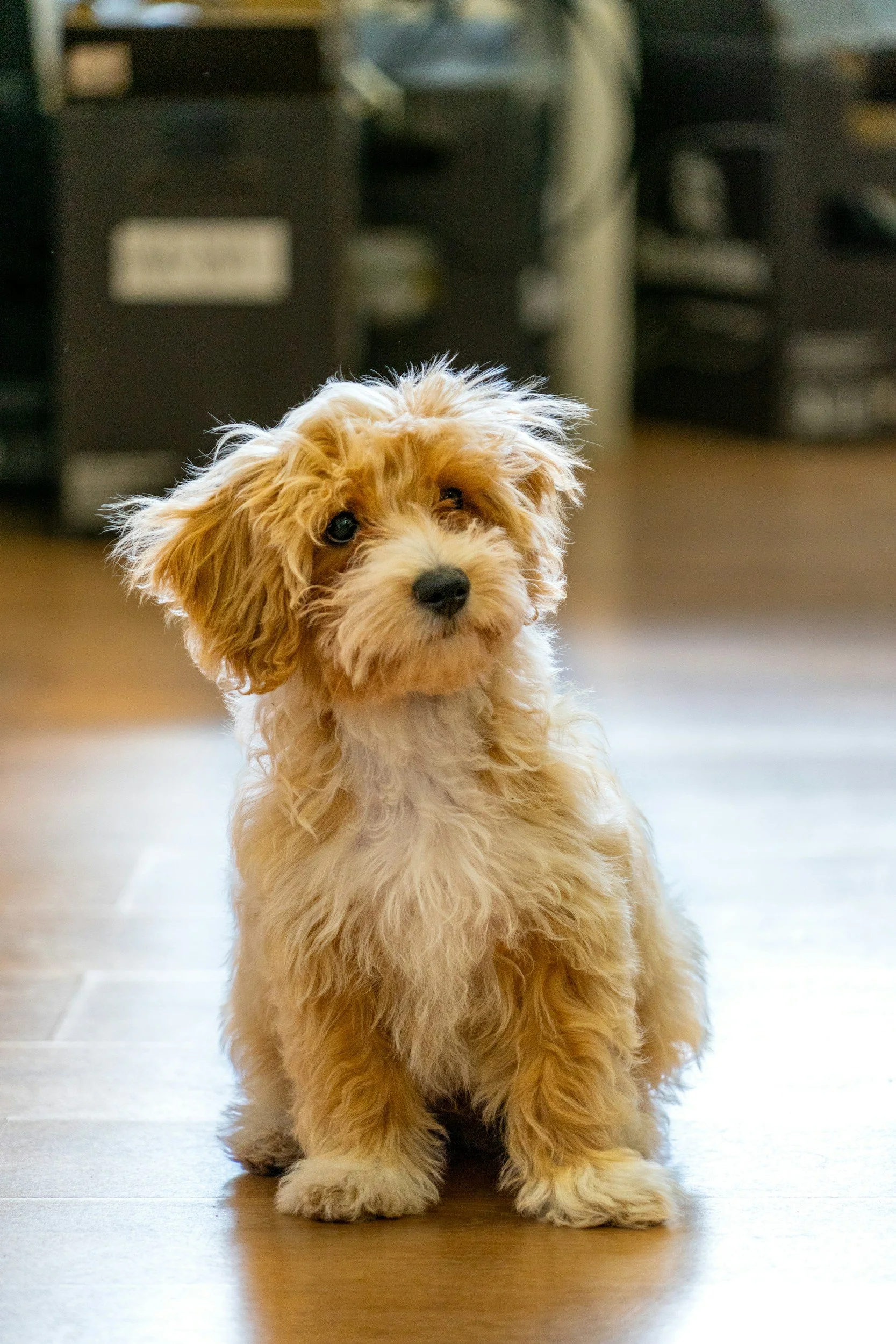
A dog who understands “sit” in your kitchen hasn’t automatically learned that “sit” means the same thing in the park, at the beach, or when another dog is bouncing past.
It’s Not Always About Training — The Nervous System Matters Too
Even when a dog understands a cue, being able to respond depends on what state their nervous system is in.
When dogs are calm, regulated, and feeling safe, learning and thinking are easier.
When arousal rises — through excitement, frustration, fear, overwhelm, anticipation, environmental stimulation, or even physical discomfort — access to thoughtful decision-making becomes harder.
This can look like:
pulling on the lead
fixating on movement
barking
lunging
zooming around
sniffing intensely
freezing
scanning the environment
appearing unable to focus
This is not necessarily a dog refusing.
Sometimes it’s a dog whose brain is simply busy coping with something else.
If the environment feels challenging, exciting, overwhelming, emotionally significant, or if movement itself feels uncomfortable, your cue may genuinely be harder for them to process in that moment.
Pain or discomfort can absolutely influence behaviour and responsiveness, so if your dog’s behaviour has changed, they seem less willing to do things they previously managed comfortably, movement appears harder, or something just feels different, it’s worth considering whether physical discomfort could be playing a role and discussing this with your vet.
The Outside World Can Be Hugely Reinforcing
From our perspective, asking for a sit might feel simple.
From your dog’s perspective, outside offers:
interesting smells
wildlife
people
dogs
changing sounds
opportunities to explore
movement
information
That’s a lot.
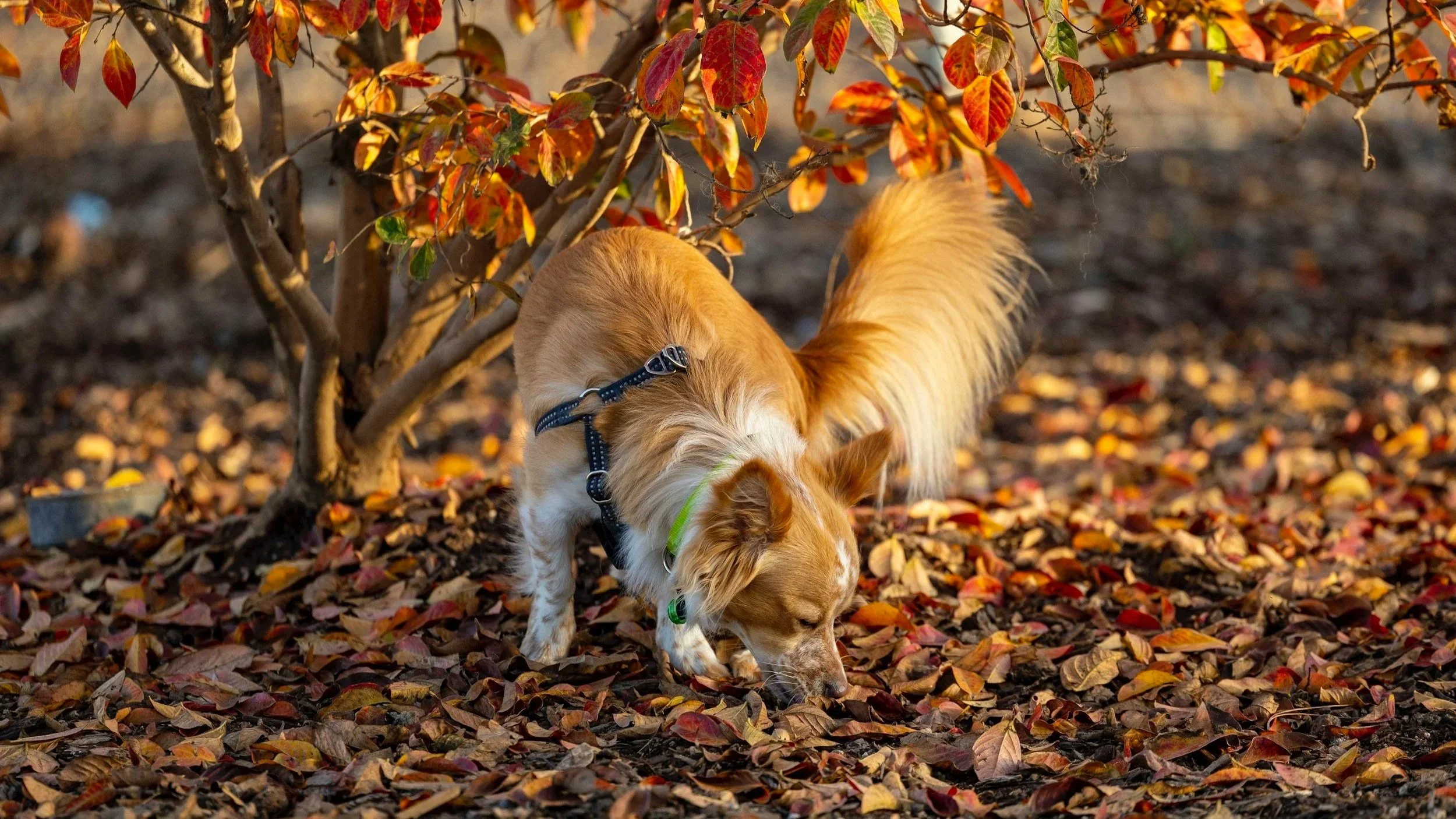
Dog sniffing outdoors during a walk, showing natural exploratory behaviour.
Rewards absolutely matter in training.
Food rewards can be incredibly useful for building new behaviours, creating positive associations, and increasing motivation. For many dogs, food is highly reinforcing — and that’s absolutely okay.
But motivation isn’t one-size-fits-all.
Dogs also work for what we call functional rewards — things that naturally matter to them in that moment.
For example:
being able to go and sniff
moving forwards on a walk
greeting someone (where appropriate)
gaining access to space
exploring an interesting area
watching something from a comfortable distance
The most effective reinforcement is whatever genuinely matters to the individual dog in that moment.
That said, reinforcement should support learning — not pressure a dog into situations they’re uncomfortable with simply because the reward is appealing. High-value food can be incredibly useful, but it shouldn’t be used to override discomfort or coax a dog closer to something they’re struggling with.
If a dog learns that engaging with you leads to safe, meaningful access to things they value, training often becomes far more relevant and enjoyable for both of you.
Repeating Cues Often Doesn’t Help

Dog on walk in a distracting outdoor environment, showing why dogs may struggle to respond to cues in distracting settings.
It’s incredibly normal to do this:
“Sit.”
“Sit.”
“Sit.”
“SIT.”
But repeated cues rarely improve understanding.
Instead, they can:
become background noise
create frustration
reduce the value of the cue
teach the dog that the first few repetitions don’t really matter
If your dog isn’t responding, the more useful question is:
Can they actually do what I’m asking right now?
That’s a very different question from assuming they simply won’t.
Sometimes We’re Asking for Too Much, Too Soon
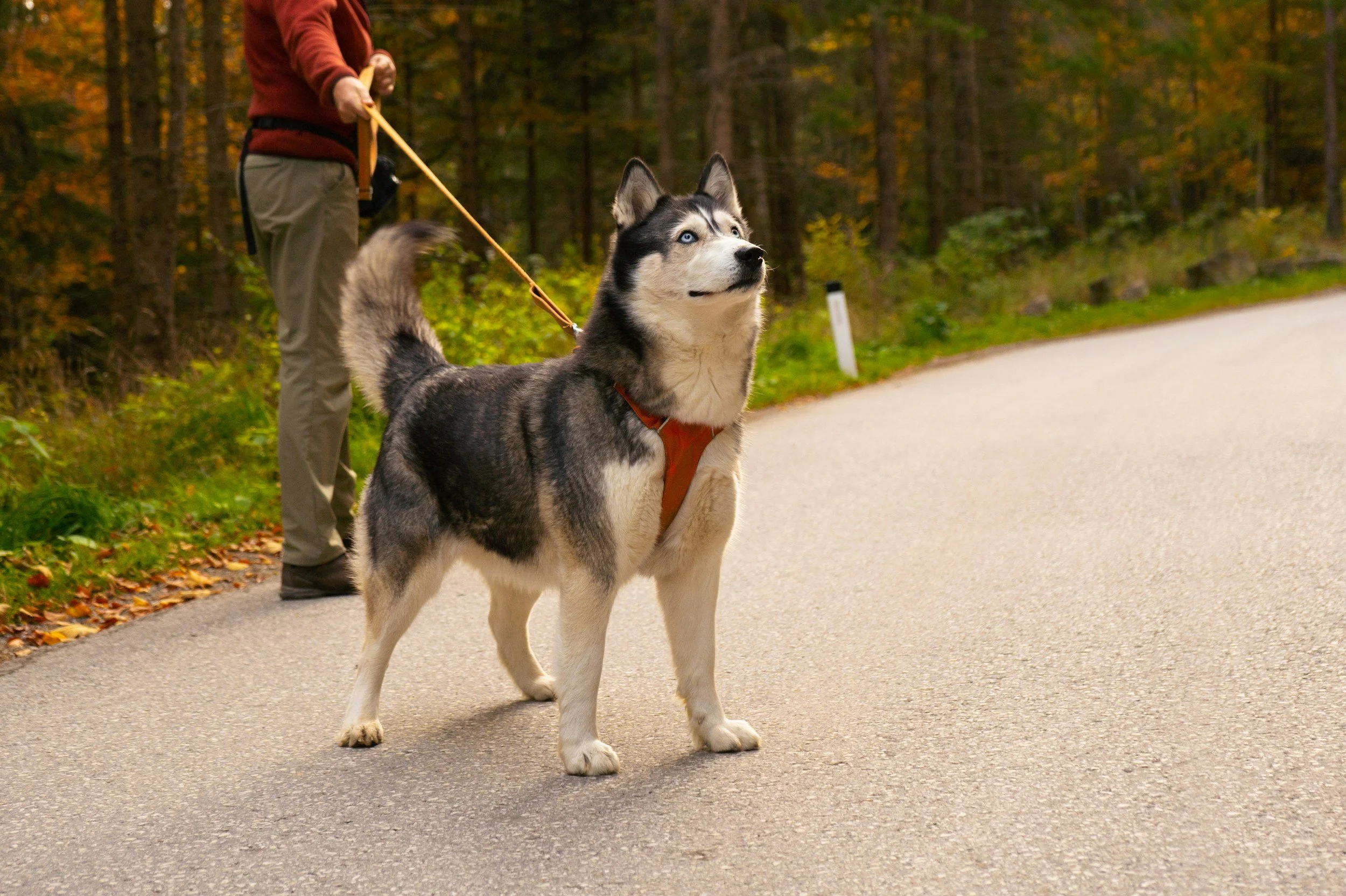
Dog on lead noticing the environment, illustrating how distractions can affect a dog’s ability to respond to cues.
This is especially common when a dog has learned a skill beautifully indoors.
Because it worked at home, it can feel reasonable to expect it outside.
But outside may involve:
a much higher level of difficulty
competing motivations
emotional triggers
sensory overload
movement
uncertainty
Training is not just about teaching the behaviour.
It’s about helping the dog understand that behaviour across enough different situations that they can begin to use it more reliably in real life.
This is why good training often progresses gradually:
home → garden → quiet street → calmer public spaces → busier environments
Not every dog moves through this process at the same pace.
And that’s okay.
So What Helps?
Rather than assuming your dog is ignoring you, try asking:
What might be making this difficult right now?
Helpful strategies include:
Lower the difficulty
Move further away from distractions.
Practise in easier environments first
Build success gradually rather than jumping straight into hard situations.
Reinforce check-ins
Notice and reward moments your dog chooses to connect with you.
Use meaningful rewards
Food is useful — but don’t underestimate functional rewards like sniffing, movement, and access.
Avoid over-cueing
Ask once, then reassess rather than repeating endlessly.
Support regulation first
A dog who feels calmer and safer will generally learn far more effectively than a dog already overwhelmed or over threshold.
Your Dog Probably Isn’t Giving You a Hard Time
More often, they may be having a hard time.
That doesn’t mean training doesn’t matter.
It means understanding the dog in front of us matters just as much.
When we shift from:
“Why is my dog ignoring me?”
to:
“What’s making this difficult for them right now?”
we often unlock much more effective — and compassionate — progress.
Need Support?
If your dog listens beautifully at home but everything seems to fall apart outside, you’re not alone.
This is one of the most common frustrations dog guardians experience — and one of the most misunderstood.
If you’re in Norfolk and would like supportive, practical help building real-world skills with your dog, I’d be happy to help.
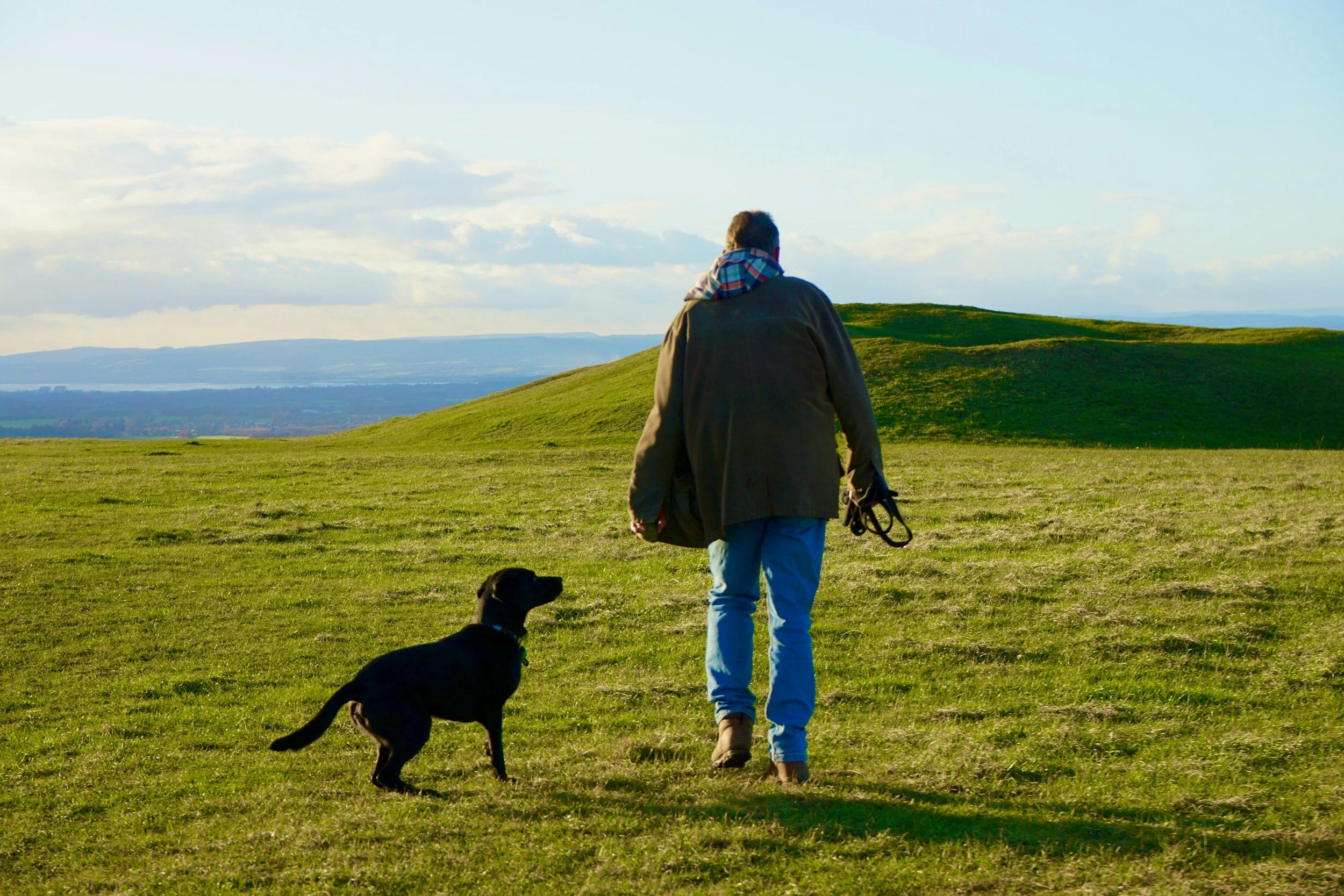
Dog walking with their owner in open countryside, representing supportive real-world training.
Need personalised support for your dog?
If you're not sure where to start, my 1-1 Intro Training Session provides personalised guidance and a clear plan tailored to your dog.
Book Your First Session
About the author
Vivienne Moore is a Certified Dog Behaviourist and Trainer (ACB-KSA, PCT-A) based in Norfolk, helping dogs and their people navigate behaviour challenges with practical, compassionate, evidence-based support.
