Why Doesn't My Dog Listen? Understanding What Gets in the Way of Learning
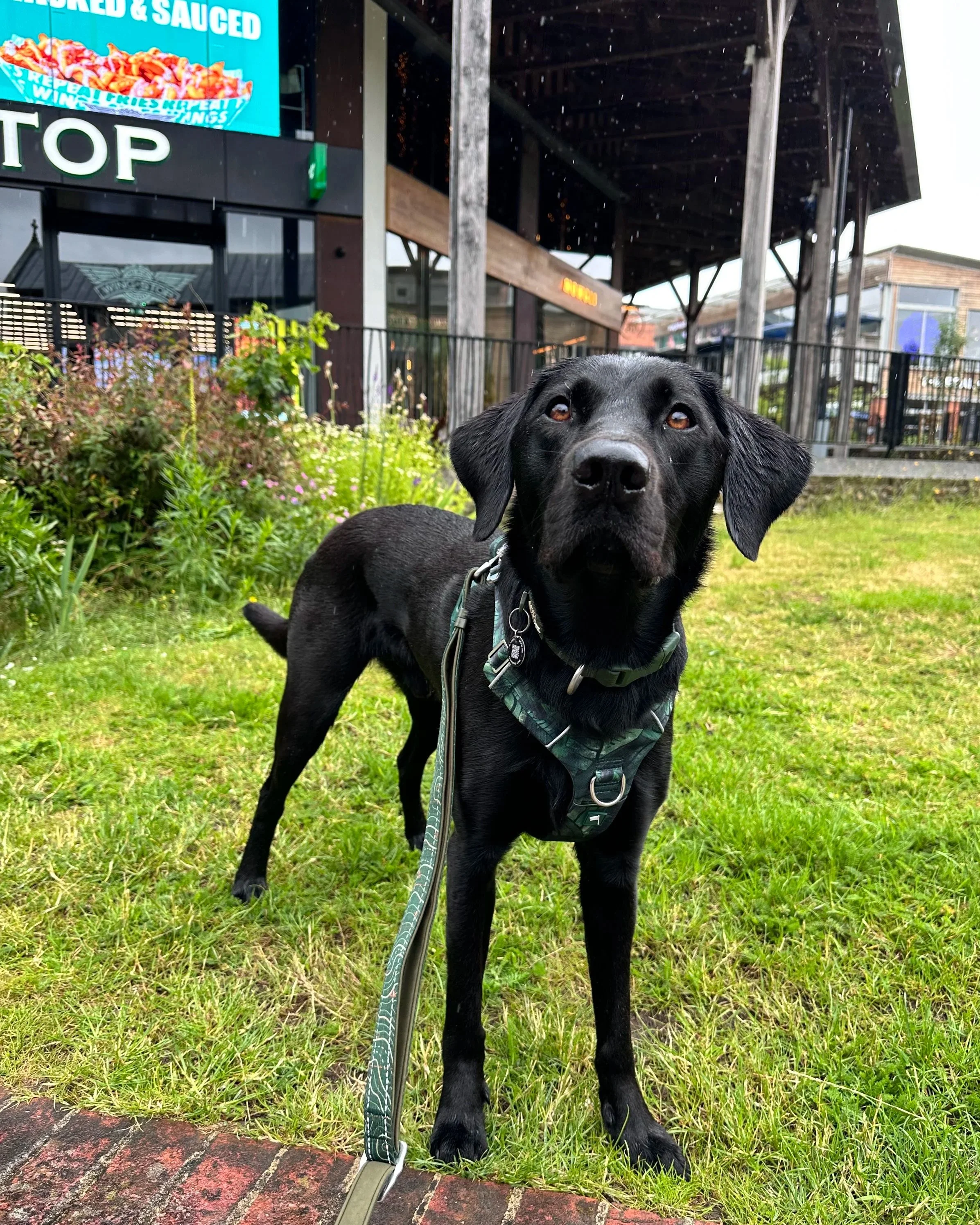
Black Labrador calmly observing the environment during a training walk in Norfolk.
If you've ever found yourself saying:
"He knows this at home."
"She listens perfectly in the garden but not on a walk."
"It's like he's completely forgotten everything I've taught him."
You're certainly not alone.
One of the most common frustrations dog owners experience is the feeling that their dog simply isn't listening.
Whether it's recall, loose lead walking, settling calmly around visitors, or responding to cues they've previously learned, many owners wonder why their dog seems capable one moment and completely unable the next.
It's easy to assume that a dog is being stubborn, ignoring us, or choosing not to cooperate.
In reality, the answer is often much more complicated.
Dogs Don't Learn in a Vacuum
One of the biggest misconceptions in dog training is the idea that once a dog learns something, they should be able to do it everywhere.
Learning doesn't work like that.
Dogs don't automatically generalise behaviours well. A cue learned in your quiet kitchen may feel completely different when you're standing in a busy park surrounded by other dogs, children, cyclists, smells, and distractions.
To us, "sit" is still "sit."
To your dog, the entire environment has changed.
This is why dogs often appear to know something one day and struggle the next.
They haven't necessarily forgotten.
The conditions around them have changed.
Emotions Influence Learning
Learning isn't just about what a dog knows.
It's also about how a dog feels.
When dogs are worried, excited, frustrated, overwhelmed, tired, or uncomfortable, their ability to process information changes.
Think about a time when you felt stressed, anxious, or exhausted.
Were you able to concentrate as easily?
Probably not.
Dogs are no different.
A dog who is feeling overwhelmed by their surroundings may genuinely struggle to respond to cues they can perform perfectly at home.
This isn't because they're being difficult.
It's because their emotional state is affecting their ability to learn and respond.
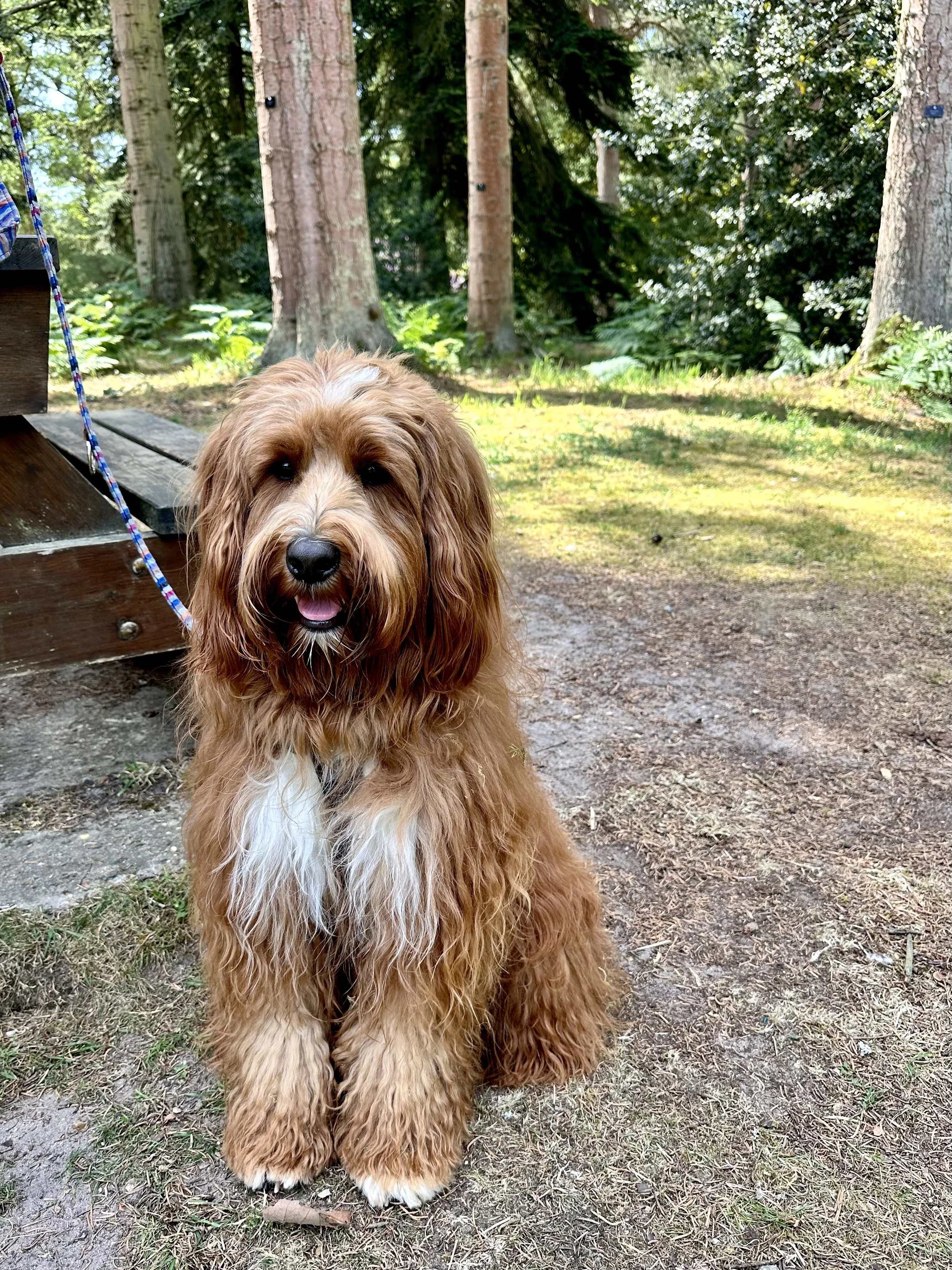
Australian Labradoodle calmly observing the environment during a walk in Norfolk.
Arousal Matters More Than Most People Realise
Many owners assume that only fearful dogs struggle to listen.
However, excitement can affect learning too.
A dog who is desperately excited to greet another dog may be just as unable to focus as a dog who is worried about the interaction.
When arousal levels rise, whether through excitement, frustration, anticipation, fear, or stress, thinking becomes harder.
This is why some dogs seem to lose all ability to respond when they spot another dog, a squirrel, a visitor arriving at the house, or a favourite walking route.
Their brain is focused elsewhere.
The Environment Is Always Part of the Picture
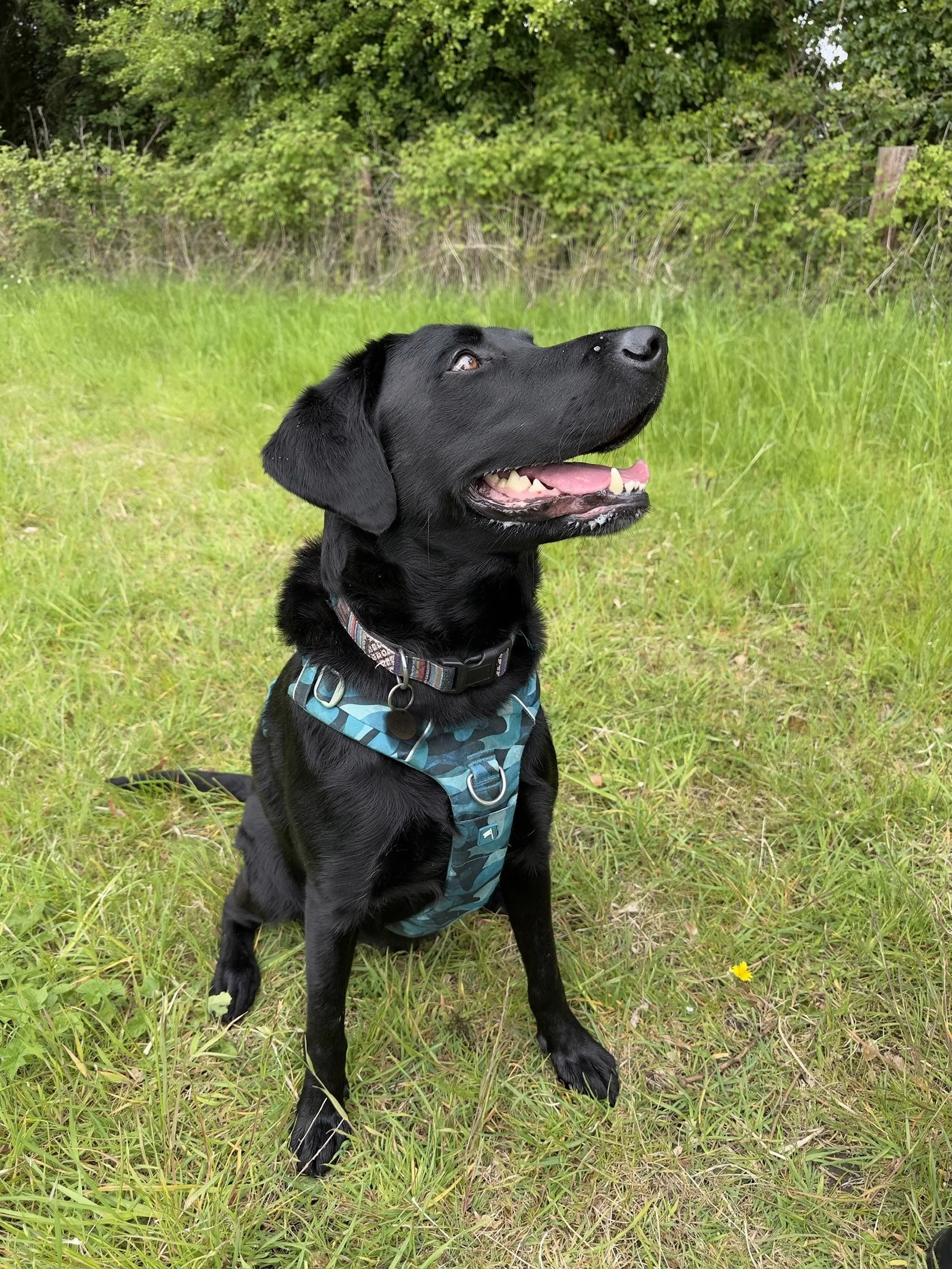
Black Labrador checking in with their owner during an outdoor training walk.
Behaviour never happens in isolation.
The environment matters.
For example:
A dog may walk beautifully on a quiet footpath but pull constantly in town.
A puppy may settle well at home but struggle in a busy café.
A dog may respond brilliantly in training sessions but find real-world situations much harder.
This doesn't mean the training hasn't worked.
It means the environment is changing how difficult the task feels for the dog.
Sometimes what appears to be a training problem is actually a challenge with the environment we've asked the dog to work in.
Physical Discomfort Can Affect Behaviour Too
Behaviour and physical health are closely linked.
Pain, discomfort, illness, or reduced mobility can all affect a dog's ability to cope with situations they previously managed well.
Sometimes dogs become less tolerant, more reactive, more distracted, or less able to settle.
In some cases, owners notice that training suddenly seems to stop working.
This is one reason behaviour professionals often encourage veterinary investigation when behaviour changes unexpectedly.
A dog who isn't comfortable physically may struggle emotionally and behaviourally too.
Sometimes We Accidentally Make Things Too Difficult
As owners, we naturally want to help our dogs progress.
Sometimes, however, we move faster than our dogs are ready for.
We ask for behaviours in situations that are simply too difficult at that moment.
For example:
Expecting recall around high-value distractions.
Practising loose lead walking in a busy town centre before the skill is established elsewhere.
Asking a worried dog to cope with close encounters before they feel comfortable at greater distances.
Learning is often most successful when we build gradually and allow dogs to experience success along the way.
What Does "Listening" Actually Look Like?
Many owners imagine a well-trained dog as one who responds immediately in every situation.
Real life is often messier than that.
Progress might look like:
Checking in with you more often.
Recovering more quickly after seeing a trigger.
Choosing to disengage from something interesting.
Settling more easily.
Responding in situations that previously felt impossible.
These changes are sometimes easy to overlook, but they're often signs that learning is taking place.
How Can We Help Dogs Learn More Effectively?
Rather than asking, "Why doesn't my dog listen?"
It can be helpful to ask:
Is my dog able to cope with this situation?
Is the environment too challenging right now?
How is my dog feeling?
Are there physical factors involved?
Have I built this skill gradually enough?
When we look beyond the behaviour itself, we often find valuable information about what our dog needs from us.
Sometimes the answer is more training.
Sometimes it's more support.
Sometimes it's more distance, more rest, better management, or a veterinary check.
Often it's a combination of several things.
When Professional Support Can Help
If your dog is struggling with recall, loose lead walking, settling, reactivity, frustration, fear, or other behavioural challenges, it can be difficult to know where to start.
The good news is that you don't need to figure it out alone.
Whether your dog needs practical training, behaviour support, or a combination of both, understanding why they're struggling is often the first step towards meaningful progress.
Through my training and behaviour services, I help owners better understand their dogs, build practical skills, and create personalised plans that support lasting change.
If you'd like help understanding what's getting in the way of your dog's learning, I'd love to hear more about you and your dog.
Final Thoughts
Dogs are not robots.
They don't perform the same way in every situation, every day, regardless of how they're feeling.
Learning is influenced by emotions, environment, health, experiences, and the individual dog standing in front of us.
When we understand what might be getting in the way of learning, we can stop viewing behaviour as a battle of wills and start seeing it as information.
And when we do that, it becomes much easier to support our dogs in a way that leads to meaningful, lasting progress.
Need personalised support for your dog?
If you're not sure where to start, my 1-1 Intro Training Session provides personalised guidance and a clear plan tailored to your dog.
Book Your First Session
About the Author
Vivienne Moore is a Certified and Accredited Dog Behaviourist and Trainer based in Norfolk and founder of Walkies Dog Behaviour & Training.
She holds a Level 5 qualification in Canine Behaviour, is an Accredited Canine Behaviourist (ACB-KSA), a Certified Dog Trainer (PCT-A), ACE Certified Practitioner, Kids Around Dogs Approved Professional, and an accredited member of the Association of INTODogs.
Vivienne specialises in helping dogs struggling with reactivity, fear, anxiety, frustration, and other behavioural challenges using ethical, reward-based methods that focus on understanding the emotions driving behaviour.
You may also find these articles helpful:
