Is Puppy Biting Just a Phase? What’s Normal and What Helps
Bringing a puppy home is exciting, but the reality of puppy biting often catches owners off guard. If your puppy seems determined to bite your hands, furniture, or anything else they can get their teeth on, you may be wondering whether it's normal and when it might stop.
Many owners find themselves asking, "Is puppy biting a phase, or is there something wrong with my dog?"
The good news is that what we often call "puppy biting" is usually a normal behaviour known as mouthing, where puppies use their mouths to explore, play and interact with their surroundings. This is an expected part of growing up, but puppies still need to learn how to use their mouths gently with people and other dogs.
This can be frustrating, but it’s important to note that puppy biting isn't something that can be 'fixed' overnight. Instead, it's a behaviour that changes over time as puppies mature and learn new skills.
In this article, we'll look at why puppies bite, what can make this stage easier, and when a little extra support might be beneficial.
Is Puppy Biting a Phase?
In many ways, yes. Puppy biting is linked to normal stages of development, as they start to learn more and develop social skills.
Part of this process involves puppies learning bite inhibition, which is the ability to control the force of their mouth during play and interaction.
As they mature, develop better self-control and gain more social experience, many puppies naturally become gentler in how they interact with people and other dogs.
Every puppy develops at their own pace, but most owners begin to notice gradual improvements over the first year of their puppy’s life.
However, puppy biting isn’t something that should just be waited out. Growing up plays an important role, but puppies also need guidance to help them cope with frustration, manage excitement and learn what is expected of them.
Contrary to some outdated advice, puppy biting is not usually a sign that your puppy is trying to dominate you or become the "pack leader". In most cases, mouthing reflects normal development, play, excitement, teething, frustration or tiredness.
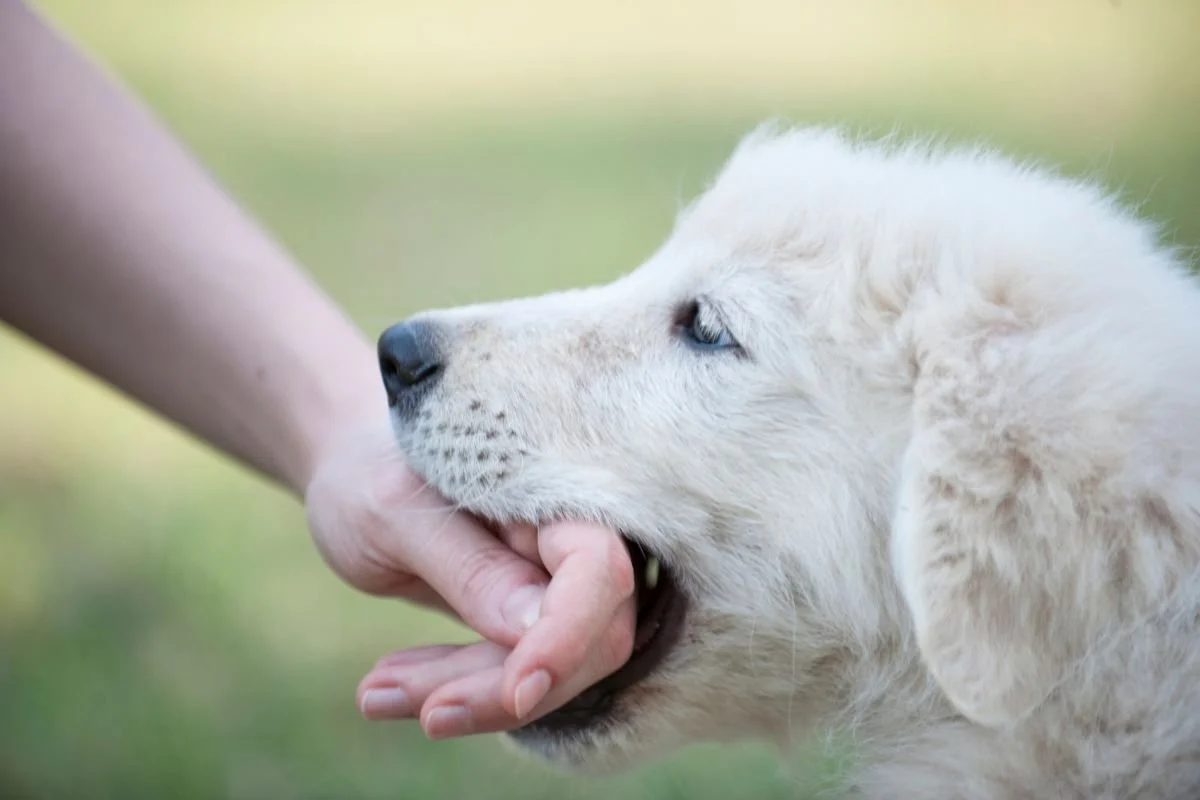
Puppy biting is linked to normal stages of development, as they start to learn and develop social skills.
Why do Young Puppies Bite So Much?
Puppies don't bite for just one reason. They use their mouths to explore their environment, learn through play, relieve teething discomfort, and cope with excitement, frustration or tiredness.
Understanding what’s driving this behaviour is often the first step towards helping your puppy develop better ways to interact.
Exploring the World
Just as we might touch or inspect something unfamiliar, puppies often investigate new objects and experiences with their mouths as they learn about the world around them.
A new toy, a lead, a shoe left on the floor, or even your hands can all become part of that learning process. Mouthing allows puppies to investigate unfamiliar objects and experiences as they build confidence and understanding.
Learning Through Play
Play is an important part of puppy development. Through play, puppies begin to develop social skills and learn how to interact appropriately with other dogs and people.
As they grow, puppies start learning how much pressure is acceptable during play and how their behaviour affects others. This is one of the reasons play biting is such a common part of puppyhood.
Play is important, but puppies don't always know when they've had enough. Many owners notice that biting becomes more intense as play becomes faster, noisier or more exciting.
Learning to spot the early signs that your puppy is becoming over-aroused can help prevent play from tipping into frantic biting. Faster movements, grabbing toys more intensely, struggling to focus, or becoming increasingly mouthy can all be signs that your puppy may benefit from a short break.
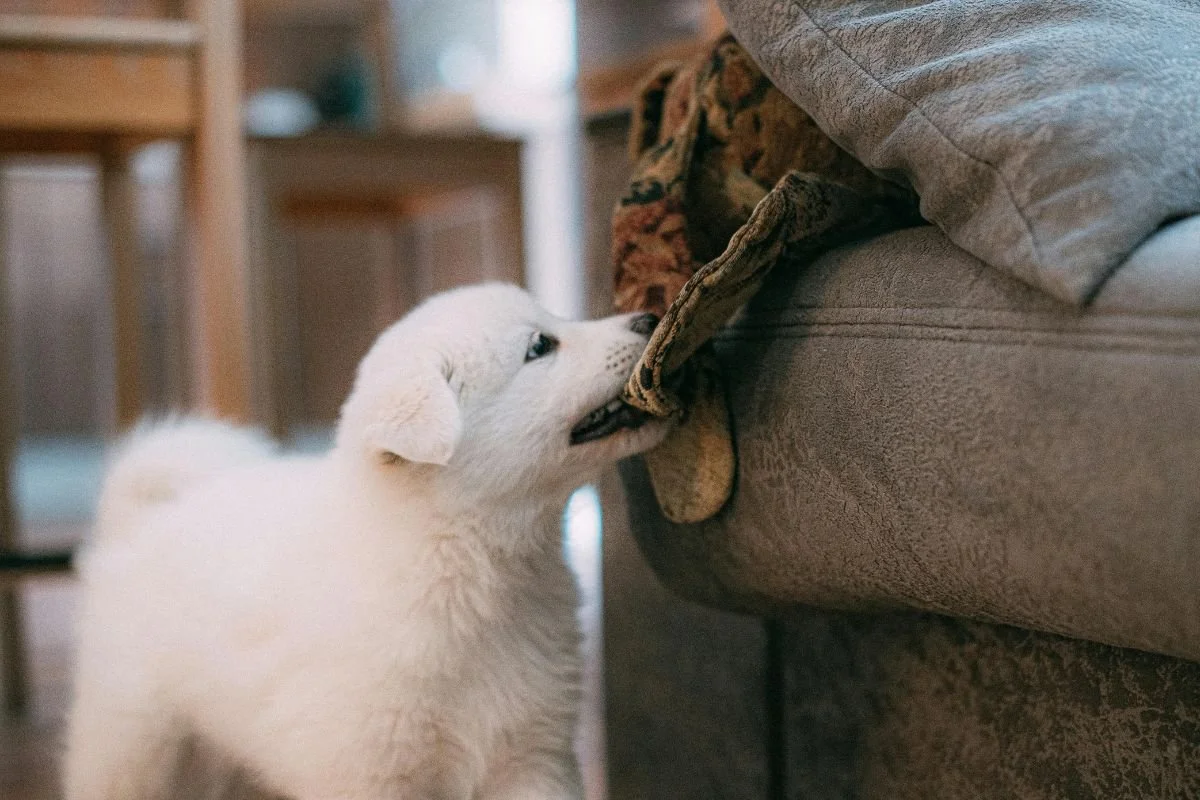
As they grow, puppies start learning how much pressure is acceptable during play and how their behaviour affects others.
Teething
Teething usually starts at around three to four months of age, when puppies begin losing their baby teeth, and can continue until they're around six to seven months old.
As their adult teeth develop, sore gums can make chewing and biting feel particularly rewarding as it relieves discomfort.
Frustration and Seeking Attention
Puppies quickly learn what gets a response from the people around them. As they're still developing emotional regulation skills, they don't always have more appropriate ways to communicate their needs.
For example, a puppy may grab at your sleeves when they want attention, mouth your hands during play, or become more bitey when they're frustrated that they can't reach something they want.
Tiredness and Overstimulation
The PDSA's Animal Wellbeing (PAW) Report found that dogs getting less than ten hours of sleep per day may be more likely to display confrontational behaviours such as growling, snapping and biting.
Given that puppies need far more sleep than adult dogs, overtired puppies can find it harder to cope with excitement, frustration or new experiences.
This is why some owners notice that biting becomes more intense after a particularly busy day. Rather than being deliberately naughty, a puppy may simply be struggling to cope with tiredness, excitement or too much stimulation all at once.
Chewing Can Help Puppies Regulate
Puppies don't only use their mouths to explore the world. Chewing, licking and carrying objects can also help them cope with excitement, frustration or tiredness.
You may notice your puppy picking up a toy after visitors arrive, carrying something around after a walk, or settling with a chew after an exciting experience. These behaviours can help puppies process what has happened and bring their arousal levels back down.
Providing appropriate outlets for these natural behaviours, such as suitable chews, enrichment activities and toys to carry, can help meet your puppy's needs while reducing the likelihood that they use your hands, clothing or furniture instead.
What Helps With Puppy Biting?
The reality is that puppy biting usually improves through a mix of maturity, learning and support. Some move through this stage fairly quickly, while others need a little more help along the way.
Though puppy biting cannot be 'fixed' overnight, there are practical steps you can take to help your puppy develop better ways to interact.
Give Them Something Better to Bite
When your puppy starts biting hands, sleeves or trouser legs, try redirecting them onto an appropriate toy or chew. The aim isn't simply to stop the biting, but to redirect it towards more appropriate outlets such as toys and chews.
It's also worth thinking about how you play with your puppy. Games that encourage your puppy to chase, grab or mouth at hands and clothing can make it harder for them to understand what is and isn't appropriate.
Using toys for interactive play creates clearer boundaries and gives your puppy a suitable outlet for their natural play behaviours.
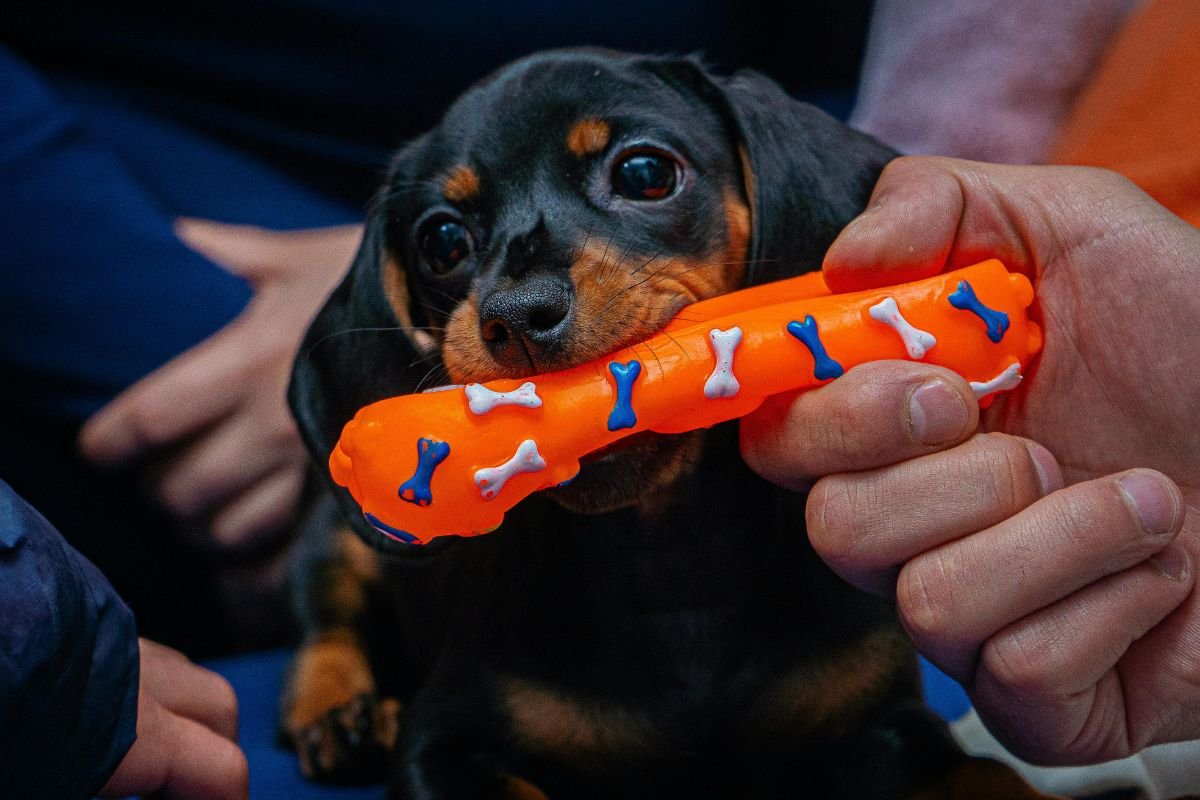
When your puppy starts biting hands, sleeves or trouser legs, try redirecting them towards more appropriate outlets such as toys and chews.
Let Gentle Behaviour Keep the Fun Going
Puppies quickly learn what keeps the fun going. If play regularly escalates into biting, calmly bring the interaction to a pause for a few moments.
This can help your puppy understand that rough play makes the fun stop, while calmer play keeps it going.
Rather than waiting until play gets out of hand, it can also help to build in short "cool down" periods. Scattering a few treats for your puppy to sniff out, offering an appropriate chew, or allowing them time to settle can help bring arousal levels back down before play resumes.
It's also important to think about the messages your puppy is receiving. Laughing, continuing to play, or accidentally turning biting into a game can make it difficult for your puppy to understand what's expected of them.
Reward the Good Choices
It’s easy to spend most of your time reacting to the behaviour you don't want, but try to look for opportunities to reward the behaviours you do want to see.
For example, if your puppy chooses to chew on a toy instead of grabbing your sleeve, you might praise them, offer a treat, or engage with them using that toy. Puppies tend to repeat behaviours that lead to positive outcomes.
Rest is Training Too
A well-rested puppy is often better able to cope with excitement, frustration, or new experiences than one who is running on empty.
An eight-week-old puppy can need as much as 18-20 hours of sleep per day, which means busy mornings of visitors, training and play can leave some puppies feeling overwhelmed and more likely to become bitey.
Just like children, puppies can accumulate a sleep debt. When this happens, they often become more excitable, impulsive and mouthy. What looks like a training problem can sometimes be a puppy who simply needs more rest.
In these situations, letting your puppy settle and rest can be more beneficial than trying to do more training.
When Should You Seek Professional Support?
While puppy biting is a normal part of development, there are times when extra support can make things easier. Professional guidance can help you understand what's driving the behaviour and how best to support your puppy.
Through my Puppy Training Programme, I help owners build calm, confident foundations from the start. Together, we'll focus on the real-life skills that matter most, helping your puppy learn how to settle, build confidence and cope with everyday life.
If you'd like support building calm, confident foundations with your puppy, I'd love to hear more about you and your puppy.
Learn more about my Puppy Training Programme, or tell me about your puppy, and I'll help you find the best next step.
Need personalised support for your dog?
If you're not sure where to start, my 1-1 Intro Training Session provides personalised guidance and a clear plan tailored to your dog.
Book Your First Session
About the Author
Vivienne Moore ACB-KSA, PCT-Ais a Certified Canine Behaviourist and Trainer based in Norfolk and the owner of Walkies Dog Behaviour & Training.
Vivienne specialises in helping dogs with fear, anxiety, reactivity, and everyday behaviour challenges using force-free, evidence-based methods. She understands the close relationship between behaviour and physical health and works alongside owners and their veterinary teams when appropriate.
Qualifications & Professional Memberships
Accredited Canine Behaviourist (ACB-KSA) – INTODogs
Professional Canine Trainer Accredited (PCT-A)
Level 5 Diploma in Canine Behaviour (Distinction)
UK Dog Behaviour & Training Charter
Vivienne offers behaviour consultations throughout Norfolk and online across the UK.
Need support with your dog's behaviour? Book a discovery call or get in touch to discuss how I can help.