Puppy Socialisation: Why Real-World Learning Matters
When we bring a puppy home, one of the first pieces of advice we often hear is that they need to be “socialised”.
We’re told to introduce them to lots of people, lots of dogs, and as many new experiences as possible while they are young.
While the intention behind this advice is good, socialisation is often misunderstood.
Puppyhood is not simply about exposure or interaction. It is about helping a young dog learn that the world around them is safe, predictable and manageable.
And sometimes, the most valuable learning happens when a puppy is simply allowed to pause, observe and make sense of the world at their own pace.
What Puppy Socialisation Really Means
When people hear the word socialisation, they often imagine puppies playing with other puppies or greeting every dog they encounter.
But behavioural science defines socialisation more broadly.
Socialisation is the process through which young animals learn about their environment and develop positive associations with the world around them (Scott & Fuller, 1965; Serpell & Jagoe, 1995).
That includes experiences such as:
encountering new environments
hearing different sounds
seeing people and animals at a distance
walking on different surfaces
observing movement and activity
Direct interaction can sometimes be part of this process, but it is not the only — or always the most important element.
Puppies Need Time to Observe and Process
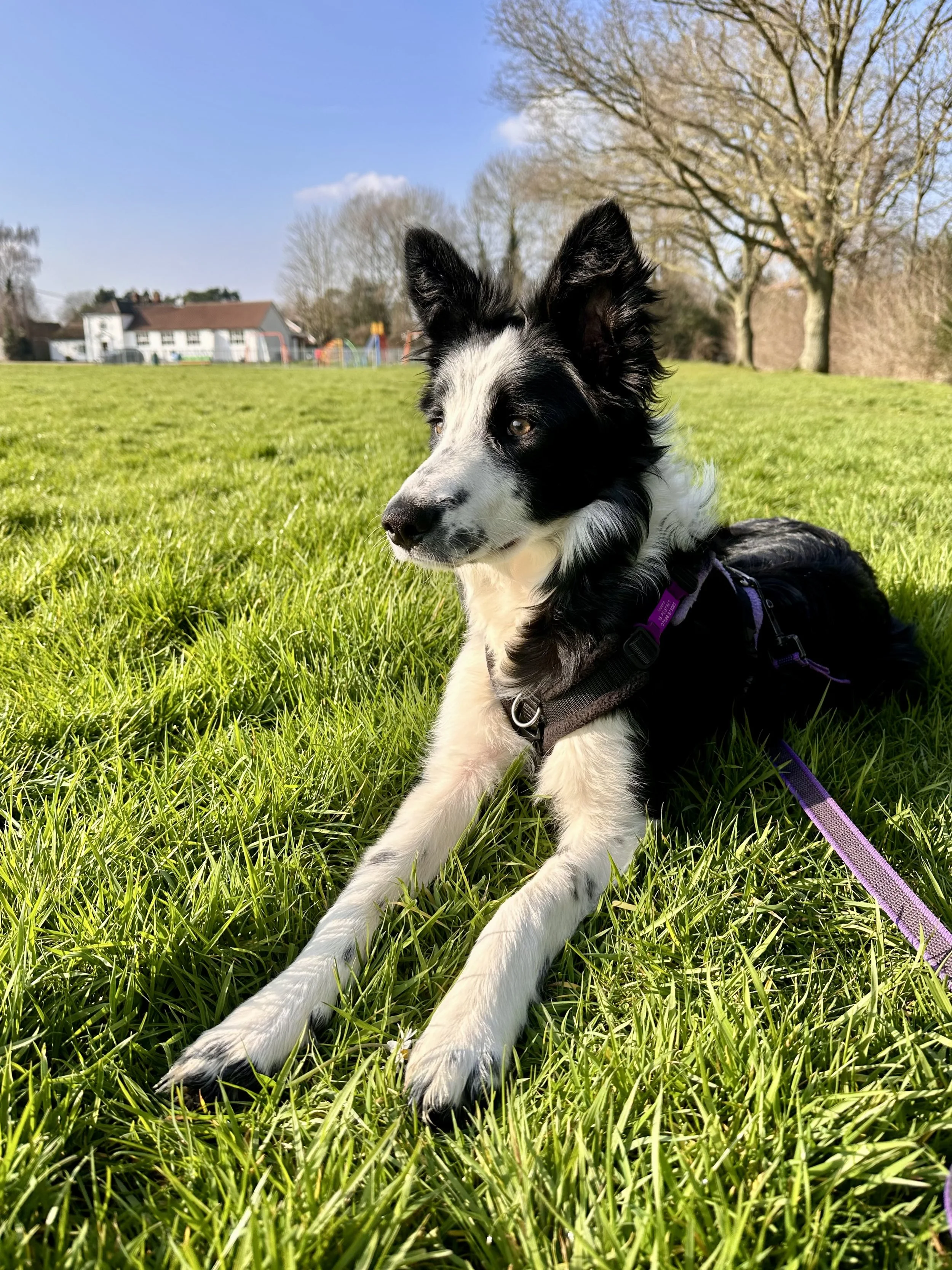
Photo showing puppy observing environment
One of the most overlooked aspects of puppy learning is observation.
When a puppy sits quietly watching the world — perhaps from a park bench or a comfortable distance — it can appear as though they are “doing nothing”.
In reality, they are learning a great deal.
Young dogs gather information through sight, sound and scent. When they are allowed to observe and process experiences at a distance where they feel safe, they can build calm and positive associations with what they see.
Learning tends to happen best when animals remain below their stress threshold, where curiosity and exploration are still possible. When arousal becomes too high, the ability to process information decreases — a principle supported by the Yerkes–Dodson law, which describes how excessive stimulation can reduce learning.
Allowing puppies to watch, sniff and explore in their own time supports this natural learning process.
Early Experiences Before Walks Begin
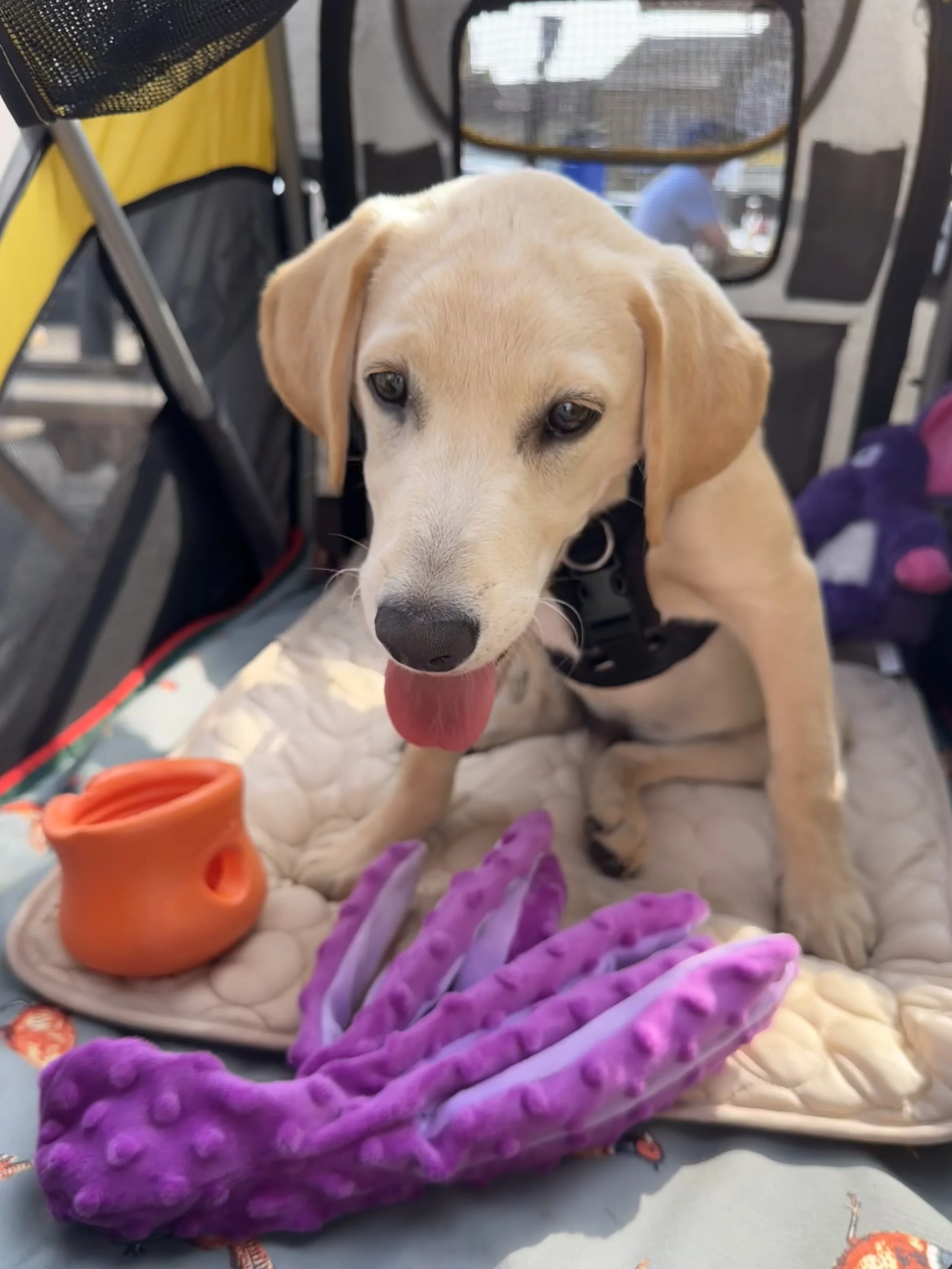
Puppy experiencing the world safely before vaccinations completed
One challenge for many new puppy guardians is that the early socialisation window occurs before puppies have completed their full course of vaccinations.
During this time, it is often still possible — and beneficial — for puppies to experience the world safely without walking on the ground in public areas.
Because this important developmental window occurs before puppies have completed their vaccinations, it can be helpful to find safe ways for puppies to observe the world rather than waiting until they are old enough to walk in public spaces. Carrying a puppy in your arms, using a puppy sling, a pet stroller, or sitting with them on a bench in a quiet park can allow them to observe new environments while remaining protected.
These gentle exposures give puppies the opportunity to see people, hear everyday sounds, watch other dogs and take in new surroundings at a distance where they feel safe.
Because puppies are not yet moving through the environment themselves, they often remain calmer and better able to process what they are seeing.
This type of supported observation can be a valuable way to begin introducing the wider world during the early socialisation period. Even when a puppy is simply watching the world from their owner’s arms, they are still learning.
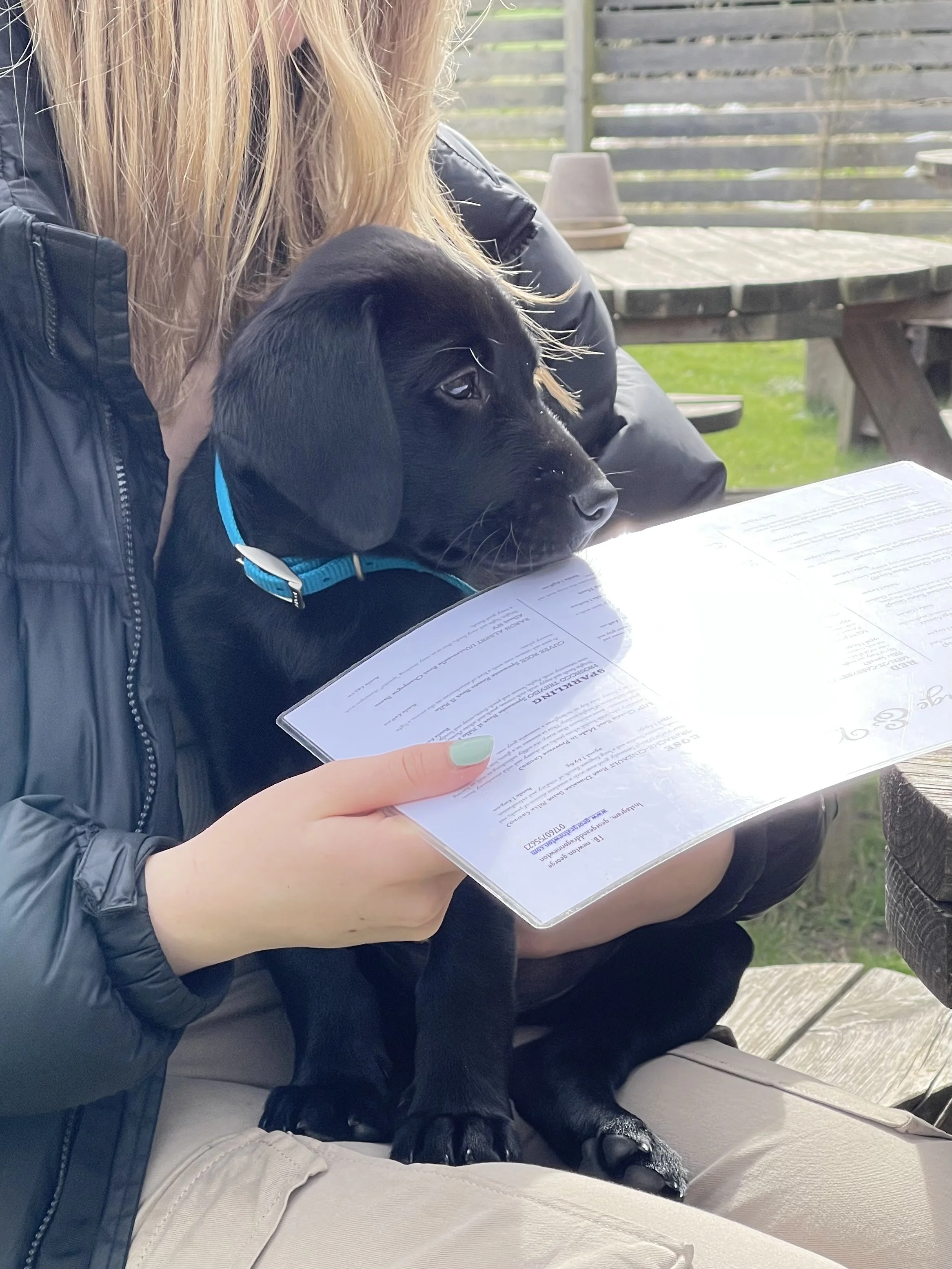
Puppy calmly observing environment during early socialisation
Puppies Can Be Magnets for Attention
Many puppy guardians I work with across Norfolk are surprised by how quickly their young dogs become the centre of attention when they venture out on walks.
Puppies are incredibly appealing. People often want to stop and greet them, and many dog owners will happily encourage their dogs to say hello too — usually with the best of intentions.
This enthusiasm comes from a genuine desire to help puppies “socialise”.
But for many young dogs, too many greetings in a short space of time can quickly become overwhelming.
Puppies are still learning how to process the world around them. Excitement, noise and close interactions can raise arousal levels very quickly. When a puppy becomes over-excited or overwhelmed, their ability to learn and process information drops significantly.
In those moments, what might look like socialisation can actually become overstimulation.
Do Puppies Need to Greet Lots of Dogs?
A common belief is that puppies need to greet as many dogs and people as possible in order to become well socialised. While the intention behind this advice is usually positive, behavioural science suggests that the quality of early experiences matters far more than the quantity (Scott & Fuller, 1965; Serpell & Jagoe, 1995).
Healthy socialisation is not about teaching puppies that every dog or person they encounter is an opportunity for interaction. Instead, it is about helping them learn that these things are simply part of the environment and can be observed calmly and safely.
When puppies repeatedly expect to greet every dog they see, they may begin to feel frustrated when access is not possible. Over time, this anticipation can contribute to behaviours such as pulling, barking or lunging towards other dogs.
By allowing puppies to watch other dogs from a comfortable distance, move away when they need space, and engage in natural behaviours such as sniffing and exploration, we help them develop a more relaxed and balanced understanding of their social world.
In many cases, the most valuable lesson a puppy can learn is not how to greet every dog — but how to feel calm in the presence of other dogs without needing to interact.
Why Sniffing Helps Puppies Learn
Sniffing is one of the primary ways dogs explore and interpret their environment. With a sense of smell far more powerful than our own, dogs gather enormous amounts of information through scent.
But sniffing does more than simply provide information.
Research has shown that allowing dogs to engage in scent exploration can actually influence their emotional state. In one study, dogs given opportunities for nosework showed a more optimistic outlook when interpreting new situations (Duranton & Horowitz, 2019).
For puppies, this means that time spent sniffing and exploring their surroundings can help them regulate their emotions, process new environments and build confidence.
Rather than being a distraction from learning, sniffing can be an important part of how young dogs make sense of the world.
When puppies are given time to sniff and observe, they are not avoiding learning — they are learning in a way that is natural for them.
Choosing the Right Environment for Your Puppy
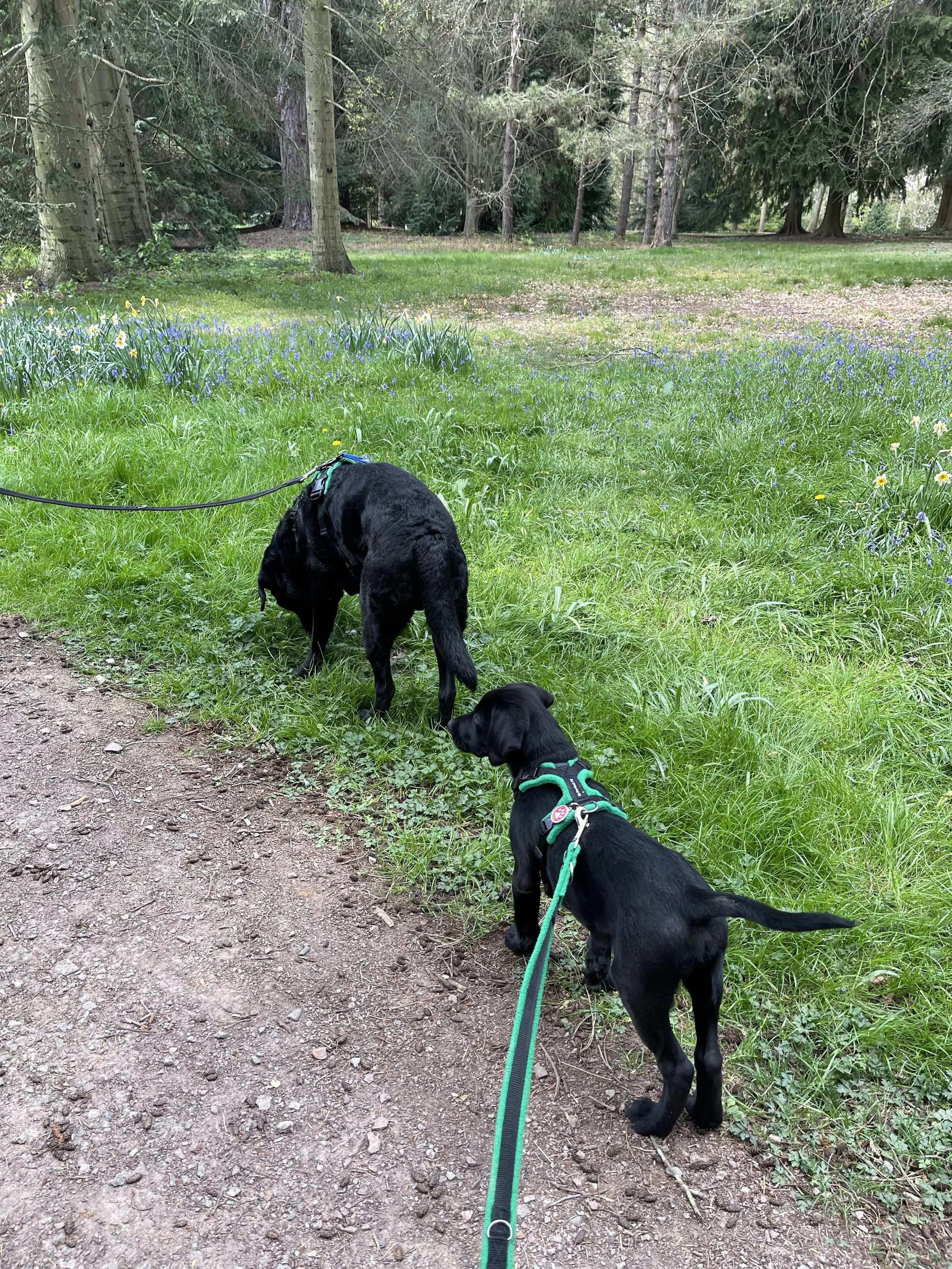
Puppy calmly observing the environment
Working in real-world environments can be incredibly valuable for puppies, but it is important to choose locations that match the puppy’s current level of confidence.
A quiet green space or a calm park bench can often be a far better starting point than a busy town centre or crowded café.
When a puppy is exposed to more activity than they can comfortably process, they may become overwhelmed. In that state, learning becomes much more difficult.
By starting in calmer locations and gradually increasing the level of challenge as the puppy gains confidence, we allow them to explore and learn at a pace that feels safe.
Watching a puppy’s body language — their curiosity, their comfort level and their ability to settle — helps guide decisions about when to move closer and when to give them more space.
Not All Puppies Learn at the Same Pace
Just like people, puppies vary enormously in their confidence, sensitivity and learning styles.
Some puppies are naturally bold and curious. Others are more cautious and thoughtful.
Expecting every puppy to cope with the same experiences at the same time can sometimes place unnecessary pressure on those who need more space.
Supporting puppies as individuals — adjusting distance, pacing and environment — allows them to build confidence gradually rather than feeling overwhelmed.
Socialisation is not a one-size-fits-all process.
Why Puppyhood Matters for the Future
Puppyhood is a brief but incredibly important stage of development.
During the early months of life, puppies are going through what behaviour scientists call a sensitive socialisation period, when their brains are particularly open to forming lasting impressions about the world around them (Scott & Fuller, 1965).
Experiences during this stage help shape how dogs respond to new environments, people and other animals later in life.
Positive, carefully supported experiences can help puppies grow into confident and adaptable adult dogs. But overwhelming or stressful experiences may contribute to fear, frustration or reactivity as dogs mature.
Many behavioural challenges that appear during adolescence — such as pulling towards other dogs or barking when they cannot reach them — can often be traced back to early emotional associations formed during puppyhood.
This is why thoughtful early guidance can make such a difference.
Supporting Puppies as They Learn About the World
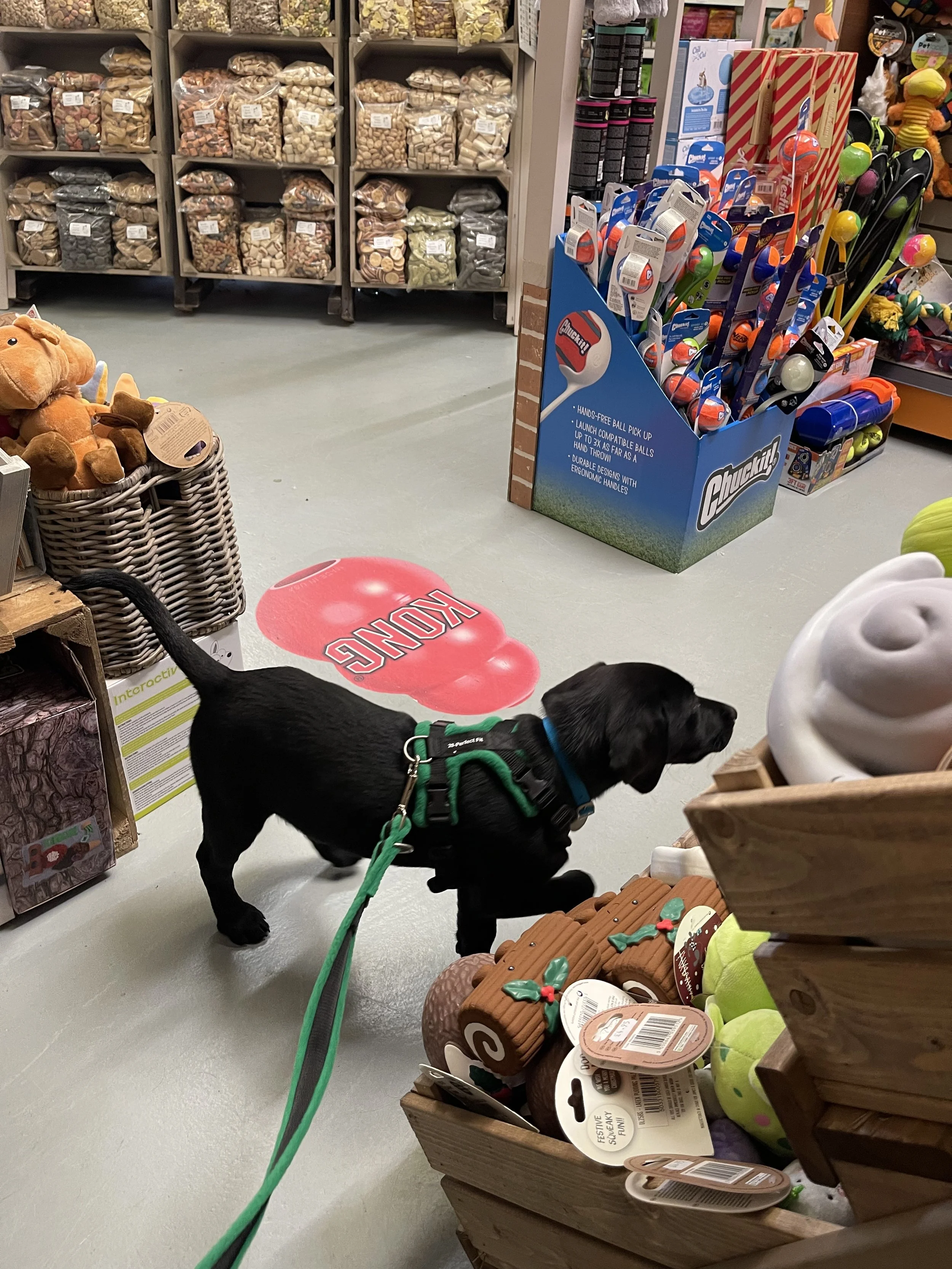
Puppy calmly exploring a new indoor environment
Puppyhood is not simply a stage to get through — it is the time when the foundations for adult behaviour are being built.
When puppies are given opportunities to explore environments at a pace that feels comfortable for them, confidence tends to grow naturally. Time to sniff, observe and process their surroundings helps them gather information and regulate their emotions.
Thoughtful socialisation doesn’t mean introducing puppies to everything all at once. Instead, it means carefully guiding their experiences so that each new encounter feels manageable and positive.
Sometimes that learning happens through interaction. At other times, it simply involves watching the world go by from a comfortable distance.
Supporting puppies in real-world environments — where they can explore, observe and learn at their own pace — can make a huge difference to how they experience the world as they grow.
Because the goal of puppy socialisation isn’t simply to create a sociable dog. It’s to help a young dog feel safe, confident and capable of navigating the world around them.
If you would like guidance supporting your puppy through these early stages, structured support can make a real difference. My Puppy Programme focuses on helping young dogs develop confidence in real-world environments while learning important foundation skills at a pace that suits the individual puppy. To get started, tell me a little about your puppy.
References
Scott, J. P., & Fuller, J. L. (1965). Genetics and the Social Behavior of the Dog.
Serpell, J., & Jagoe, J. (1995). Early experience and the development of behaviour. In The Domestic Dog.
Duranton, C., & Horowitz, A. (2019). Let me sniff! Nosework induces positive judgement bias in pet dogs. Applied Animal Behaviour Science.
Yerkes, R. M., & Dodson, J. D. (1908). The relation of strength of stimulus to rapidity of habit formation.
