How to Train a Reactive Dog
If you’ve landed on this page, the chances are you’re living with a dog who lunges, barks or growls on walks. You might be feeling embarrassed, exhausted, frustrated and perhaps a little hopeless, wondering whether your dog will ever not be reactive.
Can Reactive Dogs Be Trained?
The good news is that: Yes, a reactive dog can be trained. With the right techniques, a consistent approach, and a solid understanding of how dogs learn, significant change is possible. But it’s not about ‘quick fixes’. It’s about understanding them and supporting meaningful, lasting change.
In this article, we’ll explore what reactivity is, why it happens, and how you can support your dog with training that works. Looking for general strategies to help your reactive pup? Start with our post How Can I Help My Reactive Dog? Kind Strategies That Work and then come back for training-specific advice.
Why Do Dogs Become Reactive?
Reactivity in dogs can manifest as barking, lunging, growling or overexcitement when a dog encounters specific triggers such as other dogs, people, vehicles or unfamiliar sounds. While it may seem sudden or extreme, reactivity is usually a form of communication. Your dog isn’t deliberately being difficult — they’re expressing an underlying emotion, whether that’s discomfort, fear, frustration, unmet needs or a combination of these happening at once.
Fear & Past Experiences: If a dog has had limited socialisation or a frightening encounter, this can lead to a lasting fear response.
Frustration and Overarousal: Some dogs become reactive when they're unable to access something they're interested in, such as another dog or person. This is known as frustration-based reactivity, and it often affects dogs that are otherwise social.
Lack of Emotional Regulation or Training: Without guidance or consistent support, some dogs struggle to regulate their emotions - especially during adolescence. In fact, reactivity commonly begins during this developmental stage. At this time, the emotional centres in the brain are highly active, while the prefrontal cortex (responsible for decision making and impulse control) is still maturing. This can make it hard for them to stay calm in stimulating environments, and without support these heightened responses may become more established over time.
Sensory, Pain or Health Issues: Vision or hearing problems, joint pain or neurological conditions can make dogs feel more vulnerable, causing them to be more reactive.
How to Train a Reactive Dog
Once we understand why our dog is reacting, we can start thinking about practical ways to support them. Here are some of the approaches I use with my clients to support a reactive dog and create meaningful and lasting change.
1. Understand Why & Identify the Threshold
One of the most powerful shifts we can make is learning to notice what happens before the reaction. How close does a trigger need to be before your dog notices it? What does their body language look like just before they react? A lip lick, a yawn, a stiffening of the body or a sudden freeze can all be subtle signals.
Learning to read these subtle signals means you can act — whether that’s crossing the road, doing a U-turn, or creating more space — so your dog stays calm enough to learn and respond differently. Creating space isn’t about avoiding the world — it’s about giving your dog the distance they need to stay calm enough for learning to take place.
Before we can build new responses, we need to reduce opportunities for the old reaction to be rehearsed. Every time your dog reacts, the neural pathway for that response is strengthened. Over time, it becomes their automatic go-to pattern. Working under threshold means keeping your dog far enough from the trigger that they can notice it without becoming overwhelmed. At this distance they are still able to think, learn and respond differently. That’s where real training begins.
How close can a trigger get before your dog reacts? Find that distance, and this is your starting point.
Take our client Catherine’s experience. She said that through our reactivity programme, they learned to read their dog’s body language and know when to give him space before he is overwhelmed by nearby dogs. As a result, “his reactivity now isn’t anywhere near as bad as it was when we started.” Learning to spot the trigger early is the first step to making it work.

2. Start in a Safe Space
Start in a safe space and build from there. When we begin working with a reactive dog, we want to set them up for success. If that means choosing a space with no unexpected surprises to start with, great! There’s no harm in that.
On our Reactive Dog Training Programme, we begin our work together at my training paddock in Norfolk. However, a suitable starting point might also be any low-distraction location where your dog feels safe.
This gives your dog the chance to learn without feeling overwhelmed. You can practise new skills, build focus and engagement, and help your dog experience triggers at a distance where they feel completely safe. Once those foundations are solid, you can gradually move into more challenging locations.
This approach ensures your dog can take their new skills and apply them anywhere.
3. Use Counter-Conditioning and Gradual Desensitisation
Counter-conditioning simply means changing how your dog feels about their triggers. Desensitisation is the process of doing this slowly, over time, based on your dog’s individual needs.
Desensitisation is a behaviour modification technique in which an animal is gradually and systematically exposed to a trigger at a level they are comfortable with, so that over time their emotional response becomes less intense and counterconditioning which involves pairing the trigger with something your dog already loves (such as food or play), so that the emotional meaning of the trigger begins to change.
In other words, you pair the appearance of a trigger at a safe distance with something positive, such as a treat, to change their reaction. As a dog behaviourist, I would start with triggers at a distance where your dog feels safe, and we would very slowly, over multiple sessions and only once your dog is consistently relaxed would we very gradually reduce the distance or increase the level of challenge.
You are teaching your dog a new automatic association: Thing I used to worry about = Amazing things happen to me. This doesn’t ask our dog to follow commands (“stay” or “sit”) but instead to feel more positive, and therefore react less.
4. Incorporate ACE Free Work
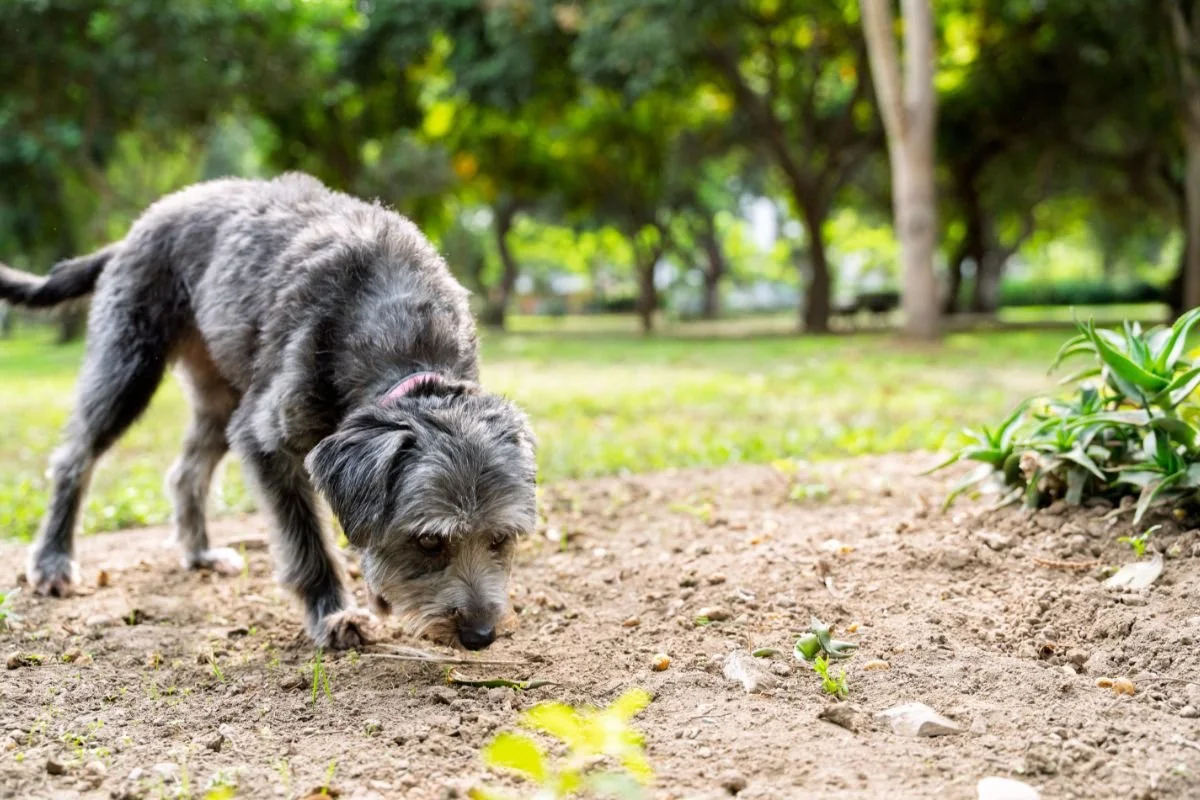
One of the approaches I use with reactive dogs, as an ACE Certified Trainer, is ACE Free Work, developed by Sarah Fisher, founder of Animal Centred Education. Free Work gives dogs the opportunity to explore a variety of sensory items at their own pace, with no demands placed upon them. Free Work is enriching in its own right, with physical wellbeing forming an important component. It can help to lower stress levels, enhance posture and balance, and promote a wider range of natural movement patterns. Free Work also helps to engage the seeking system, meet a dog's natural desire to be curious, and supports the dog's internal environment by helping them to release body tension, reset, and relax.
5. Meet Their Other Needs
Reactivity isn't always just about triggers. Sometimes, other factors are at play that can cause reactive behaviours, such as:
Sleep and Rest: Dogs, especially adolescent and elderly dogs, need a surprising amount of sleep. If your dog is constantly "on” or having trouble sleeping, this could be impacting their behaviour.
Diet: What we feed our dogs matters. A high-quality diet, tailored to your dog's individual needs, supports stable mood and energy levels.
Underlying Pain or Discomfort: Physical discomfort can influence behaviour. If your dog's behaviour has suddenly changed, please consult your vet first to rule out any underlying medical issues.
Enrichment: Dogs experience and interpret the world primarily through their nose. Opportunities to sniff, forage, explore and engage in species-appropriate behaviours aren’t ‘extras’ — they’re essential for emotional wellbeing. When dogs regularly use their brains and bodies in ways that feel natural to them, they are better able to regulate their nervous system and cope with everyday challenges.
When these foundational needs are consistently met — rest, nutrition, enrichment and physical comfort — dogs are better able to process their environment, recover from stress and access calmer, more flexible responses. Reactivity doesn’t disappear overnight, but resilience grows.
6. Focus on Progress, Not Perfection
Reactivity training isn't linear. There will be good days and bad days, and that's to be expected. Remember that the goal isn't a dog who never notices another dog. The goal is a dog who can notice, check in with you, and carry on with their walk.
Progress doesn’t always mean your dog suddenly stops reacting. More often, it shows up in subtler but powerful ways — softer body language, quicker recovery after a trigger, fewer stress behaviours once you’re home, and a growing ability to disengage and make different choices. These changes matter. They tell us your dog’s nervous system is becoming better regulated.
Read our guide How to Tell If Your Reactive Dog is Coping on Walks for more on this. Again, “coping” doesn’t mean your dog never reacts, but it does mean your dog is emotionally regulated enough to make choices and recover after challenges.
How Walkies Can Help
If you’re feeling stuck, overwhelmed, or unsure where to start, you don’t have to figure it out alone. I’m Vivienne, an Accredited Canine Behaviourist (ACB-KSA) with The Association of INTODogs, holding an Enhanced Level 5 Qualification in Canine Behaviour and I’d love to help you. Start by telling me about your dog.
My approach is kind, holistic, and evidence-led, with practical support tailored to your dog — from carefully managed training spaces through to structured real-life walks and everyday environments. I offer Dog Behaviour Consultations & Training and 1-1 Support across Breckland and West Norfolk, including programmes for reactive and rescue dogs and puppies.
Book a free discovery call to discuss your dog’s specific challenges, or sign up for the Reactivity Programme to take the first step towards calmer, more manageable walks.
