Resource Guarding in Dogs: Why It Happens and How to Help
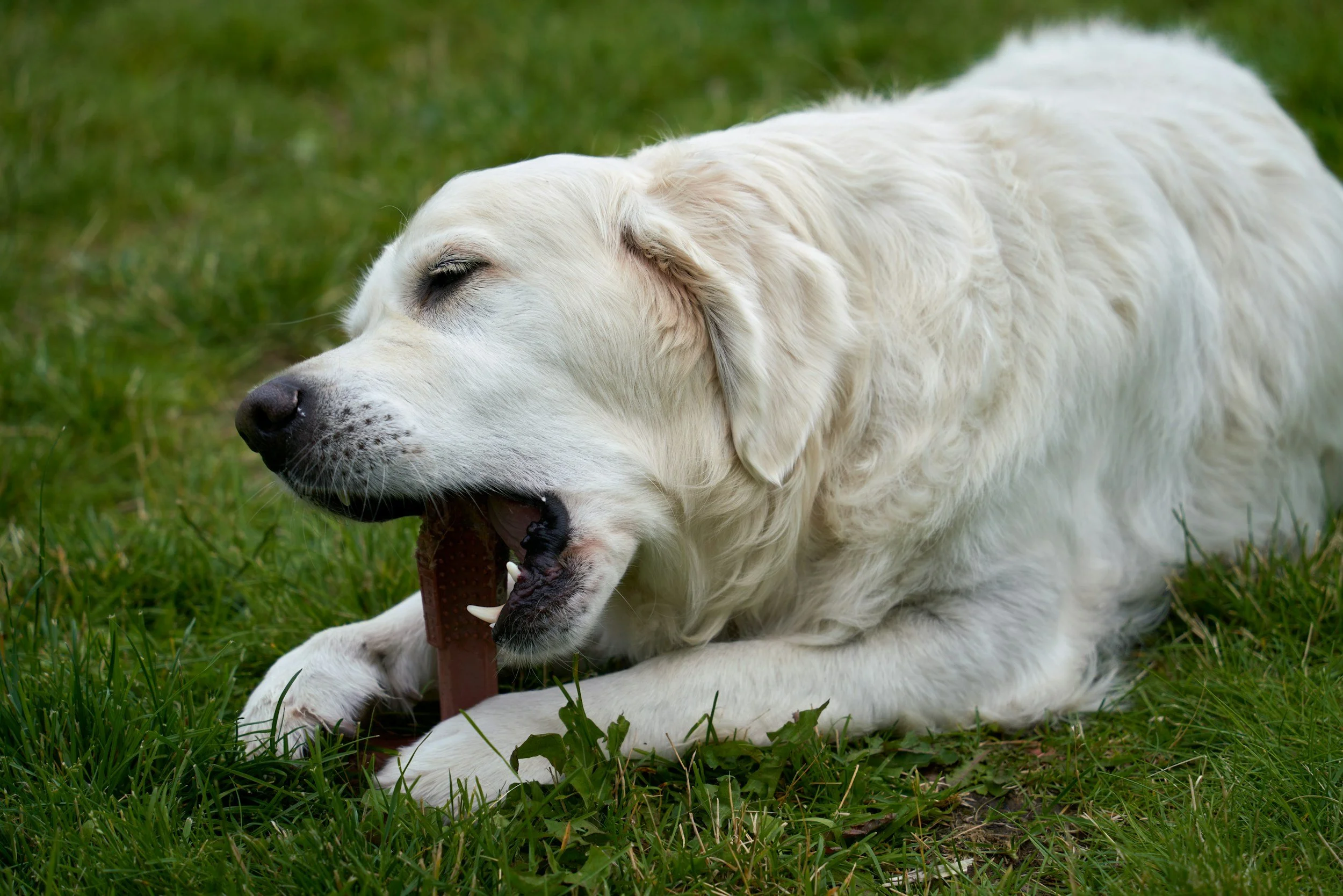
Resource guarding is one of those behaviours that can feel worrying — and understandably so.
It might look like:
A growl over a food bowl
A dog stiffening when someone approaches
Picking up an item and moving away
Tension around toys, chews, or resting spaces
But before we label it as a “problem behaviour”, it’s important to understand what’s happening underneath.
Resource Guarding is Communication
At its core, resource guarding is not about dominance, stubbornness, or a dog trying to be “in charge”.
It is:
A dog communicating that something they value doesn’t feel safe to lose.
That resource might be food, chews, toys, a bed or resting space, or even a person.
When a dog feels uncertain about whether that resource will be taken away, their behaviour shifts to protect it.
Resource guarding occurs when a dog attempts to maintain access to something they value. This might be food, toys, chews, resting places, stolen items, or even people. The behaviour exists on a spectrum and can range from subtle avoidance through to growling, snapping or biting.
What Does Resource Guarding Look Like?
Resource guarding doesn’t always start with a growl.
In fact, many of the early signs are subtle and often missed:
Pausing or freezing
Eating more quickly
Turning their body away
Hovering over an item
Quiet tension in the body
A growl is often a later-stage signal — and a very important one.
A growl is communication, not disobedience.
The Importance of Reading Body Language
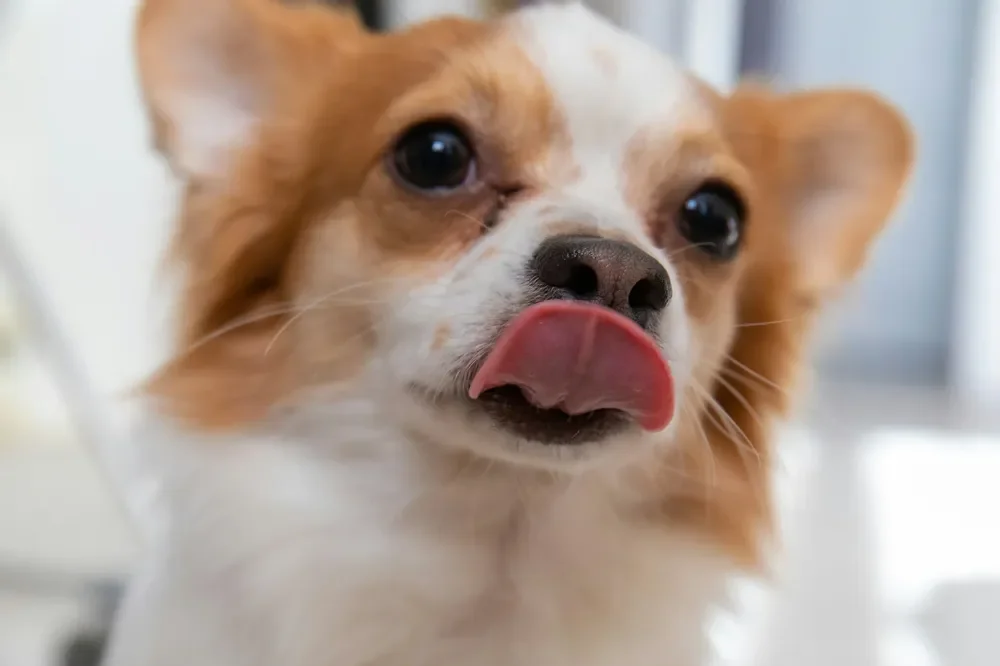
This dog is showing signs of stress - a flick of the tongue / lip lick is a stress signal in dogs.
One of the most important skills we can develop as dog guardians is learning to recognise these early, subtle signs.
Dogs rarely go straight to a growl without first showing quieter signals that they are uncomfortable.
By noticing changes such as stillness, hesitation, increased speed around food, turning away, blocking access, or subtle tension in the body, we can step in early, reduce pressure, and prevent the situation from escalating.
The earlier we listen, the less the dog needs to shout.
You can learn more about recognising these signals in my guide to canine body language here.
Why Resource Guarding Develops
Resource guarding is driven by emotion, not bad behaviour.
There are several common contributing factors.
Past experiences
Dogs who have had items taken away unpredictably can learn that they need to hold onto what they have.
This can often begin in puppyhood.
It’s very common for puppies to pick things up and explore the world with their mouths. In response, people may frequently take items away, sometimes quickly or repeatedly, without meaning any harm.
Over time, this can teach the puppy that when they have something, it gets taken away.
Many breeds are also genetically predisposed to picking up, carrying, and holding items, particularly gundog and retriever types. For these dogs, carrying objects is a very natural and rewarding behaviour. If those items are repeatedly removed, it can feel confusing and frustrating, and may increase their need to hold onto things more tightly.
What starts as normal puppy behaviour can, over time, contribute to a dog feeling the need to protect what they have.
This is something we focus on from the very beginning in my puppy programmes, helping puppies feel safe around their resources and build trust from the start.
Natural behaviour
Guarding is a normal, adaptive survival behaviour. Dogs are naturally inclined to value important resources.
Uncertainty and lack of control
If a dog does not feel safe or their environment does not feel predictable, they may try to control what they can.
Multi-dog households
Competition, whether real or perceived, can increase the need to guard.
Pain or physical discomfort
This is an important and often overlooked factor.
If a dog is experiencing pain or discomfort, their tolerance for being approached or disturbed can be much lower. Something that would usually feel manageable may suddenly feel threatening.
In these cases, guarding can be a way of saying that they cannot cope in that moment.
This is particularly relevant for dogs with orthopaedic conditions, gastrointestinal discomfort, skin sensitivities, or any ongoing or undiagnosed pain.
When pain is part of the picture, behaviour work alone is not enough. If pain or discomfort is suspected, behaviour work alone will not resolve the issue. A veterinary assessment is essential to investigate and address any underlying physical causes.
What Not to Do
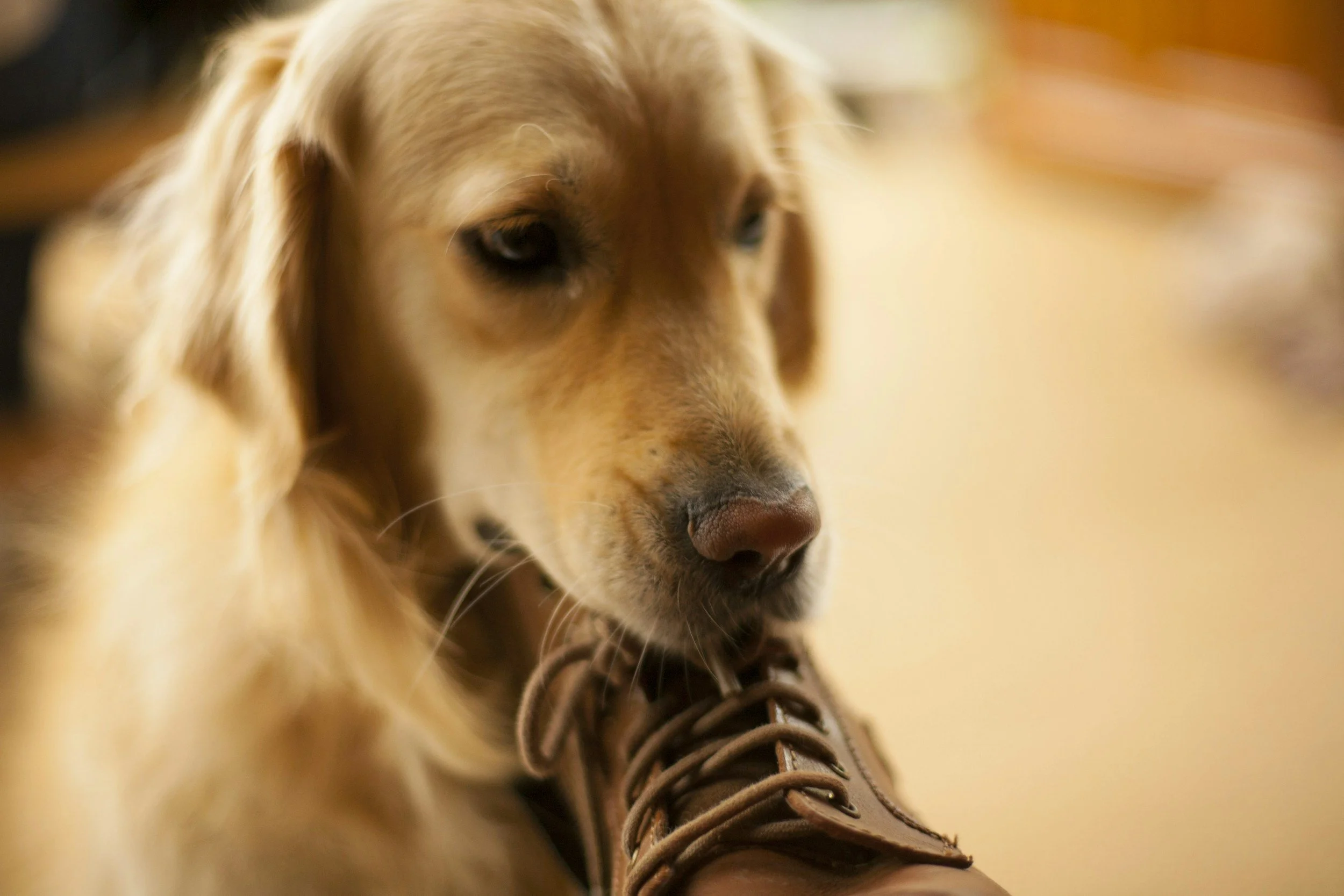
Well-meaning advice can sometimes make resource guarding worse.
Avoid taking items away suddenly, punishing growling, trying to show the dog who is in charge, or repeatedly interfering with food bowls.
It is very common for people to quickly reach in and take something from a dog’s mouth, especially if it is something unpleasant, or something they do not want the dog to have. Even when a dog tolerates this, each of these interactions has an effect.
Over time, the dog may learn that when they have something, it gets taken away.
This can gradually erode trust and increase the dog’s need to hold onto items more tightly. In some cases, it can lead to dogs becoming more guarded around resources, moving away with items, or swallowing things more quickly rather than giving them up.
While the intention is to keep the dog safe, repeated removals can unintentionally increase the urgency and intensity of the behaviour.
Our dogs learn from every interaction we have with them. Being careful, fair, and consistent helps build trust, and trust is at the heart of reducing behaviours like resource guarding.
Where possible, focusing on calm communication, safe exchanges, and thoughtful management will support both your dog’s safety and your relationship with them.
Dogs and Children: Safety Matters
This is especially important in family homes.
Dogs should always be able to eat in peace, enjoy chews without interruption, and rest without being disturbed.
Children should be gently guided to understand that when a dog has something valuable, they should be left alone.
This is not about restricting interaction. It is about creating safety and trust for both the dog and the child.
By setting clear boundaries around resources, we can prevent situations where a dog feels they need to guard in the first place.
As a Kids Around Dogs (KAD) Approved Professional, I support families in creating safe, positive interactions between children and dogs, helping to reduce the risk of situations like this developing.
What Helps Instead
Build trust through calm, predictable interactions. A trusting relationship is at the heart of reducing resource guarding. Dogs learn through experience, so when interactions around resources are calm, consistent, and positive, their need to protect those items reduces.
Build positive associations. Help your dog learn that when people approach, good things happen. This might include walking past and dropping extra food or adding value rather than removing it. However, if your dog is showing more significant or intense resource guarding, this should not be attempted without professional guidance. Approaching too closely or working too quickly can increase pressure and make the behaviour worse. In these cases, distance, safety, and a structured plan are essential.
Avoid unnecessary conflict. We must be careful not to push dogs into situations where they feel they need to defend themselves. If your dog has something, give space, avoid confrontation, and manage calmly.
Use exchanges, not removals. Teach your dog that giving something up leads to something better. This builds cooperation and trust rather than conflict.
Support the underlying emotion. We are not just changing behaviour. We are helping the dog feel safer around their resources.
A Behaviourist Perspective
As behaviourists, we must always consider the full picture.
Resource guarding is often linked to dogs who are more sensitive or anxious, who feel uncertain in their environment, or whose nervous system is under increased load. In many cases, physical discomfort may also play a role.
Behaviour does not exist in isolation from the body or environment.
The goal is not simply to stop guarding. It is to reduce the need for the dog to guard in the first place.
When to Seek Professional Support
If your dog is showing signs of resource guarding, it is important to seek support from a qualified behaviourist.
A behaviourist will look at the full picture, identify the underlying reasons for the behaviour, create a tailored and safe treatment plan, and support you in building a calmer, more trusting relationship with your dog.
Resource guarding is very workable, but it needs to be approached carefully and thoughtfully.
Need Support?
If you are dealing with resource guarding and are not sure where to start, you are not alone.
If you’re based in Swaffham, Dereham, Fakenham, Kings Lynn or the surrounding areas, I offer professional behaviour support tailored to your dog and your individual situation. You can find out more about working with me here or simply tell me about your dog.
