Why Does My Dog Lie Down and Stare at Other Dogs?
Understanding why dogs lie down and stare on walks
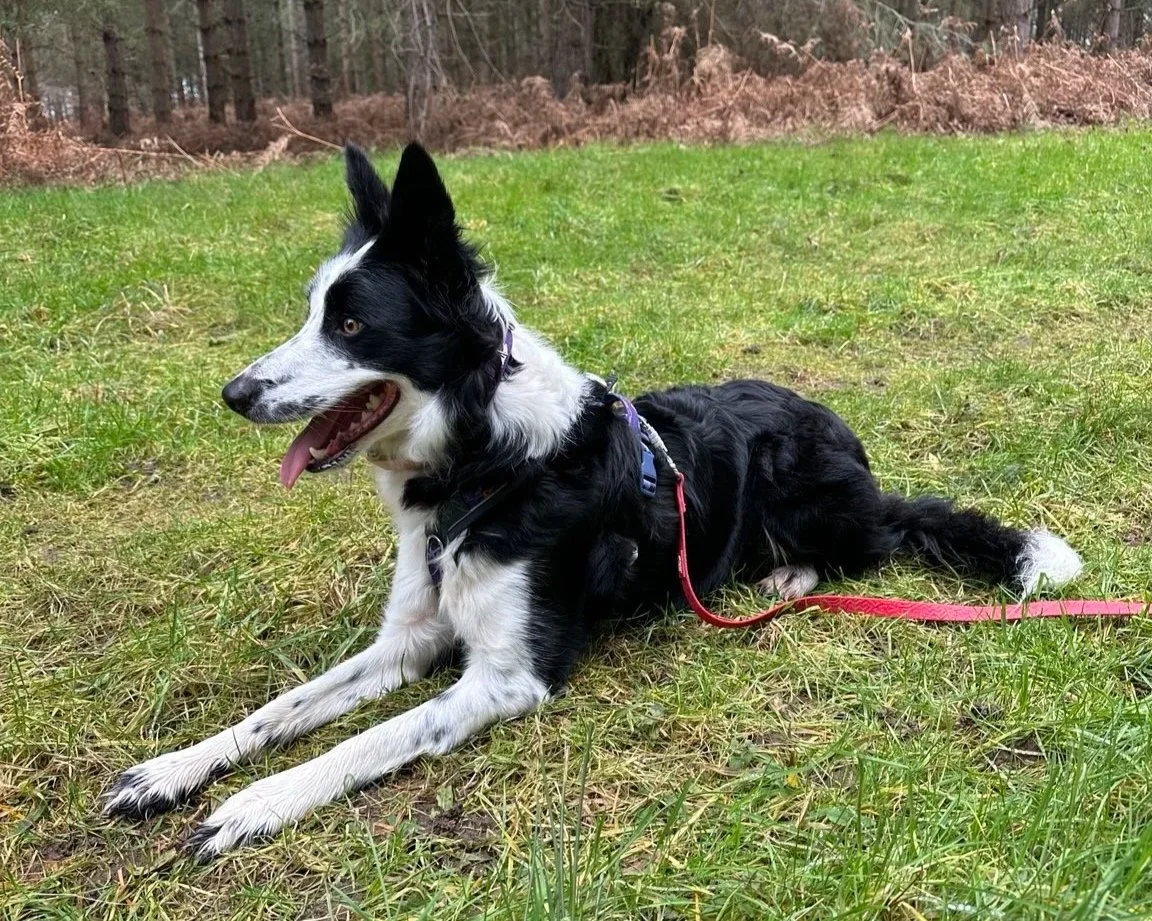
Few things puzzle owners more than seeing their dog suddenly stop on a walk, lie down, and stare intensely at another dog.
Sometimes they refuse to move.
Sometimes they seem completely fixated.
Sometimes they lie quietly and wait.
Other times, what starts as a calm-looking pause ends with barking, lunging, or frantic pulling on the lead.
Owners often describe it as:
"He just locks on and won't listen."
"She lies down and waits for the other dog to come closer."
"It's like he forgets I exist once he's spotted another dog."
While the behaviour may look similar from the outside, the reasons behind it can be surprisingly different. Understanding what your dog is feeling is often far more important than focusing on the behaviour itself.
Some dogs do this around other dogs, while others may lie down when they spot familiar people approaching. Although the behaviour can look similar, the emotions driving it are not always the same.
Lying Down and Staring Is a Behaviour, Not an Emotion
One of the most important things to understand is that lying down and staring does not tell us how a dog feels.
It simply tells us what they are doing.
Different emotions can produce very similar behaviours.
One dog may lie down because they are excited and hoping to greet.
Another may be gathering information.
A third may be worried.
A fourth may be experiencing a mixture of all three.
This is why behaviour professionals spend so much time looking at context, body language, history and what happens next rather than making assumptions based on a single behaviour.
Could It Be Herding Behaviour?
For some dogs, particularly herding breeds such as Border Collies, Australian Shepherds and Kelpies, genetics may play a role.
Many herding breeds have been selectively bred to orient towards movement, watch carefully, stalk and control the movement of livestock. Border Collies are particularly well known for their intense "eye" when working sheep.
As a result, some dogs naturally find moving dogs, people, cyclists or wildlife difficult to ignore.
However, it is important not to assume that every dog who lies down and stares is trying to herd.
Many Collies who display this behaviour are not attempting to herd at all. Instead, they may be experiencing frustration, anticipation, uncertainty or concern. Their breed may influence how the behaviour looks, but it does not automatically tell us why it is happening.
Has Lying Down Become Part of the Greeting Routine?
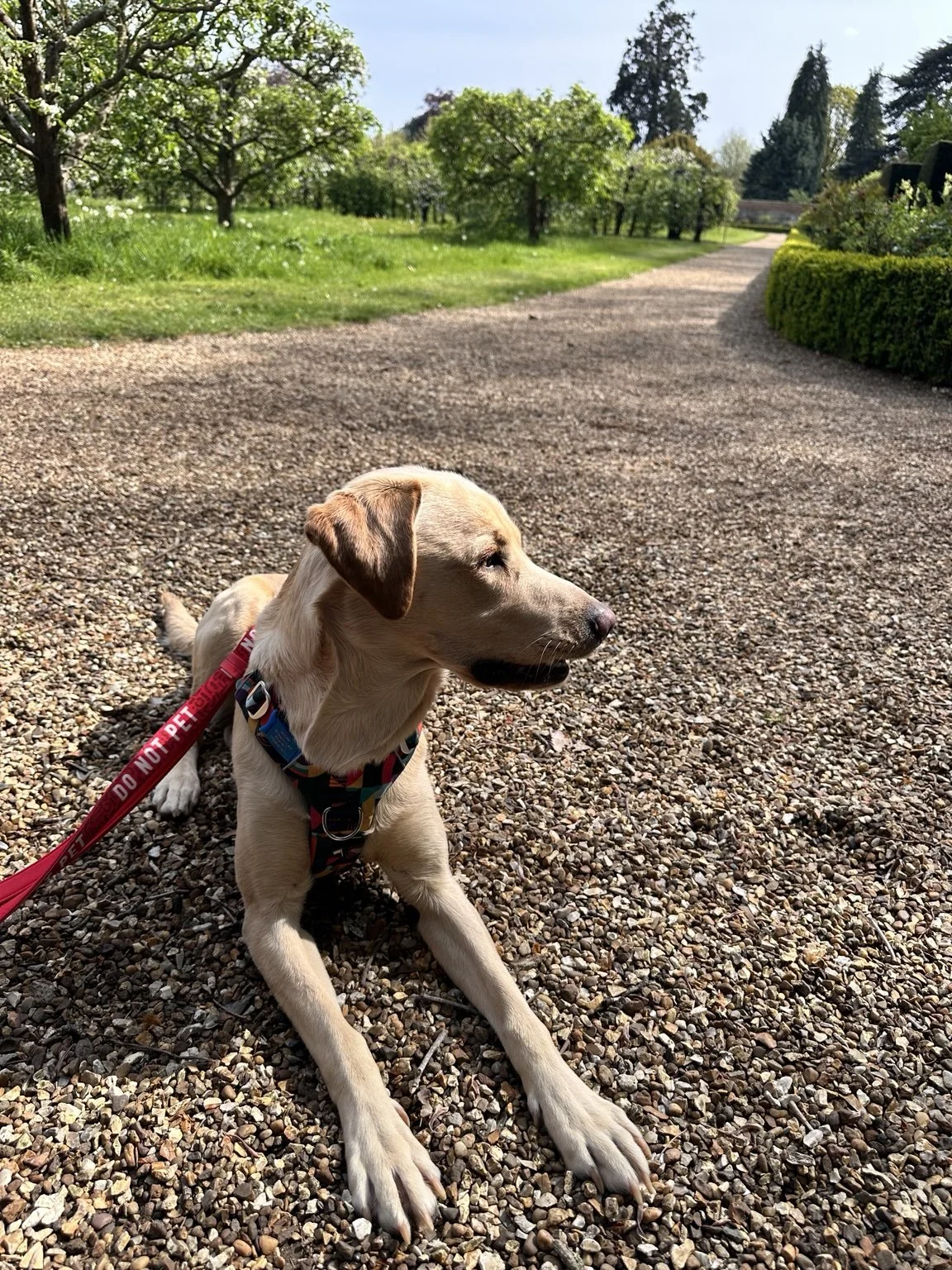
This is one of the most common patterns I see in practice.
Many dogs learn from a young age that seeing another dog often leads to interaction.
Well-meaning owners are often encouraged to socialise puppies through frequent interactions with other dogs and people. While positive social experiences can be valuable, some puppies begin to develop a strong expectation:
Dog appears → I get to go and say hello.
Over time, the dog may start to lie down and wait.
The sequence becomes:
Spot dog → lie down → wait → greeting happens.
From the dog's perspective, the strategy works.
The other dog eventually arrives.
The interaction takes place.
The behaviour is reinforced.
This behaviour often becomes more noticeable during adolescence as social interests, confidence and emotional regulation continue to develop.
This doesn't just happen with other dogs. Some dogs will also lie down when they spot familiar people because they have learned that waiting often leads to social interaction.
Interestingly, some dogs continue to perform this behaviour even when they no longer particularly enjoy greetings.
As they mature, they may become more selective, more sensitive or less comfortable with social interaction. However, the expectation remains, creating conflict between what they expect to happen and how they actually feel about it.
Frustration and Anticipation
Closely linked to greeting expectations is frustration.
Many dogs become highly invested in what is happening ahead of them.
They can see the dog.
They are waiting.
They are anticipating.
Their emotional arousal begins to build.
The longer they wait, the more significant the approaching dog becomes.
If the greeting does not happen, frustration may develop.
This is one reason why some dogs appear calm while staring but then suddenly bark, whine, lunge or pull.
The stillness can be misleading because stillness does not always indicate calmness.
A dog can appear calm on the outside while experiencing significant emotional arousal on the inside.
Externally, the dog appears settled.
Internally, anticipation and arousal may be steadily increasing.
In some cases, training exercises can unintentionally contribute to the pattern. Owners are often encouraged to ask their dog to sit and wait while another dog passes. While this may work well for some dogs, others become increasingly focused on the approaching dog. Instead of learning to disengage, they may spend the entire time watching, waiting and building anticipation. Over time, the dog can begin to associate seeing another dog with stopping, staring and becoming emotionally invested in what happens next.
For these dogs, encouraging movement, creating distance or helping them briefly notice and then disengage from the trigger may be more helpful than asking them to remain stationary.
Neuroscientist Jaak Panksepp's work on emotion and motivation helps explain why anticipated rewards can become so powerful. His research suggests that animals have emotional systems that drive them to seek out things they find important or rewarding. For some dogs, social interaction can become highly significant, making it difficult to disengage once they have noticed another dog.
Sometimes Dogs Are Gathering Information
Not every dog who lies down is hoping to greet.
Some dogs simply need more time to process what they are seeing.
Environmentally sensitive dogs often spend longer observing their surroundings before making decisions.
Rather than rushing towards a situation, they pause and gather information.
They may be asking themselves:
Who is that dog?
Are they approaching me?
What are they doing?
Do I need to be concerned?
For these dogs, staring may reflect information gathering rather than social motivation.
Conflict: "I Want to Know More, But I'm Not Sure"
One of the most overlooked explanations is conflict.
Many dogs appear caught between competing motivations.
Part of them may want to approach.
Part of them may feel uncertain.
Part of them may want information.
Part of them may prefer more distance.
When dogs experience conflicting motivations, behaviour can become slower, more hesitant and more difficult to interpret.
The dog may freeze.
They may stare.
They may struggle to make a decision.
Then, when the pressure increases, they may suddenly react.
This is particularly common in adolescent dogs and dogs whose social preferences are changing as they mature.
The Role of Leads and Restricted Choice
Lead walking changes the way dogs interact with their environment.
When off lead, dogs can naturally create space, move away, approach in an arc, slow down, speed up or choose not to interact at all.
On lead, many of those options disappear.
This lack of choice can increase both frustration and concern.
A dog who wants to approach may become frustrated when prevented from doing so.
A dog who would prefer more distance may feel trapped.
This is one reason why some dogs appear much more comfortable around other dogs when off lead than when attached to a lead.
Fear and Social Concern
For some dogs, lying down and staring is associated with concern about the approaching dog.
In some cases, lying down may function as an appeasement signal, helping the dog appear smaller, less threatening or less confrontational.
Rather than preparing to greet, they may be assessing a potential threat.
Rather than preparing to greet, they may be assessing a potential threat.
Signs that fear or uncertainty may be contributing include:
A closed mouth
A tense body
Weight shifted backwards
Difficulty taking food
Reluctance to move
Increased vigilance
If the other dog continues to approach and the dog feels unable to create distance, barking or lunging may follow.
In these situations, the behaviour may function as an attempt to increase space rather than initiate interaction.
Could Pain or Physical Discomfort Play a Role?
Behaviour is never separate from physical wellbeing.
Increasingly, research and clinical experience highlight the close relationship between physical health, emotional wellbeing and behaviour.
Dogs experiencing pain may become more vigilant, less tolerant of social interactions and more concerned about approaching dogs. They may feel physically vulnerable, worry about being bumped into, or struggle to move comfortably away from situations.
This does not mean pain is the cause in every case. However, if the behaviour has appeared suddenly, worsened over time, or is accompanied by other behavioural changes, a veterinary assessment is always worthwhile.
Why Does It Often End in Barking or Lunging?
Owners are often confused because their dog appears calm while lying down.
However, the behaviour we see is often only one part of a much longer sequence.
The dog notices another dog.
They focus.
They wait.
Their emotional investment grows.
Distance closes.
Arousal increases.
Eventually they reach a point where they can no longer cope effectively.
Barking, lunging, spinning or vocalising may simply be the final stage of that process.
Why Does It Keep Happening?
Behaviour that works tends to be repeated.
If lying down consistently leads to:
Information
Social interaction
Relief
Increased distance
Emotional release
then the behaviour is likely to occur again.
Over time the sequence becomes increasingly well rehearsed.
The brain becomes more efficient at performing it.
This is why early intervention and preventing repeated rehearsal can be so helpful.
What Can You Do?
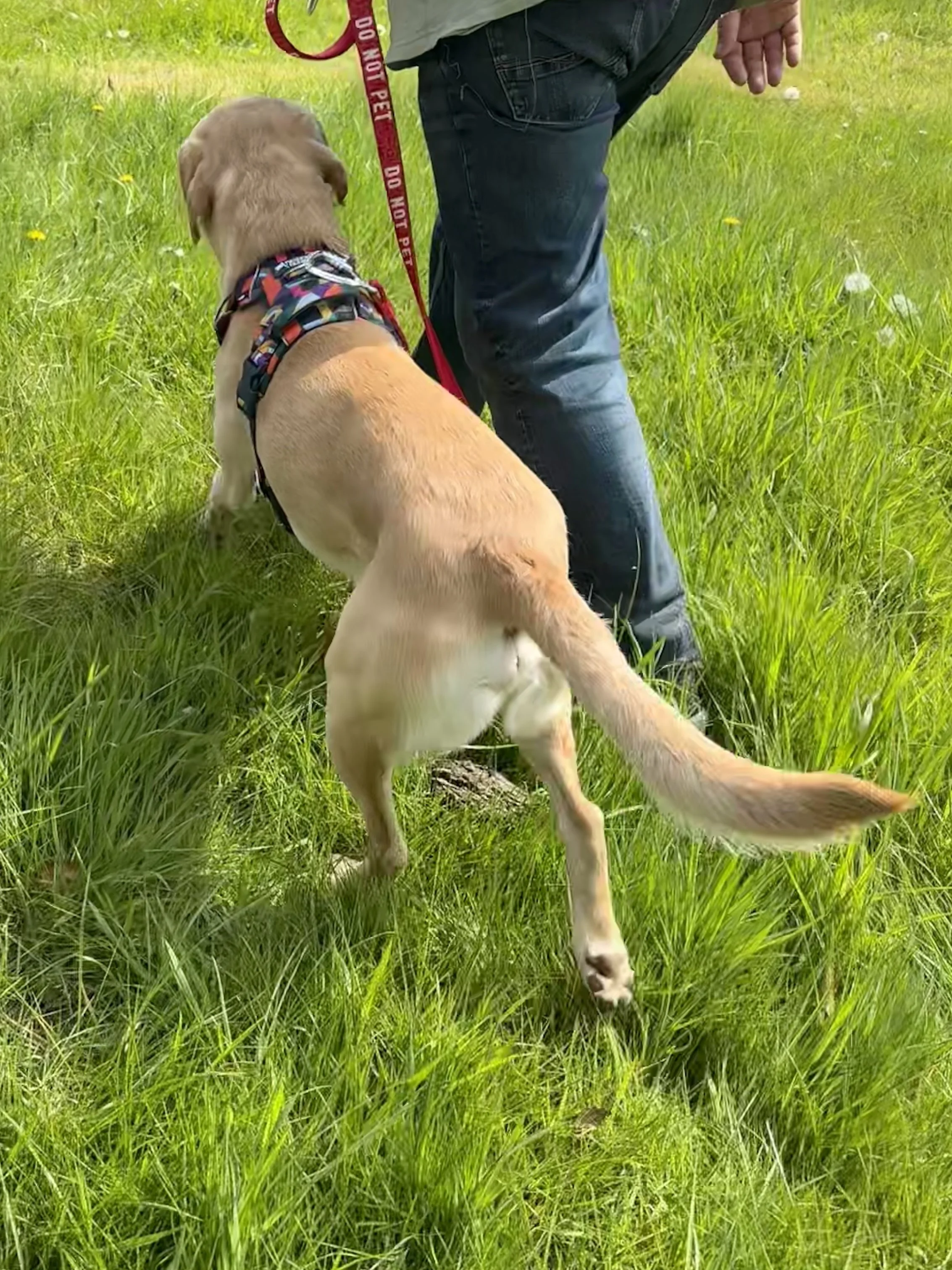
For many dogs, the goal is not to stop them noticing other dogs, but to help them stay engaged, moving and able to process the environment without becoming stuck.
Rather than waiting until your dog is fully fixated, try to intervene earlier.
Helpful strategies include:
Increasing distance before fixation develops.
Reinforcing brief glances rather than prolonged staring.
Encouraging movement before your dog becomes stuck.
Reducing opportunities to rehearse the full sequence.
Supporting your dog at a distance where they can still think and respond.
Seeking professional support if the behaviour is escalating or becoming difficult to manage.
Most importantly, try to understand the emotion driving the behaviour rather than focusing solely on stopping the behaviour itself.
Final Thoughts
Lying down and staring at other dogs is not a diagnosis.
Two dogs may show identical behaviour for completely different reasons.
For one dog, it may reflect anticipation and excitement.
For another, frustration.
For another, uncertainty.
For another, pain-related concern.
For herding breeds, genetics may influence how the behaviour is expressed.
The key is understanding what your individual dog is feeling.
Once we understand the emotion behind the behaviour, we can begin supporting the dog in a way that helps them feel safer, calmer and better able to cope with the world around them.
Need Help Understanding Your Dog's Behaviour?
If your dog regularly lies down, fixates on other dogs, struggles to disengage, or becomes reactive on walks, my Intro Session can help you understand what may be driving the behaviour and identify practical next steps tailored to your dog.
Find out more and Book Your Intro Session Here.
About the Author
Vivienne Moore is an Accredited Canine Behaviourist and Trainer based in Norfolk, supporting owners with reactivity, fear, anxiety, rescue dog support and puppy development.
She holds accreditation through INTODogs as an Accredited Canine Behaviourist (ACB-KSA), is a Certified Dog Trainer (PCT-A), an ACE Certified Practitioner, and a member of the UK Dog Behaviour and Training Charter.
Vivienne's approach combines behaviour science, practical training, welfare-focused methods and a holistic understanding of canine wellbeing to help dogs and their owners navigate everyday challenges with confidence.
