Do Dogs Understand Human Body Language?
Have you ever picked up your dog's lead and watched them immediately race towards the door, without you saying a word? Or perhaps they seem to know you're about to leave the house before you've even reached for your keys.
Dogs are surprisingly good at watching us. Our posture, facial expressions, movements and gestures can all give them clues about what we're feeling and what we want from them.
So, do dogs understand human body language? Yes, they can learn to interpret many of the physical signals we give them.
In fact, a 2024 study of 70 pet dogs found that they could follow human pointing gestures, even when those gestures were used in unfamiliar situations. This gives us an idea of just how closely our dogs are paying attention, even when we might not realise it.
The tricky part is that the signals we give them aren't always as clear as we think, and mixed signals can make training or behavioural challenges difficult to work through.
Below, I'll cover what our dogs pick up from our body language, how it can influence the way they respond to us and how I help owners communicate more clearly with their dogs through training and behaviour support.
How do Dogs Understand Human Body Language?
Some signals are deliberately taught, like using a hand gesture alongside “sit”. Others are learned simply by living alongside you.
Walk towards the treat cupboard, for example, and chances are your dog already knows what's coming.
There are a few types of body language dogs seem particularly responsive to:
Hand gestures and pointing: Dogs can follow pointing gestures to work out where we're directing their attention, while hand signals can also become useful training cues.
Eye contact and gaze: Dogs pay attention to where we're looking and whether our attention is directed towards them.Research has found that dogs are particularly responsive to human communication when eye contact is involved.
Facial expressions: Dogs can pick up information from our faces, too.One study found that dogs could distinguish between happy and angry human facial expressions, even when they were only shown part of the face.
Posture and movement: How we stand, turn, approach or move away can provide information. A dog may respond differently to someone approaching them directly than to someone standing sideways or giving them more space.
But context matters. Your dog isn't looking at one gesture or expression in isolation. They're also taking in what's happening around them and what they've learned from similar situations before.
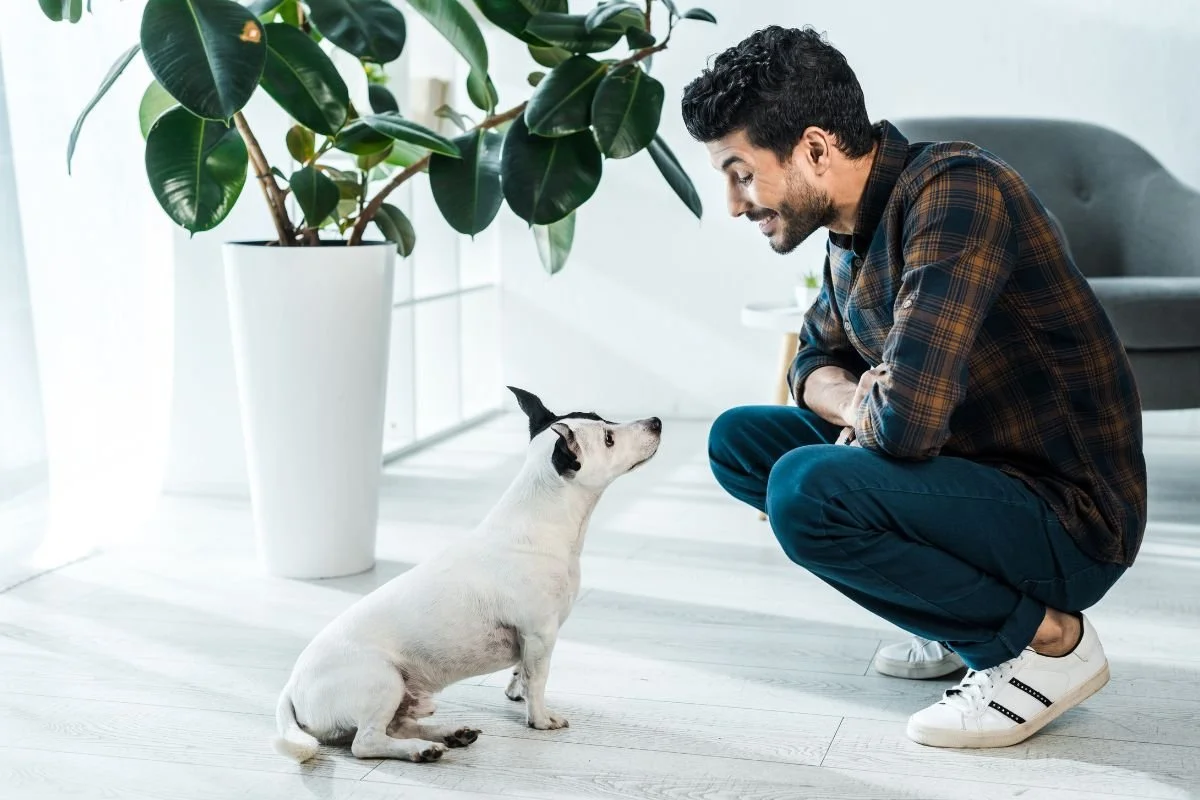
Some signals are deliberately taught, like using a hand gesture alongside “sit”. Others are learned simply by living alongside you.
How Does Body Language Affect Your Dog’s Behaviour?
Once you realise how closely dogs watch us, it’s easy to see how our body language can affect their response.
Take recall as an example. If you're calling your dog while standing still and facing them head-on, you may get a different response than if you make yourself inviting, move away and encourage them towards you. The words might be the same, but the rest of your body is giving them extra information.
We can also change our behaviour without realising when we're anticipating something - perhaps by altering our movement, changing our posture or shortening the lead. Dogs can learn that these changes predict what might happen next, so it's useful to become aware of the signals we may be giving unintentionally.
A 2024 study found that changes in owners' heart rates predicted changes in their dogs' heart rates in an unfamiliar environment, highlighting just how closely dogs and their owners can respond to one another.
This doesn't mean your body language is the cause of reactivity or other behavioural difficulties. Behaviour is much more complex than that. Your dog's previous experiences, environment, emotional wellbeing and even physical comfort can all influence how they respond.
The signals you give are simply one part of that picture. Becoming more aware of them can make your intentions clearer, but it's just as important to pay attention to what your dog is communicating back.
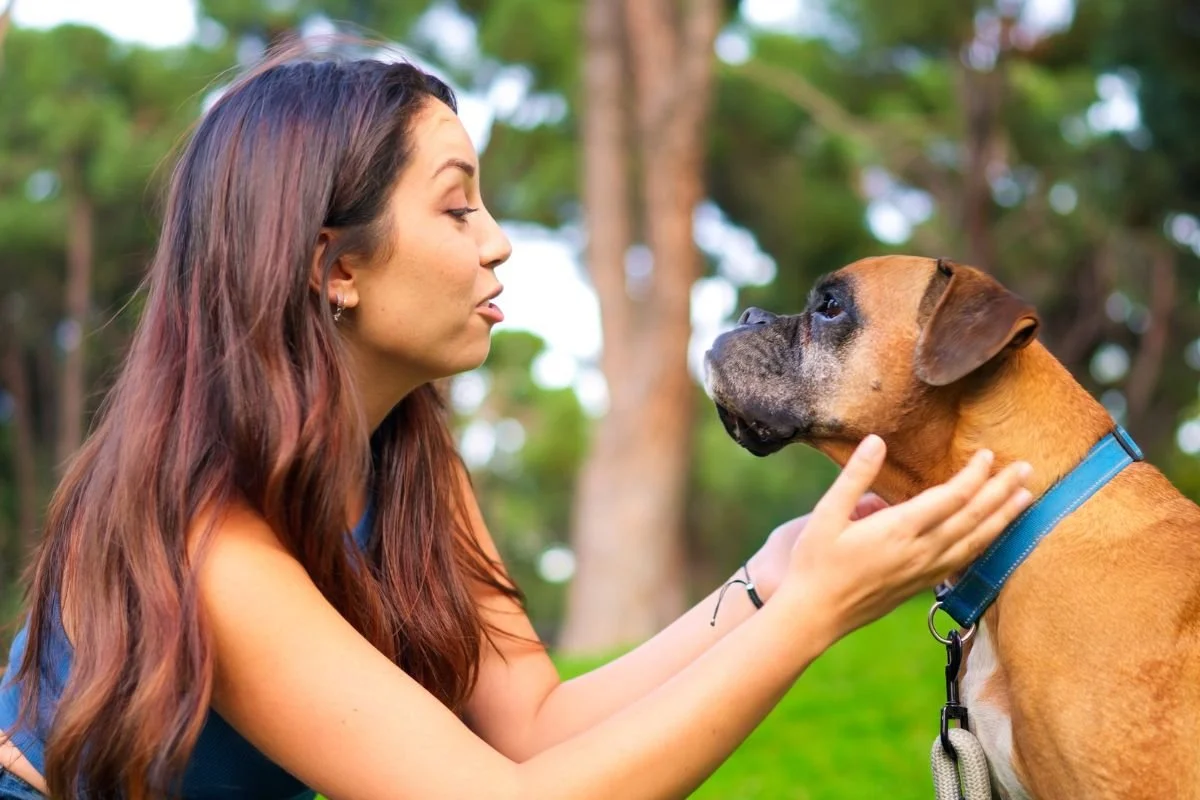
Dogs can learn that changes in our body language predict what might happen next, so it's useful to become aware of the signals we may be giving unintentionally.
Understanding Your Dog's Body Language Is Just as Important
Knowing that dogs pay attention to our body language is useful, but the other half of the picture is noticing how your dog responds to the signals you're giving them.
You might lean over your dog to stroke them, reach towards their collar or move closer to reassure them without thinking twice. These gestures may feel friendly to us, but your dog's body language can give you clues about how they're actually experiencing them.
If they turn their head away, lick their lips, become very still or move away, for example, these changes may suggest that they're uncomfortable or would prefer more space. Giving them that space and noticing what they choose to do next can provide us with even more information.
Research has linked signals such as turning the head away and lip licking with stress or uncertainty in dogs, but I wouldn't look at any one signal and assume I know exactly what a dog is feeling.
Instead, I look at the whole interaction. What were you doing immediately beforehand? How did your dog respond? Did their posture change when you moved closer or changed your own position?
The situation around the behaviour and your dog's response can tell you a lot about how your own body language is coming across.
The more you notice these small exchanges, the easier it becomes to adjust the signals you're giving and communicate in a way that feels more comfortable for your dog.
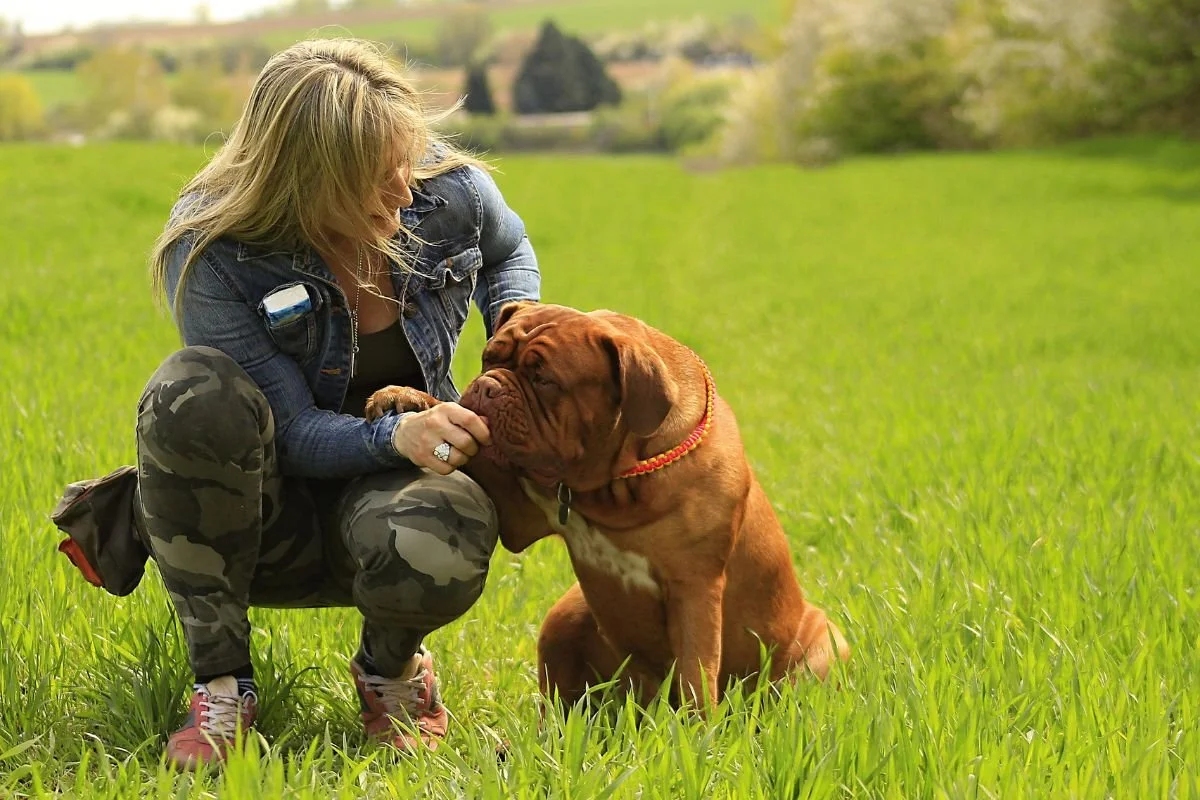
You might lean over your dog to stroke them or move closer to reassure them. This may feel friendly to us, but your dog's body language can give you clues about how they're actually experiencing them.
How Can I Help?
Understanding your dog's body language is one thing, but noticing how your own movements affect them can be much harder, especially when you're already struggling with their training or behavioural issue.
I don't simply help owners teach their dogs what to do. I help owners better understand what their dog may be communicating and how their own responses can support clearer, more comfortable interactions.
If you're struggling with recall, loose-lead walking, settling calmly or everyday manners, my 1-1 Dog Training offers practical, personalised support while helping you build clearer communication and a stronger relationship with your dog.
If your dog is struggling around other dogs or people, my Reactivity Programme provides structured, personalised support to help you understand their responses, build confidence and make walks feel more manageable.
For concerns such as anxiety, aggression, fear or other complex behaviour, my Behaviour Consultations look at the whole picture - from your dog's experiences and environment to their individual needs and how they respond in different situations. This helps us build a fuller picture of what may be influencing their behaviour and create a practical plan that works for you and your dog.
If you're not sure where to start, tell me a little about your dog, and I'll help you find the right support for you both.