Margaux’s Story: Being Safe Isn’t the Same as Feeling Safe
Margaux was safe. But Margaux didn’t know that.
When she arrived in her new home, she was loved. She had a secure home, a family determined to do their best for her and Lily, another rescue dog who was already very much part of family life.
But physical safety and feeling safe are very different things.
Margaux would show all of us just how different they can be.
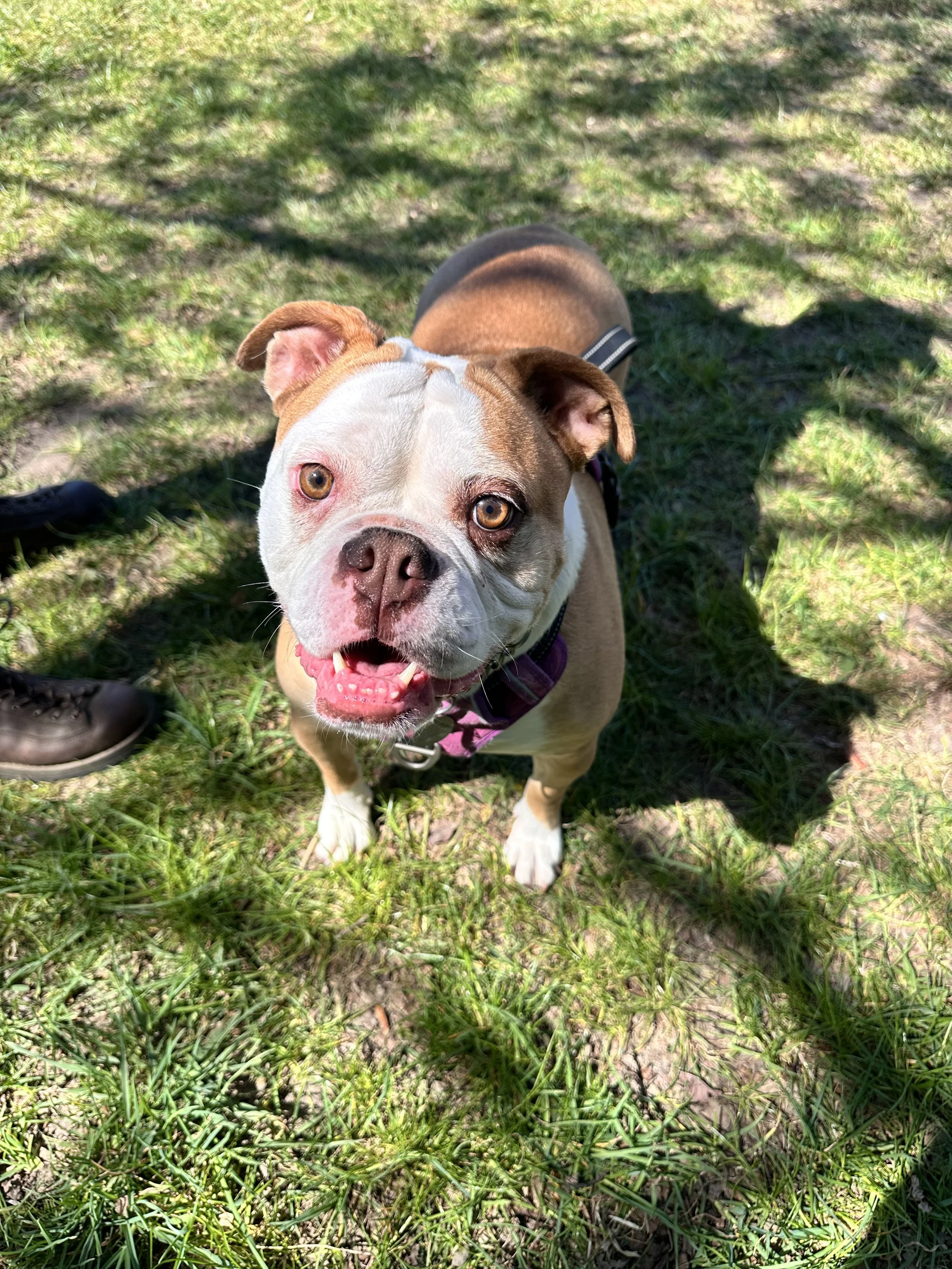
Margaux, a rescue dog, outdoors during her behaviour support journey
Before Margaux came home
Margaux wasn’t actually the dog Alun had imagined adopting.
The family had been looking for another dog for some time, with Lily’s needs very much at the centre of their decision.
Margaux had initially been ruled out, but as Alun puts it, he eventually realised that what mattered most wasn’t breed or appearance, but finding a dog who could live happily alongside Lily.
So he went to meet Margaux.
What happened over the next few days is much more significant to her story.
On the first visit, Margaux wanted very little to do with him.
Alun went back the following day.
Same response.
Then a third day.
And a fourth.
On the fifth visit, the whole family went. They loved her and wanted to give her a home.
Margaux came home with them.
But she was so reluctant to leave that she had to be lifted into the car.
Looking back now, those early encounters feel significant.
Margaux was already communicating.
Her family simply didn’t yet understand quite how much she was telling them.
When everything seemed difficult
Once home, Margaux refused to get out of the car.
Even Lily bounding enthusiastically towards the garden wasn’t enough to persuade her, so Alun carried her inside.
The family had carefully prepared a covered crate with two entrances as a quiet retreat.
Margaux walked through the house and climbed on top of it.
And stayed there.
It was an early glimpse of just how differently Margaux experienced the world around her.
The following months were extraordinarily difficult.
Toileting outside was a particular challenge. Margaux could appear unable to toilet in the garden, only to come back inside and empty her bladder once she felt sufficiently able to do so.
At night, Alun slept on a camp bed downstairs.
Margaux didn’t even discover there was another floor to the house for more than three months.
Yet during those quiet nights, when the house was dark and nobody was asking anything of her, tiny glimpses of something different began to appear.
Margaux would sometimes climb down and creep onto the sofa behind Alun.
First she rested her muzzle against his head.
Later, his thigh.
Eventually she would sometimes find herself, almost accidentally, on his lap having her ear scratched.
During the daytime, things could look completely different.
If Alun simply walked in Margaux’s direction to get a tissue or take a mug into the kitchen, she might scurry away.
A pedal bin could startle her.
A tea towel being moved could frighten her.
Alun remembers picking up a stainless-steel shoehorn to put his boots on:
“You’d think it were a Samurai sword the extremity of her reaction.”
This wasn’t simply a dog who needed a little more time to settle.
A dog who had shut down
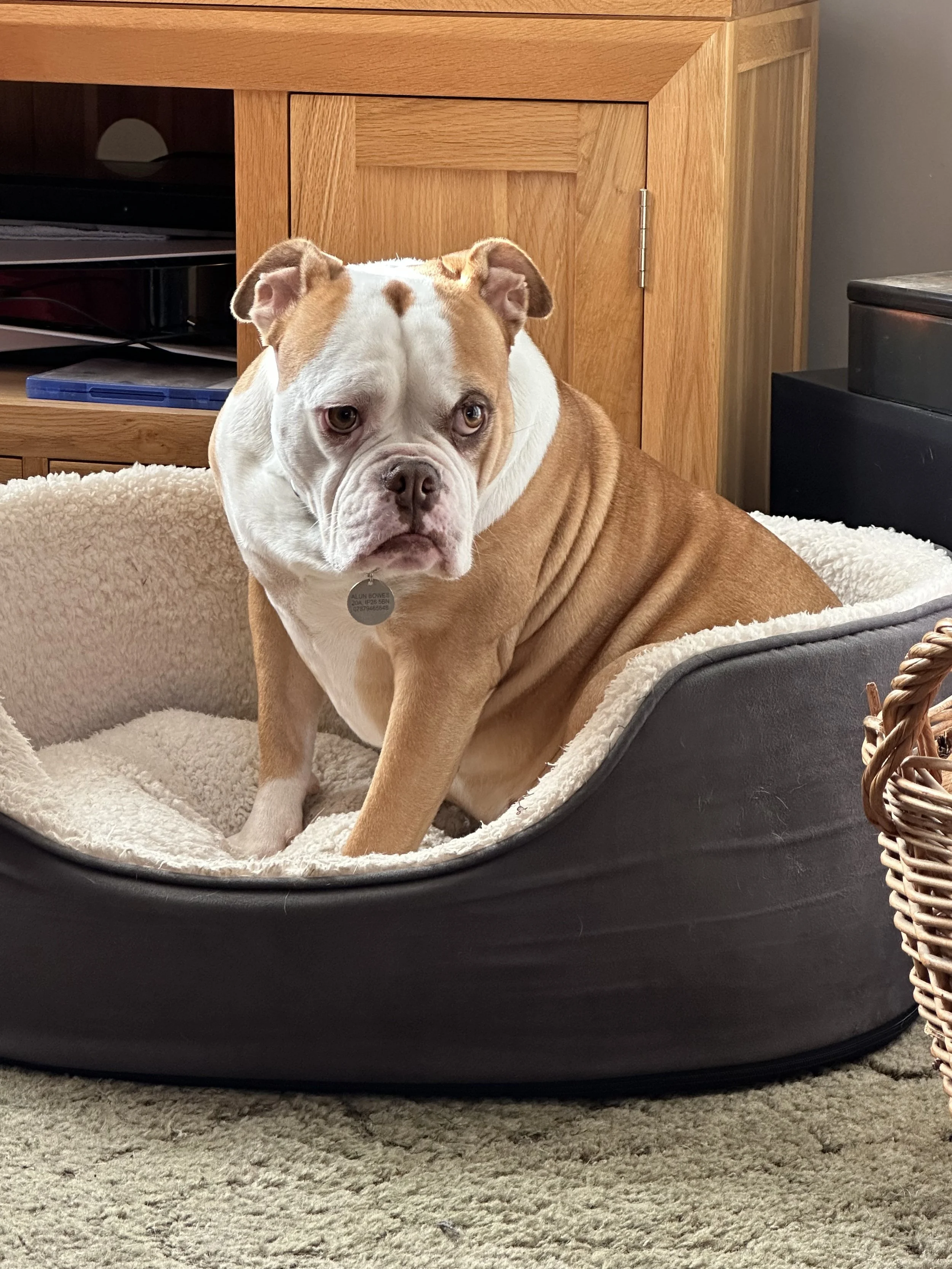
When I describe Margaux as profoundly shut down, I don’t simply mean that she was very frightened.
Fear doesn’t always look dramatic.
Margaux wasn’t barking, lunging or using aggression when she couldn’t cope. She withdrew. She became still. She stopped exploring.
Her world gradually contracted around the few places and routines in which she felt able to function.
That’s one of the reasons a dog like Margaux can be misunderstood. Quiet can look like calm from the outside.
But quiet doesn’t necessarily mean comfortable.
Alun hadn’t encountered a dog like Margaux before.
“We had not come in contact... with one so profoundly shut down as Margaux.”
Over time, rather than expanding as she settled into her new life, Margaux’s world was becoming smaller.
Trying harder wasn’t working
The family had been advised to carry on with normal life, and Alun persevered.
Walks had always been a huge part of his life with Lily. Naturally, he wanted Margaux to experience them too.
But getting Margaux there could involve putting on her harness and lead after she had retreated to her bed, carrying her to the car and then lifting her out again at their destination.
Once away from the car, she might follow.
At times, she could even appear to walk reasonably well.
But gradually her behaviour became harder to ignore.
She tried to return to the car.
She refused to continue.
Eventually, she would push herself so far back against the seat and dog guard that getting her out became impractical.
Looking back, Alun says:
“Dogs like Margaux don’t go out. I am sorry to say that I made her, despite this. Being told to ‘just carry on with what you normally do’ was not appropriate here. I persevered with that one too long.”
I don’t include that to criticise Alun.
He was trying desperately hard to help a dog he loved.
But Margaux’s experience of those walks was telling a very different story.
Being safe isn’t the same as feeling safe
This would later become one of the most important things for us to understand about Margaux.
Her family knew she was safe.
They knew she was loved and nobody was going to hurt her.
But Margaux’s experience of the world was her reality.
A woodland could be objectively peaceful and still feel frightening to her.
She could complete a walk without enjoying it.
She could be still without being relaxed.
And she could endure something without feeling safe.
It wasn’t enough for us to know that Margaux was safe.
Margaux needed to experience safety for herself.
When her world became smaller still
A number of frightening experiences during those early months added further difficulty.
One night, while Alun was taking Margaux outside to toilet, a military Chinook flew extremely low overhead.
Margaux was terrified and spent the remainder of the night shaking.
Later, an extraordinarily loud motorbike accelerated along the road beside secure parkland where they were walking. Margaux bolted towards the exit.
On another occasion she froze in a field and looked skywards.
Swallows were flying overhead.
Again, Margaux desperately wanted to go home.
Alun increasingly realised that perseverance wasn’t solving the problem.
“These events all added up to one thing as far as I could see, we were doing everything wrong!”
Eventually, he began questioning whether they were even the right people for Margaux.
They loved dogs. They had experience. They were trying incredibly hard.
Why wasn’t any of it working?
Ten months after Margaux came home
This continued, in different forms, for around ten months.
Alun describes it as:
“10 months of relentless perseverance and research.”
Eventually, he reached a conclusion.
“I needed help, proper professional help.”
It was at this point, around ten months after Margaux’s adoption, that Alun contacted me for behavioural support.
When I first met Margaux in her home, I wasn’t looking for ways to persuade her to do more.
I wanted to understand what she could already do without pressure.
Where did she feel safest?
What caused her to withdraw?
What did uncertainty look like for Margaux?
And what did a genuine choice to engage look like?
With a dog this shut down, doing less could tell us far more than asking for more.
This wasn’t a family who hadn’t tried hard enough.
They had tried incredibly hard.
What we needed wasn’t more effort.
We needed to listen differently.
Margaux’s yes, no and maybe
We began talking about Margaux’s responses as her yes, no and maybe.
That simple language became an important part of how we understood her.
Her no wasn’t something we needed to overcome.
Her maybe wasn’t something we needed to turn into a yes.
And even when she said yes, she was allowed to change her mind.
The work unfolded from there at Margaux’s pace.
Rather than deciding where she needed to get to, we watched what she felt able to do and allowed those answers to shape what happened next.
Alun has since summed that up rather beautifully:
“The dog is always right, it’s the question we are asking of it that is more likely to be wrong, if not the way we are asking?”
Veterinary support and Reconcile
Behavioural work wasn’t the only part of Margaux’s support.
Veterinary involvement was important too, and Margaux was prescribed Reconcile (fluoxetine).
Medication alone didn’t change everything.
Margaux didn’t start taking Reconcile and suddenly become confident in the world.
But alongside the behavioural work, it appeared to give her something incredibly valuable: more capacity to move rather than remain stuck.
For so long, Margaux had seemed unable to move beyond the very small world in which she felt able to function.
As pressure reduced and veterinary and behavioural support worked alongside one another, we gradually started seeing more from her.
She could investigate.
She could retreat.
She could come forward again.
There was more room for curiosity and more opportunity for choice.
Reconcile didn’t teach Margaux that the world was safe.
But it appeared to help her slowly become more able to participate in the experiences through which she could begin discovering that for herself.
The first paddock session
I remember Margaux’s first session at my paddock particularly clearly.
We genuinely didn’t know whether she would leave the car.
And I didn’t need her to.
If the entire session consisted of Margaux sitting safely in the car observing a new environment, that would have been okay.
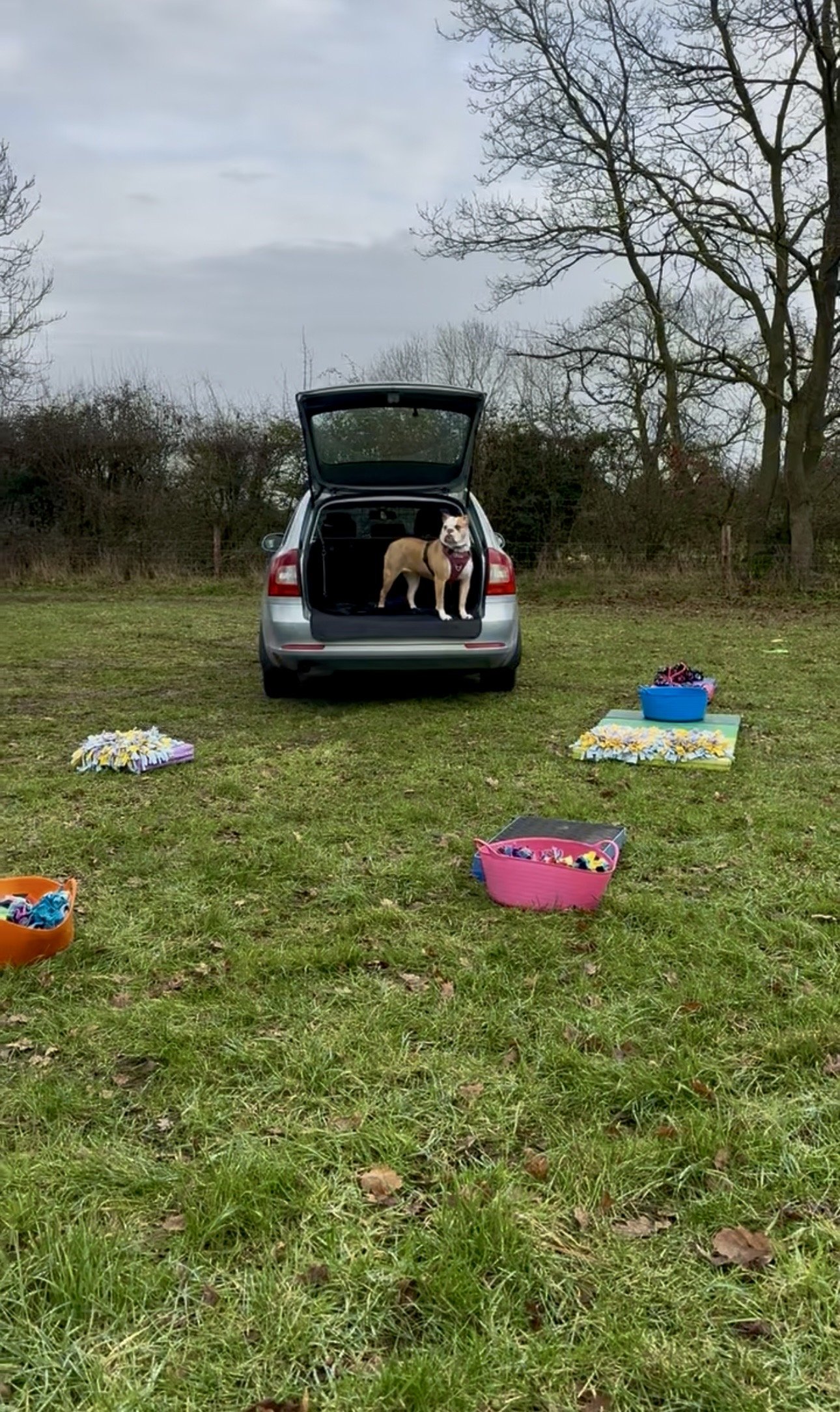
Then she surprised us.
Margaux stepped out and explored ACE Free Work laid out beside the car.
Only briefly.
Then she got back in.
A little later, she came out again.
And then went back.
She repeated this several times.
It would have been incredibly easy to see getting out of the car as the success and then try to keep her outside.
But what interested me was something different.
Margaux had made a choice.
And when she changed her mind, nothing happened.
Nobody stopped her.
Nobody tried to persuade her to stay.
The car remained available.
And then Margaux chose to come out again.
When she stopped needing to get back in
Over subsequent sessions, something lovely began to happen.
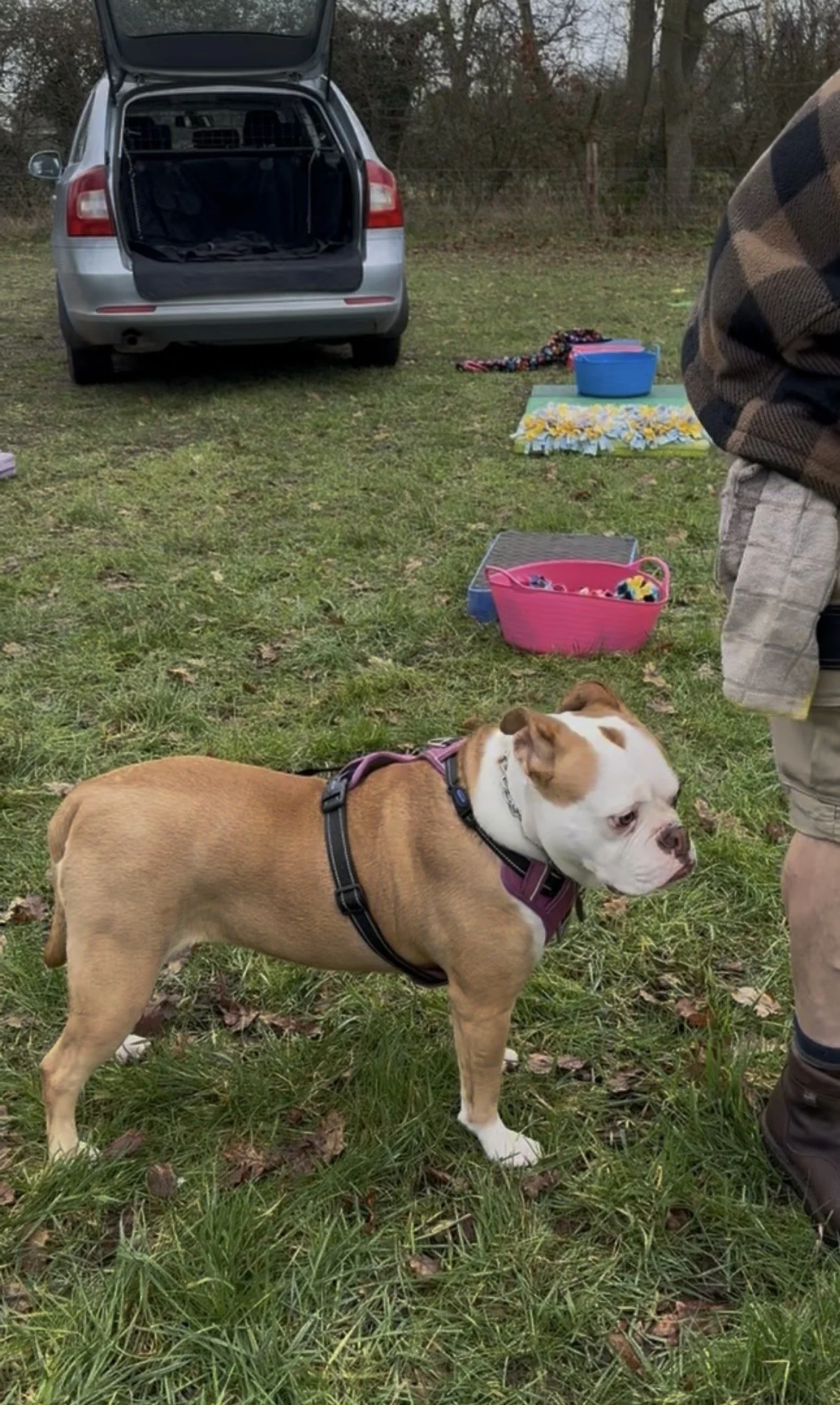
Margaux would explore ACE Free Work and then return towards the car.
Initially, she climbed back inside.
Gradually, she began reaching it and pausing.
Contemplating.
And sometimes she didn’t get back in.
She chose to explore again.
Those moments could look almost insignificant from the outside.
For Margaux, they were enormous.
By protecting her ability to retreat, we were beginning to see her choose not to.
Making Margaux’s world bigger
We built from there slowly.
ACE Free Work gave Margaux opportunities to move, sniff and investigate without somebody continually directing her. It also gave us the chance to observe what she chose when very little was being asked of her.
As she became more able to explore the paddock, we introduced a long line so she could retain as much freedom as possible while remaining safe as we ventured beyond it.
Eventually, we explored immediately outside the gate.
There was no prescribed walk.
Margaux could look.
Sniff.
Explore.
Or return.
Then, before long, she began choosing which way she wanted to go.
She would leave the paddock, select a direction and spend time sniffing and exploring before choosing to return.
These weren’t distances we had set for her.
Margaux was beginning to make her own world bigger.
New places, same choices
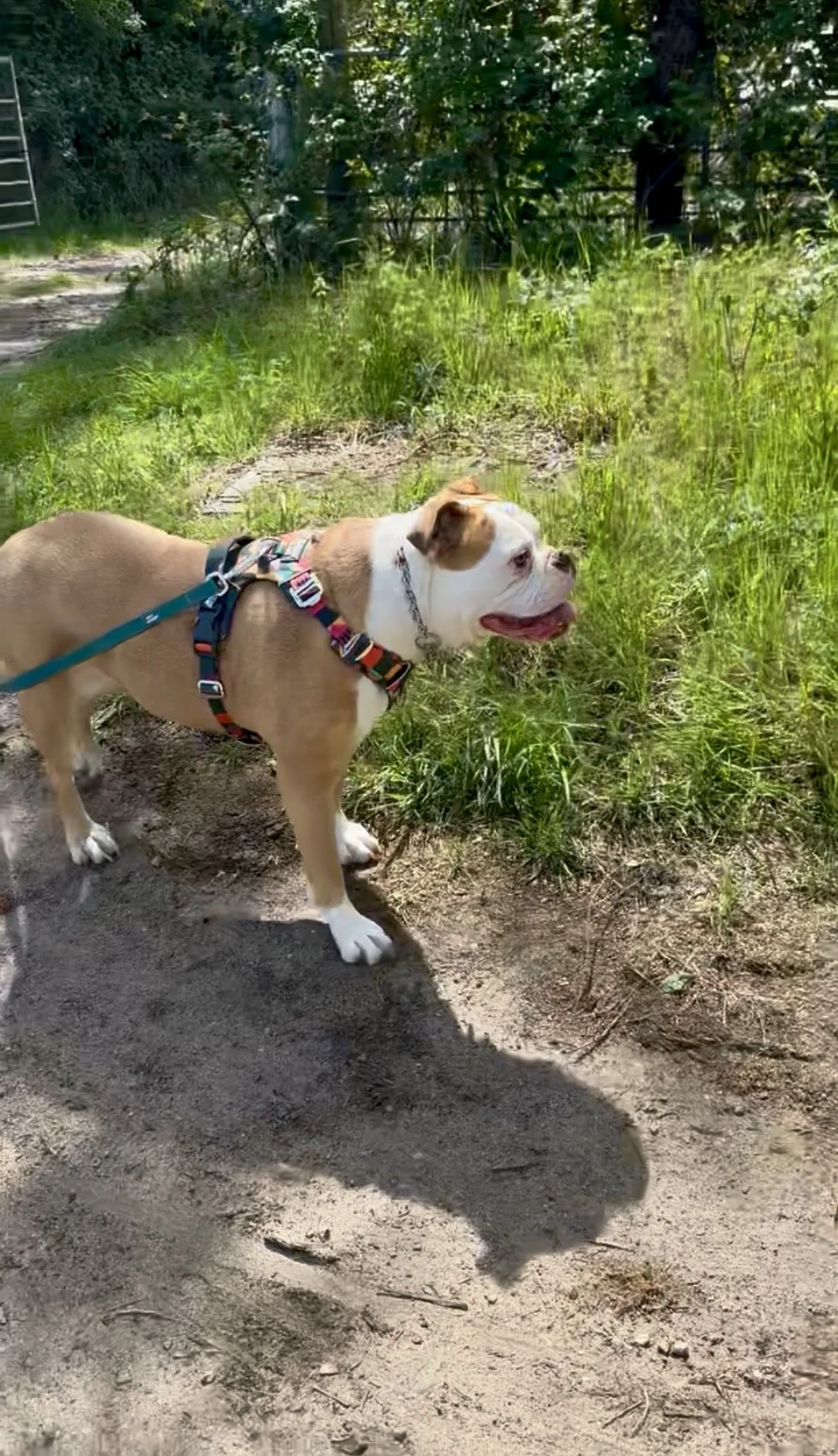
Eventually we began visiting a small number of carefully selected new locations.
But every time we arrived somewhere unfamiliar, we remained genuinely prepared for Margaux not to leave the car at all.
That mattered.
It can be surprisingly difficult to have no expectations.
You’ve driven somewhere. You’ve set aside the time. The last session went brilliantly.
And when a dog starts making progress, the temptation to add just a little more can be enormous.
With Margaux, we resisted that temptation.
And she repeatedly surprised us.
Again and again, we arrived knowing that remaining in the car was an entirely acceptable outcome, and Margaux chose to come out.
Slowly, we were able to add a few more places to her world.
But we also returned to the same places.
That repetition allowed us to see something far more interesting than whether Margaux could simply manage another location.
We could see her experience of it changing.
From coping to enjoying
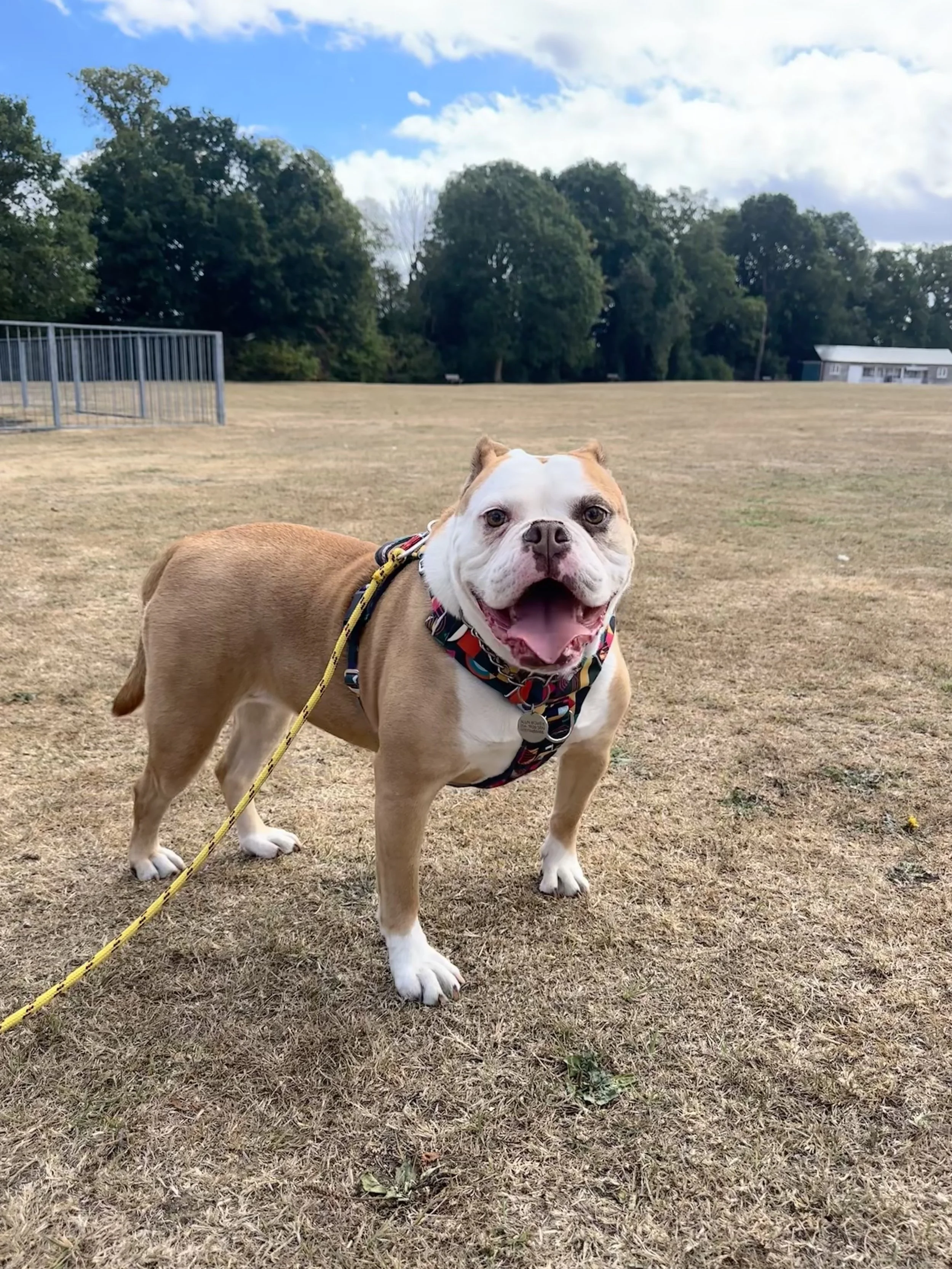
I didn’t want to measure Margaux’s progress simply in metres or minutes.
I wanted to know what she was telling us about the experience.
On repeated visits, we began seeing more sniffing.
More exploration.
More freedom in her movement.
She chose to venture further.
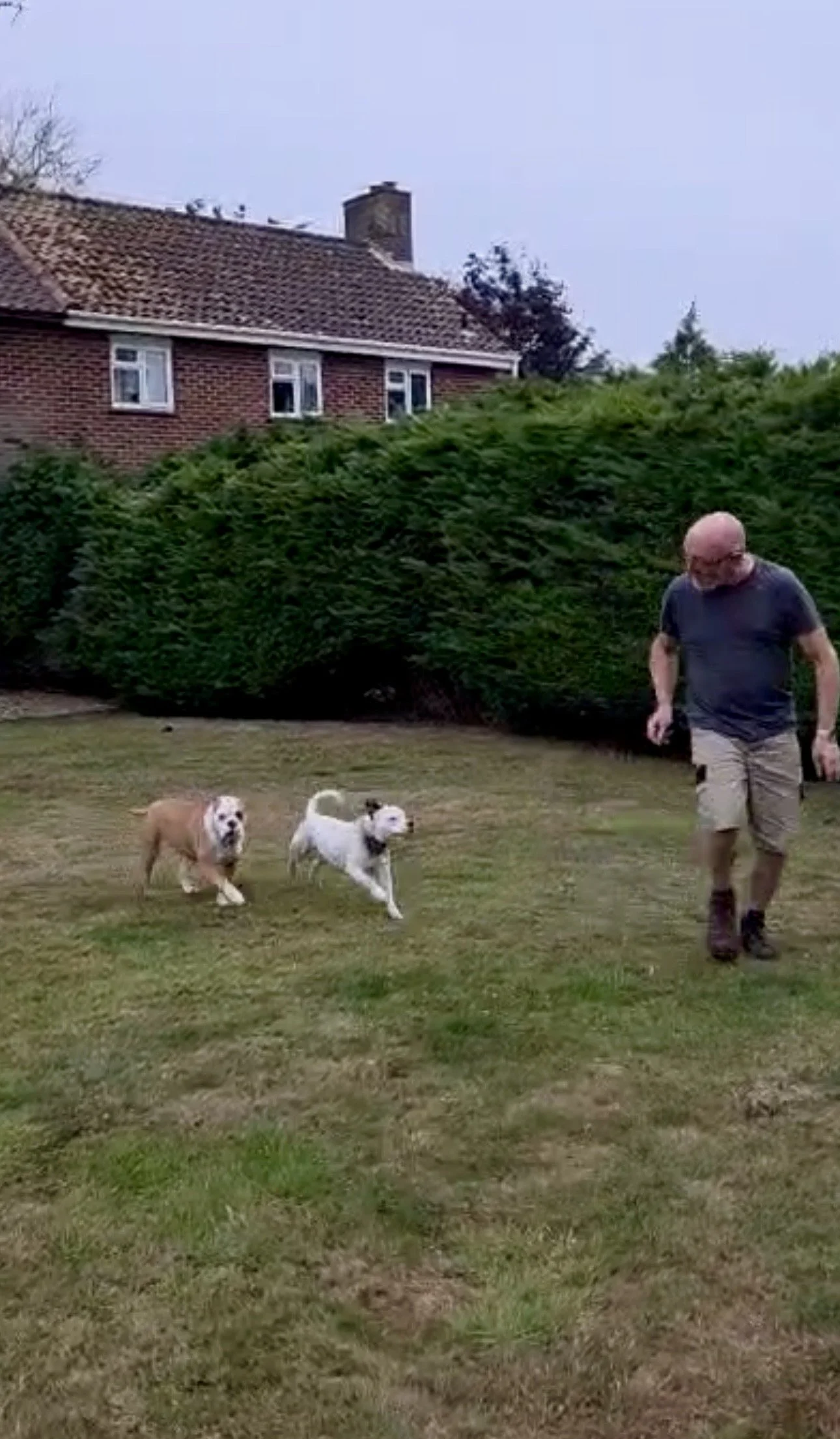
And then came those wonderful flashes of joyous movement back towards Alun.
Those moments told us far more than the distance she’d travelled.
Margaux wasn’t simply completing an outing.
Increasingly, she appeared to be enjoying being there.
For a dog whose world had once become so small, that distinction meant everything.
From safe places to safe people
When tiny things become enormous
Perhaps one of my favourite parts of working with Margaux has been watching the family’s idea of progress change too.
At first, it’s completely understandable to want the big things.
A walk.
A new place.
The things other dogs seem able to do without a second thought.
But with Margaux, seemingly tiny moments became enormous.
Choosing to get out of the car.
Sniffing.
Exploring a little further.
Returning to the car and deciding she didn’t need to get back in.
Moving joyfully towards Alun.
There is something wonderful about seeing someone’s face light up over moments like these.
Because by then, progress is no longer being measured by how much more the dog can do.
It’s about recognising what that particular moment means for that particular dog.
And that’s when you know they truly get it.
A little help from Lily
Lily has also played an important part in Margaux’s journey.
Her presence offered another layer of support without taking Margaux’s choices away.
Margaux could watch her.
Follow if she chose.
Or not.
Lily could provide some social scaffolding, but Margaux still determined what she felt able to do.
Choice beyond walks
The same principles have gradually extended into other areas of Margaux’s life, including handling and cooperative care.
For Margaux, this isn’t simply about learning to tolerate things being done to her.
It gives her another way to communicate.
We can ask.
Margaux can answer.
And her answer matters.
We may never know what happened to Margaux
It’s almost impossible to live with a dog like Margaux without wondering about her past.
Alun remembers watching some of her reactions and thinking:
“Dear god what has this poor creature had to suffer, to make this her default?”
It’s an entirely understandable question.
But the truth is that we don’t know exactly what shaped Margaux’s responses.
And we didn’t need to construct a story about her past in order to help the dog in front of us.
Alun has reached a similar conclusion:
“No one can really know what it was precisely but that is largely irrelevant anyway, as all that matters is the dog’s response to it and the sum of ‘the dog’ that you are left with.”
Looking back, he recognises how much energy initially went into trying to understand what had made Margaux this way.
“We were too busy trying to work out what had happened to ‘make her’ the way she was behaving and sadly not enough time letting her show us who she was and what she could and couldn’t do and then thinking how to enhance that.”
That shift is at the heart of Margaux’s story.
We stopped needing to know exactly why she was Margaux.
We concentrated on understanding Margaux.
What Alun wishes he’d known
When I asked Alun what he wished prospective rescue adopters could take from their experience, he was very clear that this wasn’t about blaming Margaux’s rescue.
“I do not blame anyone in Margaux’s ‘rescue’ for doing anything wrong.”
The difficulty was that general advice couldn’t account for the individual dog who had arrived in their home.
Looking back, Alun wishes they’d been able to begin from a different place.
“If we had genuinely started the entire process of adopting Margaux as a completely blank canvas, we would have fared so much better than we did.”
Alun describes those early months as:
“flailing around ignorantly ‘meaning’ well but doing badly.”
I think he’s being rather hard on himself.
What I saw was a family who had tried incredibly hard with the knowledge they had.
After ten months, when Alun realised trying harder wasn’t giving Margaux what she needed, he asked for specialist support.
And from there, we began listening to Margaux differently.
Progress at a glacial pace
There hasn’t been one dramatic moment where Margaux suddenly became a confident dog.
Her progress has been layered and sometimes almost imperceptible.
Her family describe the pace as glacial.
Yet when we look back, her world has changed enormously.
The dog who once struggled to move beyond a couple of safe spaces is exploring.
Sniffing.
Making choices.
Visiting places.
Finding joy.
And increasingly finding security not only in familiar places, but in the people alongside her.
Recently, Alun sent me an update:
“If you’d seen her over the last couple of days both at home and further afield you would be beside yourself!”
And then:
“Results are beginning to manifest now at a gathering pace, which bearing in mind, is set to ‘glacial’... does hint at such joy and fun to follow!!”
There is still a way to go.
That’s okay.
The aim was never to turn Margaux into somebody else’s idea of a normal dog.
It was to help Margaux feel safe enough to become more of Margaux.
The dog is always right
Alun said something else that has stayed with me:
“If you’ve ever earned trust from a dog that looked as if it never could, you are a very lucky and special person.”
Margaux’s family had given her physical safety from the day she came home.
The much longer journey has been helping Margaux gradually experience that safety for herself.
Her story is also a reminder that what we see from the outside doesn’t necessarily tell us how a dog feels on the inside.
A dog who isn’t reacting isn’t necessarily coping.
A dog completing a walk isn’t necessarily enjoying it.
And a safe environment doesn’t automatically create a feeling of safety.
There is one sentence of Alun’s that seems to sum up Margaux’s story better than I ever could:
“The dog is always right.”
Margaux has shown us the value of listening carefully enough to believe her.
