Are Puppy Zoomies Normal? Understanding Your Puppy’s Energy Bursts
If your puppy suddenly hurtles round the living room, ears back, bouncing off the sofa like it's on fire, you've met the zoomies.
Vets call this a Frenetic Random Activity Period, or FRAP. They happen when a puppy has built up excess energy or excitement, and needs to release it through short bursts of frantic running, spinning, or play.
It's a common enough sight that most new puppy owners find themselves wondering the same thing: are puppy zoomies normal?
Essentially, yes. Most puppies experience zoomies from time to time while they're growing.
However, if zoomies are happening frequently, your puppy struggles to settle afterwards, or they seem to happen every evening, they're often telling you something important: your puppy is overstimulated, overtired, and struggling to self-regulate.
If zoomies become very frequent or difficult to recover from, it's worth stepping back and looking at the whole picture. Some puppies genuinely need more opportunities to explore and use their brains. Others are already overwhelmed and actually need more rest, predictability and opportunities to regulate.
So before you can help your puppy settle, it helps to understand exactly what's going on in their body and brain when the zoomies strike.
What Causes FRAP in Dogs?
Rather than focusing on the zoomies themselves, I find it more useful to ask what happened beforehand. Often, there's been a build-up of experiences throughout the day that has gradually increased your puppy's arousal, even if the zoomies seem to come out of nowhere.
What most experts agree on is that zoomies come down to arousal: your puppy's nervous system releasing built-up tension or excitement through a short, explosive burst of movement.
For puppies, a few things tend to build that arousal up:
Pent-up physical energy, often after time in a crate, car, or pen.
Overstimulation, from new people, new places, or an exciting play session.
A sudden change of state, like after a bath or being let out of a confined space.
Tiredness, which sounds backwards, but puppies become overexcited when their arousal levels rise too quickly for the situation they're in. By the time zoomies show up in the evening, they’re often overstimulated and struggling to cope.
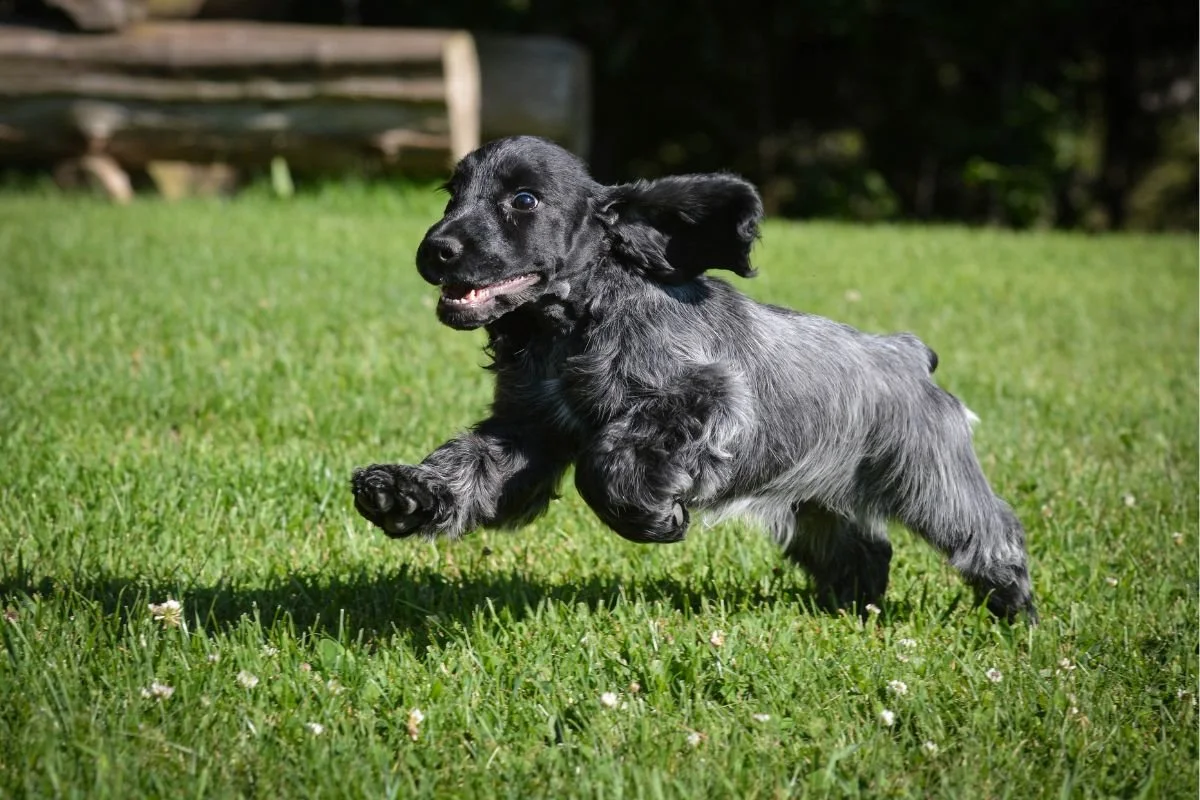
Most experts agree that zoomies come down to arousal: your puppy's nervous system releasing built-up tension or excitement through a short, explosive burst of movement.
Why Zoomies Often Mean Your Puppy Is Overtired, Not Just Excited
It's easy to assume a puppy tearing around the house simply has energy to burn. Often, it's the opposite.
Puppies aren't born knowing how to switch off. Emotional regulation is a skill that develops over time, and part of that is learning to pause between feeling excited and acting on it.
A busy day, full of new sights, sounds, visitors, play sessions and walks, all adds up. By the time evening comes around, your puppy may not simply be excited – they may be struggling to process everything that's happened. The zoomies can be one way that built-up arousal is released.
This distinction matters because the solution isn't always more exercise. A puppy who is genuinely under-exercised may benefit from more opportunities to explore, play and use their brain. A puppy who is overtired and overstimulated often needs the opposite: more opportunities to rest, decompress and recover. Getting that balance wrong can sometimes feed the very cycle you're trying to break.
How to Tell the Difference: Excited vs Overtired
An excited puppy tends to zoom after something fun, like a walk, meal, or play session, then settles fairly easily once it's run its course.
A puppy who's overtired often zooms later in the day, after too much has built up rather than too little. This can catch owners out, as the instinct is to add more stimulation when the puppy is already overstimulated.
Watch what happens in the ten minutes afterwards. A quick drink, a stretch, then a flop into a nap is a good sign your puppy simply needed to let off steam.
Staying wired, nipping, or ignoring cues they'd normally respond to straight away is often their way of telling you they've reached their limit. If this is the case, they need help coming down, not more activity to burn off.

Puppies aren't born knowing how to switch off. Emotional regulation is a skill that develops over time, and part of that is learning to pause between feeling excited and acting on it.
When Zoomies Might Be a Sign of Something More
Most of the time, zoomies are nothing to worry about. But it's worth knowing what to look out for, because occasionally they're telling you your puppy needs a bit more support.
One of the first things to look at is your puppy's body language during and after a zoomie session.
A loose, bouncy zoomie, ears back, tongue out, tail wagging or relaxed, generally means your puppy is celebrating or letting off steam.
A tighter, tenser version, with the tail clamped down and eyes wide, is closer to a fear response working itself out, and it's worth paying attention to.
If the zoomies are becoming more frequent or your puppy struggles to recover afterwards, it's worth stepping back and looking at the bigger picture. Are they getting enough quality sleep? Has the day been particularly busy? Are they getting opportunities to sniff, explore and decompress as well as exercise?
None of this means something's gone wrong. It just means your puppy hasn't yet learned how to come back down from excitement on their own. This is something that gets easier with the right support.
Practical Steps to Help Your Puppy Settle
The goal isn't to stop zoomies altogether; they're a normal, healthy release. It's to help your puppy build the skills to come back down calmly, rather than needing to hit full meltdown first.
Build in proper rest. Puppies need far more sleep than most owners expect, often well over double what an adult dog needs. If the evening zoomies are a nightly event, look at naps and quiet time earlier in the day.
Keep them safe, but let it run its course. Move anything breakable out of the way. Trying to grab, restrain, or shout during a zoomie session can add more arousal, not less.
Create opportunities for your puppy to practise settling. Reward calm choices, offer appropriate chews and don't underestimate the value of quiet time.
Watch for the build-up, not just the burst. If you notice your puppy is having a busy day, with visitors or lots of play, plan for some quiet time instead of waiting for the zoomies to arrive.
These changes add up quickly, and they're often easier to put into practice with some guidance.

The goal isn't to stop zoomies altogether, but help your puppy build the skills to come back down calmly, rather than needing to hit full meltdown first.
How Can I Help
The early months with a puppy can feel overwhelming, particularly when you're trying to work out what's normal and when it's time to ask for a little extra help.
One of the biggest things I help puppy owners with isn't simply teaching cues. It's helping them understand why their puppy is behaving the way they are. Once you can recognise the difference between an excited puppy, an overwhelmed puppy and an overtired puppy, everything starts to make much more sense.
My Puppy Training Programmes focus on building confidence, emotional regulation and real-life skills at a pace your puppy can cope with.
If you'd like some support understanding your puppy's behaviour, tell me a little about your puppy and I'll help you find the right level of support for you both.
