When Behaviour and Pain Overlap: Rosie's Story
Real Dog Stories · Looking Beyond Behaviour
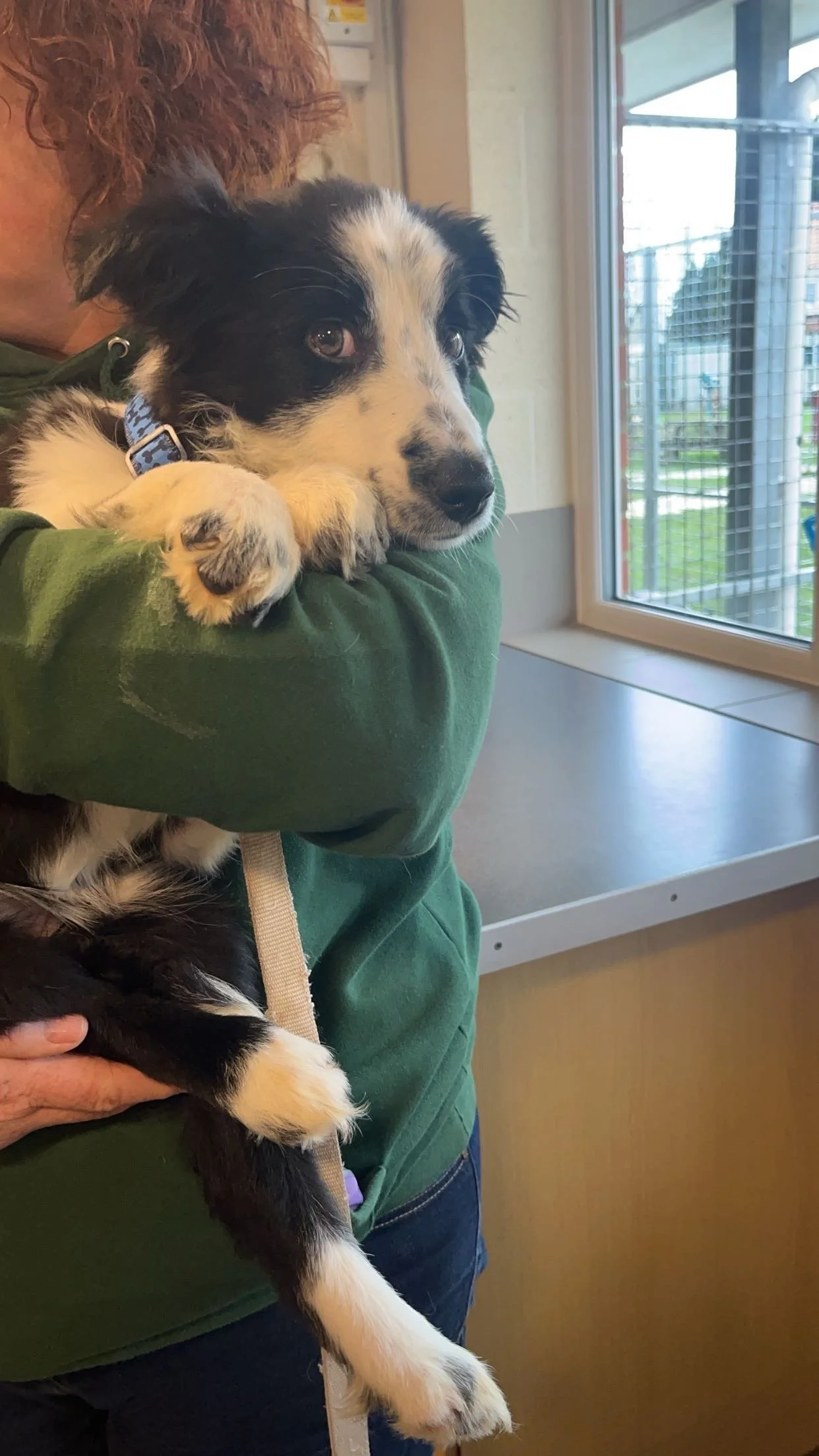
Rosie the Border Collie as a frightened puppy in rescue
When I first met Rosie, she looked as though she didn't have a tail.
She did. It was simply tucked so tightly underneath her that you could barely see it.
Rosie had been brought into RSPCA care after being found in a property with two other dogs and a deceased person. The dogs had no food or water. Initially we thought she was a very young puppy; it later transpired that she was around 17 weeks old.
And this wasn't her first upheaval. Rosie had originally gone to a home with her brother, but after just a few weeks she was rehomed. Not long afterwards, she was found in the circumstances that brought her into RSPCA care.
She was underweight, frightened and held an extraordinary amount of tension in her little body. In her kennel she would curl herself into a tight ball in the corner.
I started visiting her every day, giving her opportunities to explore ACE Free Work without putting pressure on her. After a couple of weeks in rescue she had begun barking at other dogs from her kennel. She was struggling and I was asked if I would foster her.
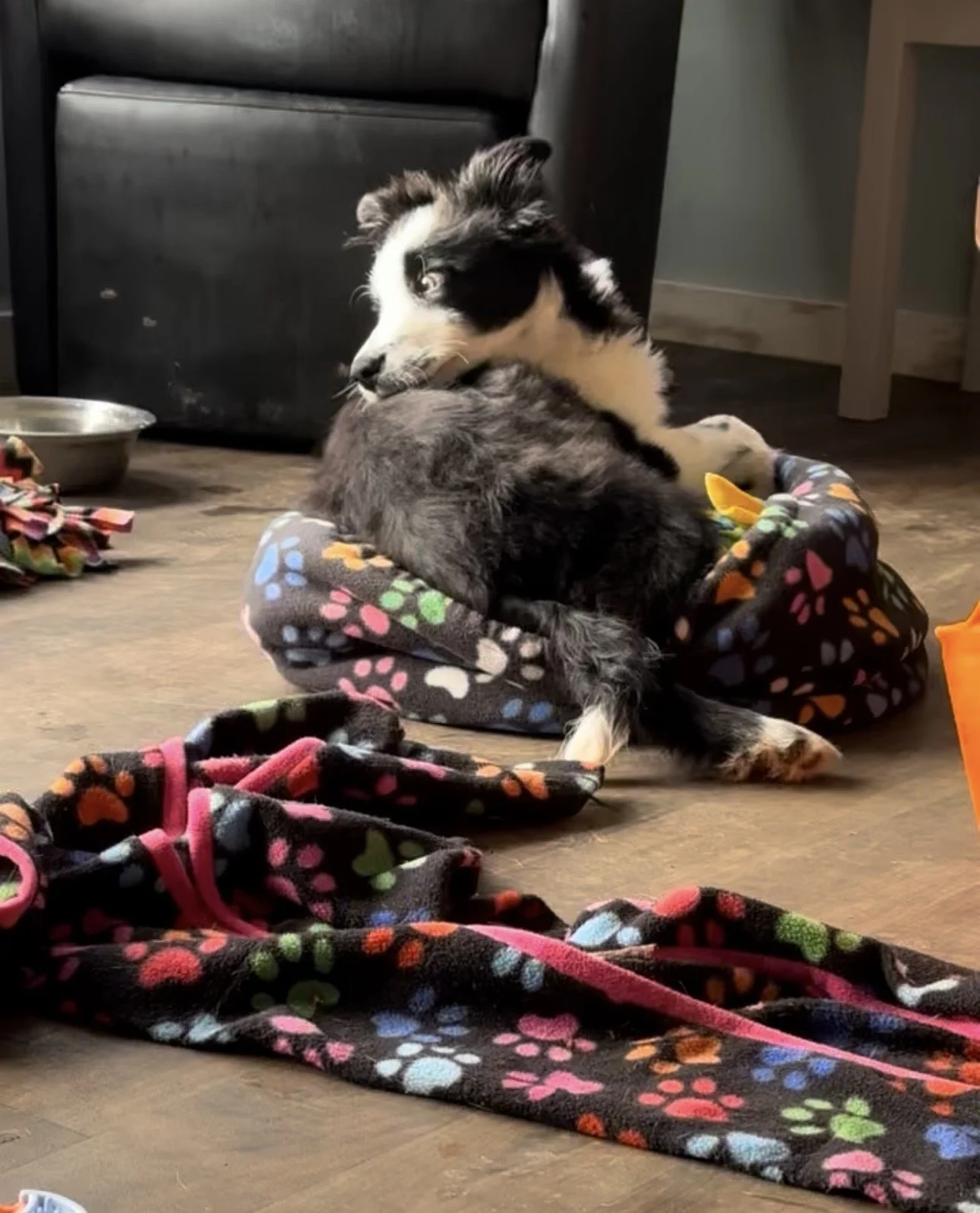
Rosie curled tightly during ACE Free Work during her early days in rescue.
Three days later, she wasn't going anywhere
Rosie was around five months old when she came home with me.
She was nervous of almost everything new. New places, new experiences and unfamiliar people all worried her, so we took things slowly and gave her as much choice and space as we could.
She was gradually introduced to my other dogs, Doug, Archie and Rango. For the first few days she remained physically curled up, but slowly we started seeing her stretch out. She discovered the sofa, loved being close to the other dogs and began playing with Archie and Doug.
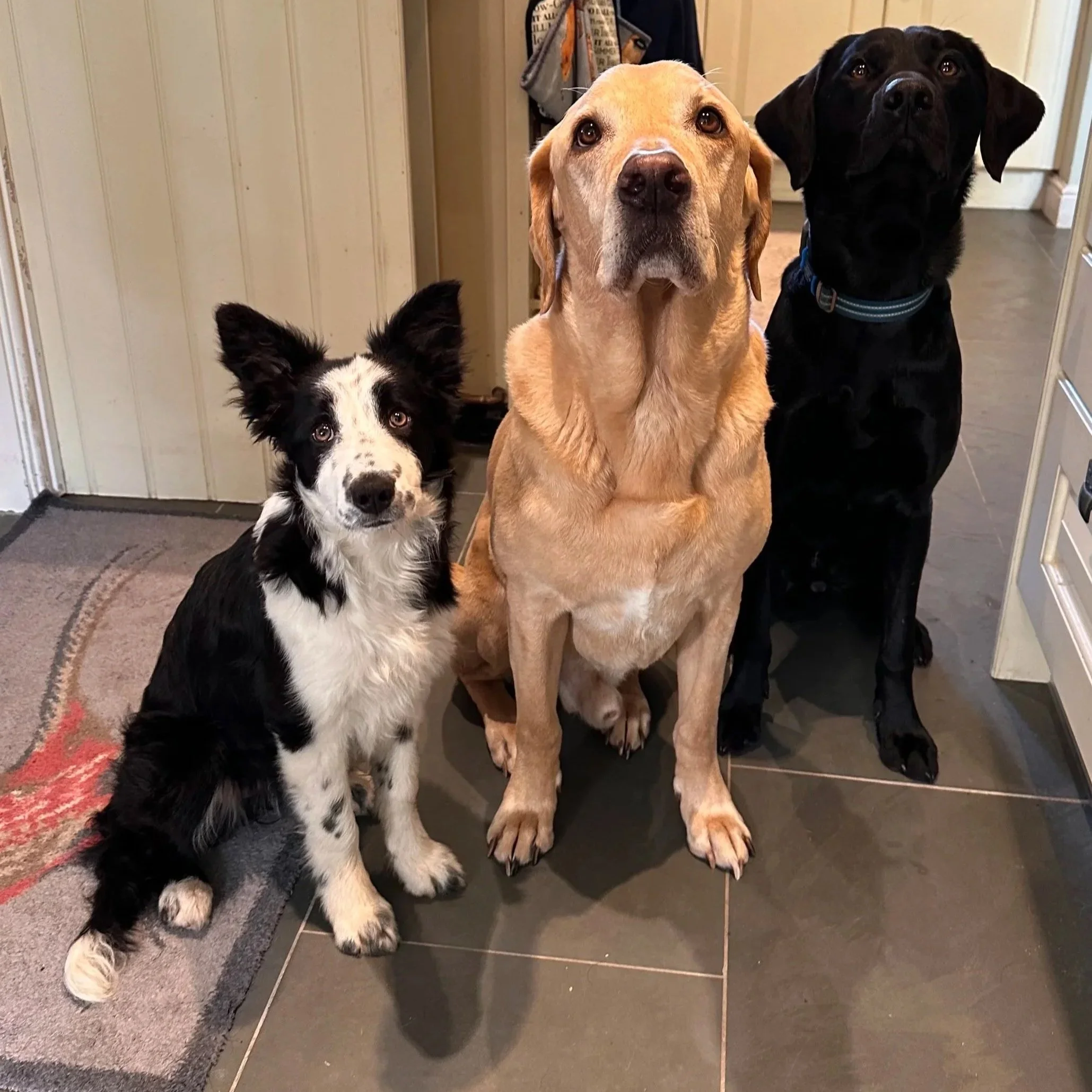
Rosie relaxing at home with Doug and Archie
Within three days, we'd decided to adopt her.
We loved her already, although I remember feeling deeply concerned about what her future might look like. This little dog had so many struggles.
She was extremely wary of unfamiliar people, particularly men. She was sensitive about being handled and found things such as grooming and having her tail touched difficult.
My son took weeks to build a relationship with her. He never pushed her and allowed Rosie to dictate the pace. Today they have the most wonderful relationship.
I work professionally with dogs with behavioural difficulties, and there was every reason to explain much of Rosie's behaviour through what she had already experienced. She was a frightened rescue puppy who'd had more upheaval in her first few months than many dogs experience in a lifetime.
But there were also little things that made me wonder whether we were seeing the whole picture.
The first little clues
Rosie's gait had looked slightly unusual from the beginning.
But she also held her entire body incredibly tightly. With such a frightened puppy, it was difficult to know what we were looking at. Was there something unusual about the way she moved, or was this simply a worried little dog carrying an enormous amount of tension in her body?
I mentioned her gait to our vet when Rosie was around six months old. At that stage there was nothing obvious to suggest a physical problem.
As she approached a year old, I started noticing very brief episodes of hind-end lameness when she got up after resting. They lasted only seconds, but alongside her existing sensitivity around having her back, tail and feet handled, they made me look more closely.
Around the same time, some of her behavioural difficulties were becoming more pronounced. She was reactive towards dogs, sometimes at considerable distances, wary of unfamiliar people, and there were increasing tensions around resources with our other dogs.
We were doing a lot of behavioural work with Rosie and she was making good progress.
Rosie’s story isn’t one in which all of her behaviour was caused by pain and disappeared once we addressed it. Her early experiences mattered. Her fear mattered. Her learning history mattered.
I just wasn’t convinced they explained everything.
Looking beyond the behaviour
Rosie was given a pain relief trial and we saw a response, so she was booked for X-rays.
They were clear.
But I still wasn’t convinced we had the whole picture.
Rosie was referred to the Orthopaedic team at Granta Veterinary Specialists and eventually transferred to Neurology.
By this stage, Rosie’s reactivity towards dogs and people had escalated, resource guarding between the dogs at home was becoming more concerning, and handling her back, tail and feet remained difficult. Her quality of life was being affected and life at home was becoming more difficult for everyone. We knew we needed to keep looking for answers.
When the scans don't give you a simple answer
Rosie underwent MRI imaging, including dynamic investigation, but there wasn't a clear abnormality that neatly explained everything we were seeing.
Her neurologist suspected hypermobility at her lumbosacral joint.
Rosie then had an epidural, and what happened afterwards gave us another important piece of information.
She became more like her old self.
She was more tolerant of the other dogs, more playful and less intense. A behaviour we'd been seeing regularly in the evenings - persistently scratching at her bed, stopped.
Her neurologist explained that her response to the epidural supported the suspicion that pain in her lower back was contributing to what we were seeing.
It still didn't give us every answer, but Rosie's response to treatment mattered alongside what we were seeing clinically and behaviourally.
Her neurologist explained that spinal stabilisation surgery had been successful for some other Border Collie’s presenting similarly to Rosie, although there was no guarantee that it would work for her.
For me, the decision wasn't difficult.
I trusted her neurologist implicitly and was incredibly grateful that what Rosie was showing us wasn't being dismissed simply because her imaging hadn't provided an obvious answer.
The support and expertise of the team at Granta Veterinary Specialists throughout Rosie’s investigation, surgery and recovery was invaluable. They kept looking at the whole picture when there wasn’t an easy answer.
Her quality of life was suffering and, at that point, surgery felt like the best option we had.
So in May 2025, Rosie underwent spinal stabilisation surgery.
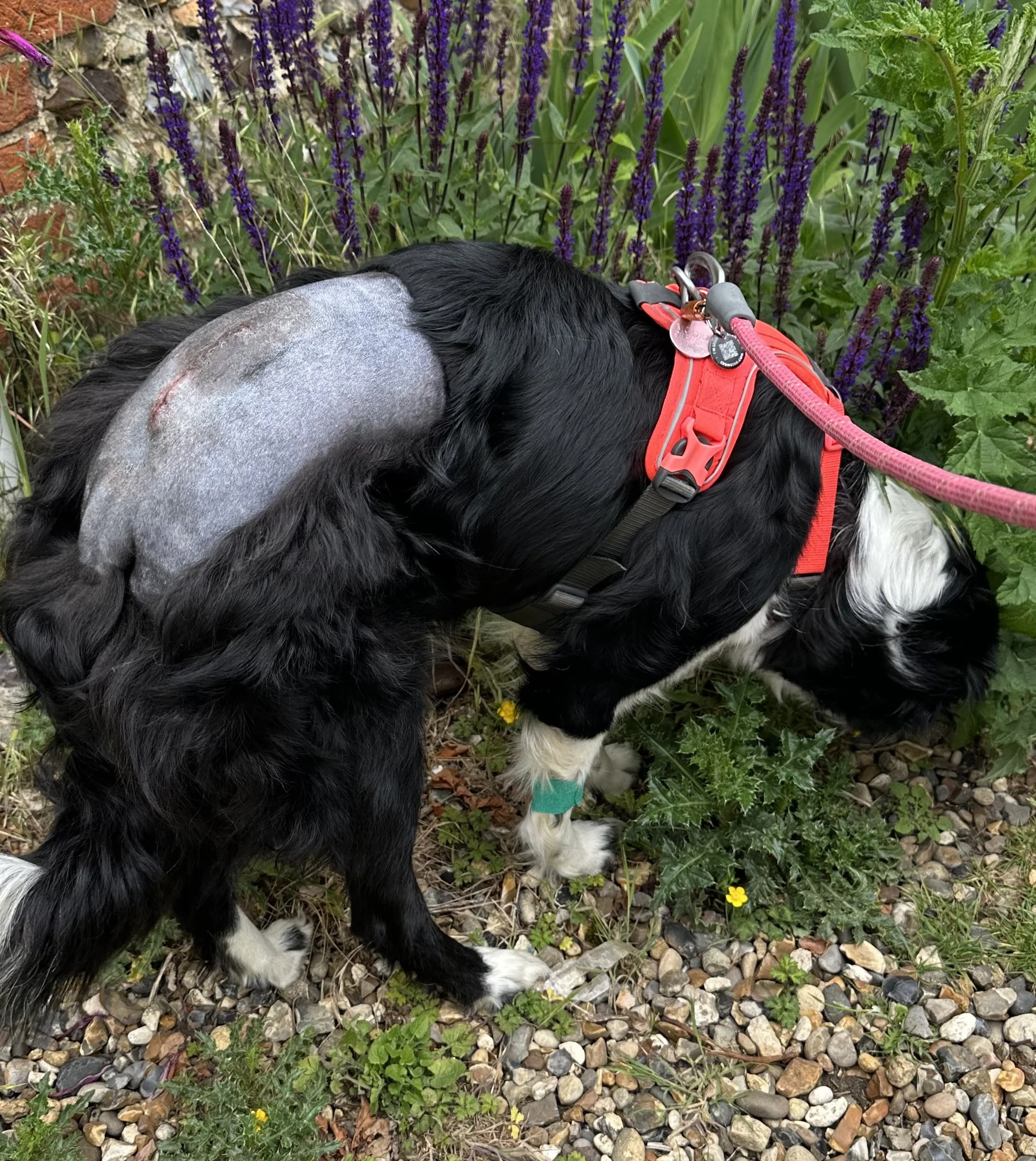
Rosie during recovery after spinal stabilisation surgery
Letting Rosie be a Border Collie again
Surgery wasn't the end of the journey.
Rosie spent several weeks confined to a pen on complete rest whilst she healed. Then came the slow process of rehabilitation, with exercise gradually reintroduced alongside physiotherapy and hydrotherapy.
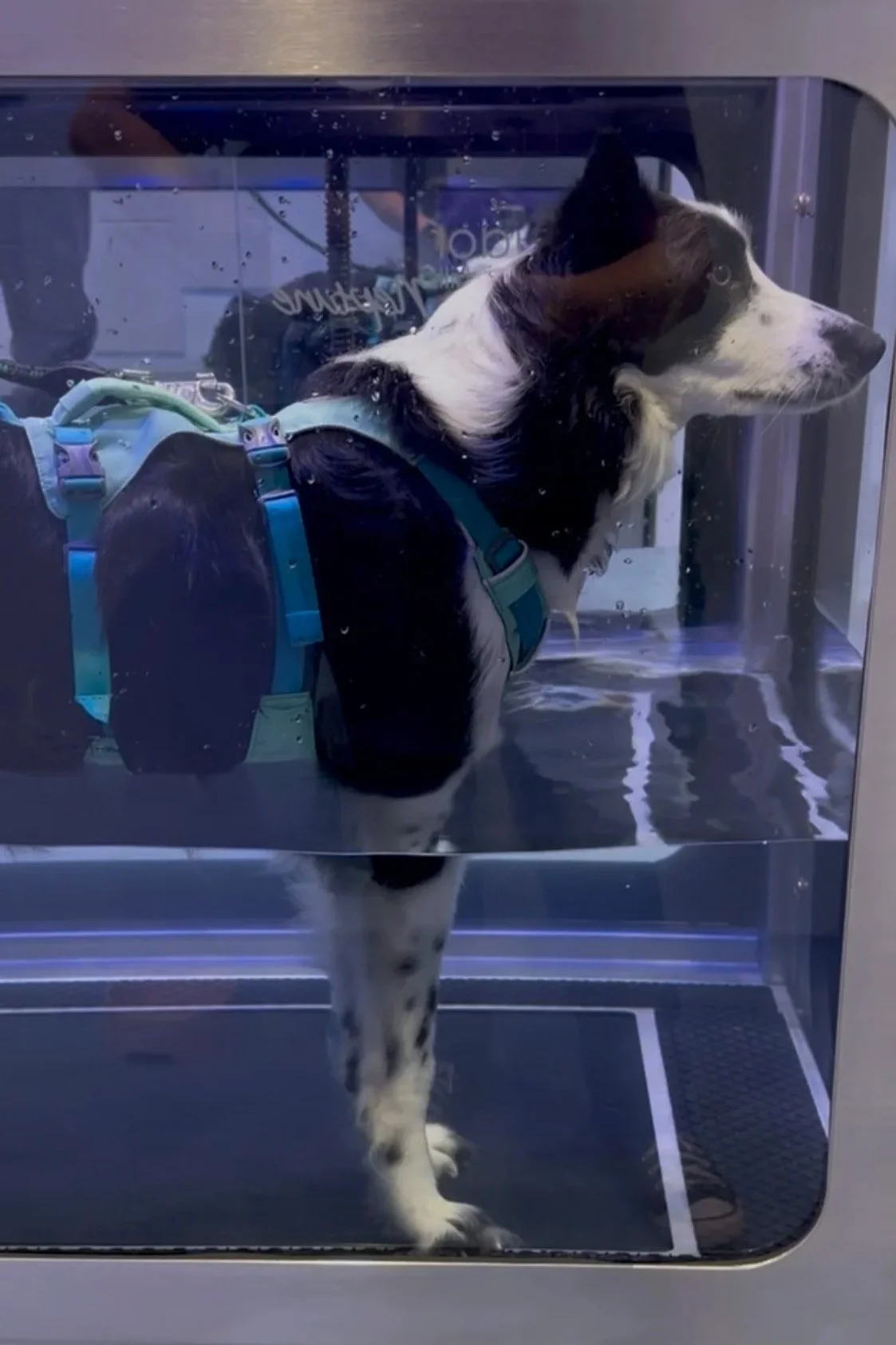
Rosie during hydrotherapy rehabilitation
She was still such a young dog, and through all of this I had one milestone in my mind.
Rosie would turn two that September. I hoped that by then she would be able to run freely again - to move, explore and enjoy being the young Border Collie she was.
It was a long journey, but by her second birthday, Rosie was running again.
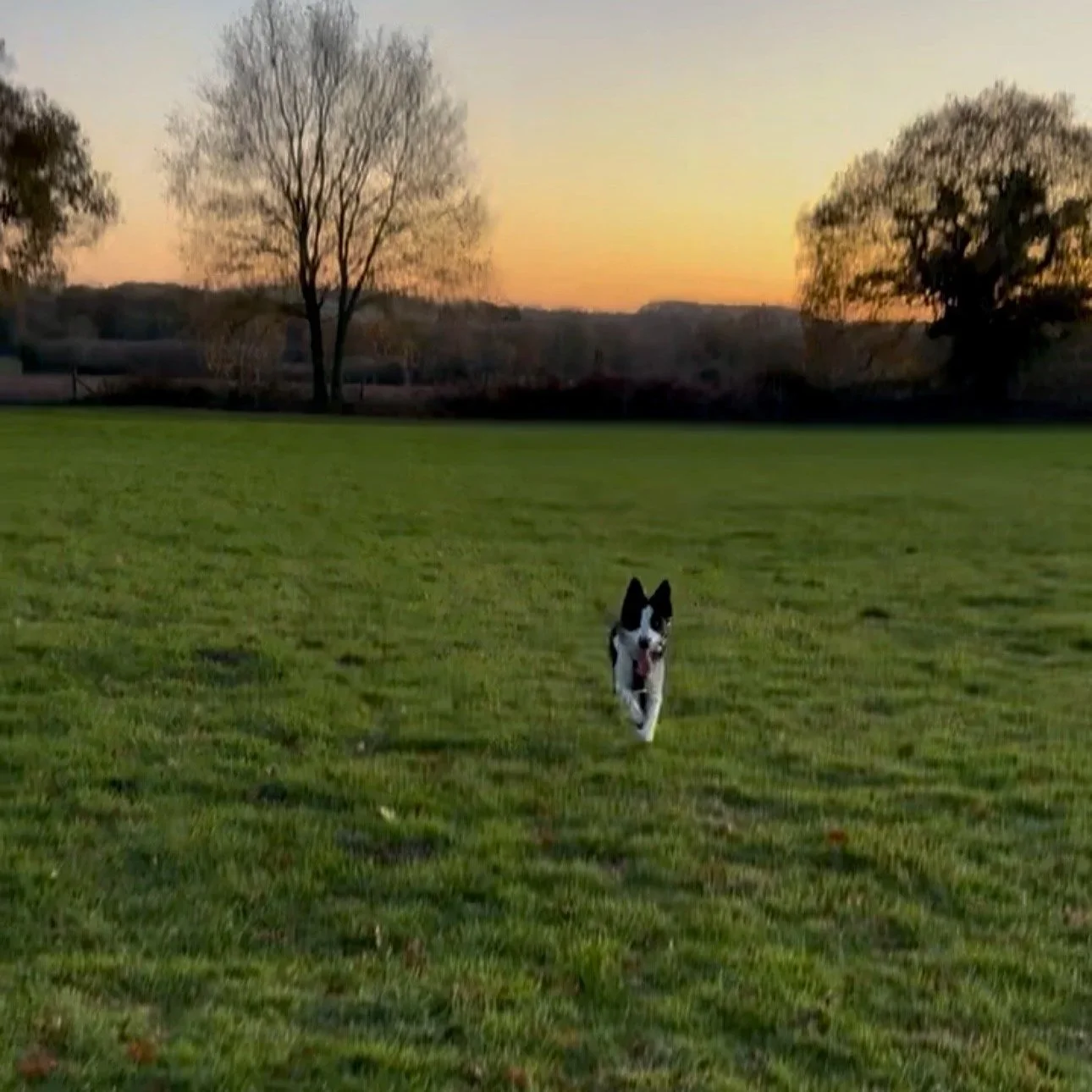
Rosie running freely following spinal surgery and rehabilitation
Rosie today
The behavioural work didn't stop because Rosie had undergone surgery.
We continued helping her with the things she found difficult, and she continued to make progress.
The little dog who once reacted to other dogs at huge distances has now become something of a social butterfly. She will often actively want to greet other dogs.
She can still be unsure of some larger dogs - although she recently successfully passed a Saint Bernard, which anyone who has lived with a reactive dog will understand is anything but a small achievement.
We still advocate for Rosie around unfamiliar people. She doesn't have to interact with somebody simply because they would like to meet her.
Increasingly, though, when we stop to talk to someone, Rosie chooses to approach them herself.
For a dog who once found almost everything unfamiliar frightening, those choices mean a great deal.
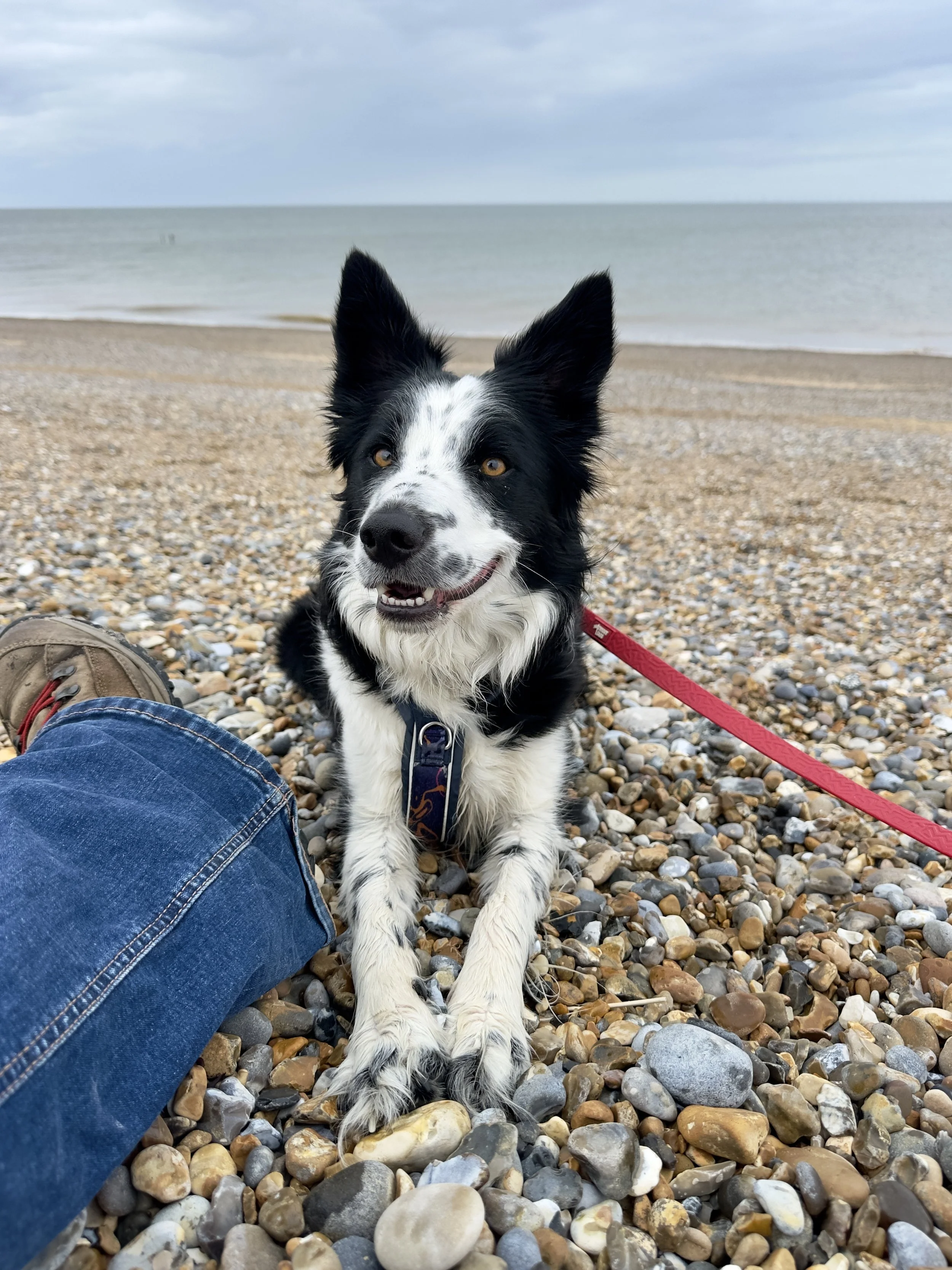
Rosie the Border Collie enjoying the beach today
There wasn't one simple explanation
That's perhaps the biggest lesson Rosie's story has taught me.
We like putting things into boxes: fear, reactivity, pain, training, medical, behavioural.
Dogs aren't quite so obliging.
Rosie's early experiences were real and undoubtedly shaped her. She needed, and benefited from careful behavioural work.
She was also experiencing physical discomfort.
One didn't cancel out the other.
Clear X-rays didn't mean there was nothing wrong. Even more advanced imaging didn't hand us a simple answer.
Instead, we had to look at the whole dog: her movement, her behaviour, her responses to treatment and the changes we saw when her pain was addressed.
Behaviour is information.
Sometimes it's telling us that a dog is frightened or overwhelmed. Sometimes learning and previous experiences are playing a part. Sometimes there may be something happening inside their body that we can't immediately see.
Often, several of those things are true at the same time.
I still think about the tiny puppy I first met in rescue, curled into the corner of her kennel with her tail tucked so tightly underneath her that she appeared not to have one.
Today Rosie runs, plays and makes friends. She still has opinions about the world, and we're quite happy for her to have them.
Rosie’s story reinforced something that has become increasingly important to me in my work. I don’t assume that every behavioural change means pain, but neither do I assume that clear initial investigations necessarily rule it out. When I have concerns that discomfort could be contributing to behaviour, that’s something for me to raise with the dog’s veterinary team.
Behaviour is information. Sometimes we need to keep asking what it’s telling us.
