How Do I Gently Train My Puppy to Be Alone?
Bringing a puppy home might feel a bit like having a little fluffy shadow. They follow you everywhere, rely on you, and become a central part of your life, so it’s normal to worry about leaving them alone.
If your puppy cries the second you step away from them, you’re not doing anything wrong. Puppies have a strong need for closeness and safety, as this supports both their physical and emotional well-being.
Training a puppy to be alone is a gradual process, just like toilet training or walking on a lead.
At Walkies Dog Behaviour and Training, I approach teaching ‘alone time’ as a confidence skill. My goal is to make your puppy feel safe, settled, and relaxed even when you’re not by their side. This happens through small steps, kind pacing, and realistic expectations.
In this guide, I’ll share why puppies cry when they’re alone and 5 supportive ways to train your puppy to be content when left alone.
Why Do Puppies Cry When Alone?
Puppies don’t know that when you leave, you’ll eventually come back. During the early weeks, separation can feel scary and cause them to cry because their brains are still developing, they’re in a new environment, and they haven’t yet built a history of safety.
What looks like clinginess is actually your puppy communicating that they’re not sure how to cope without you.
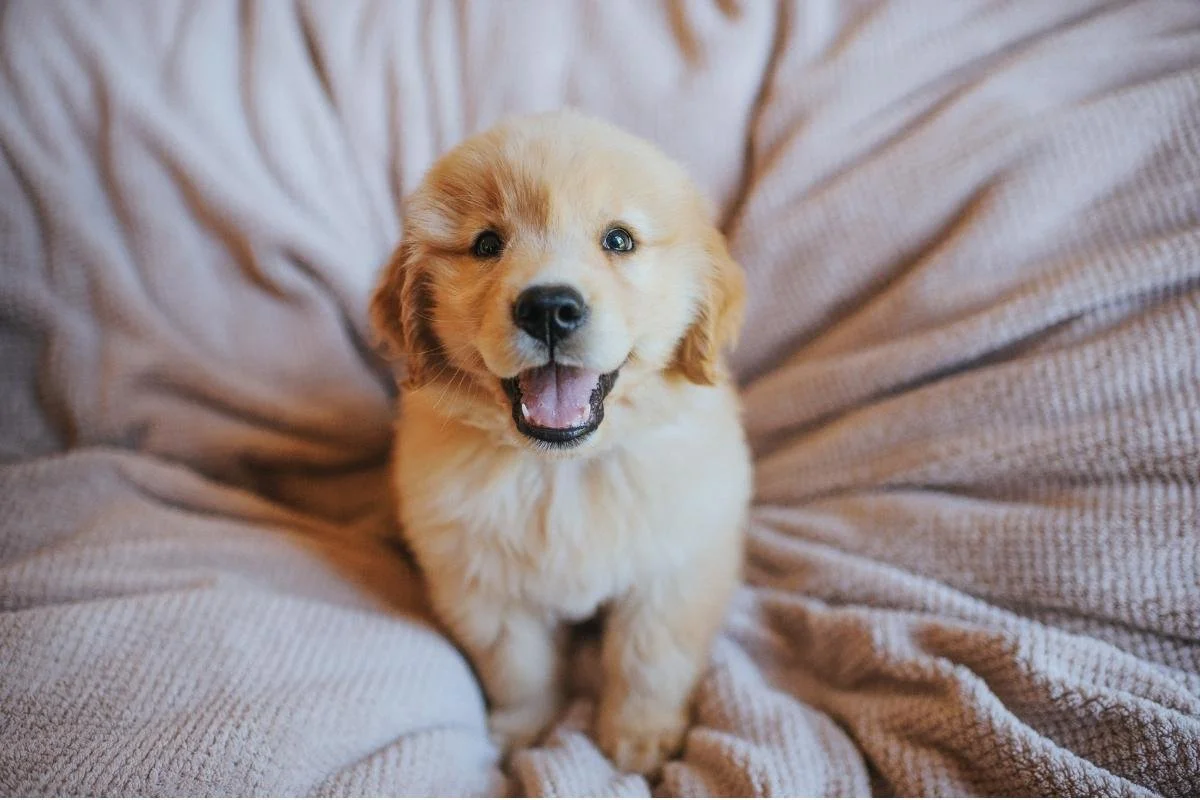
Puppies cry when they’re alone, as they feel scared and worried you won’t come back.
Gentle training means we listen to that message. Instead of using methods like leaving them to ‘cry it out’, which can induce stress, I teach alone time in a way that keeps your puppy under threshold, calm enough to learn.
This approach is science-based, as emotions drive behaviour: if your puppy feels safe, their body can relax, and if they feel unsafe, their nervous system panics. Our job is to make alone time predict good things and build resilience slowly.
5 Gentle Ways to Train Your Puppy to Be Alone
Now let’s delve into 5 kind and practical ways you can train your puppy to be alone:
1. Start with Micro Separations Throughout the Day
Jumping straight into the deep end isn’t my recommended approach. Before you ever leave the house, teach your puppy that tiny separations are safe.
You can do this by taking a step away from them, coming back, and rewarding calm behaviour. Try walking to the kitchen or popping to the toilet whilst they’re distracted with a chewing toy, then return.
Start by increasing the separation by seconds, then move to minutes. It’s crucial that these separations are small and gradually increased.
Begin by creating small separations throughout the day to gradually build your puppy’s emotional strength.
You’re essentially increasing their emotional strength, so it can be helpful to think of it in terms of physical strength. For example, if you’re helping someone with weight training, you wouldn’t start off by giving them really heavy weights. Build gradually so confidence grows without overwhelm.
Positive signs are your puppy staying relaxed, such as sniffing, chewing, lying down, or even just watching you calmly.
If your puppy follows you, that’s okay. Don’t push them away or shut doors yet. Just keep practising tiny moments of distance that they can cope with, and over time, they’ll choose to stay put.
2. Pair Alone Time With Something Wonderful
It’s essential that your puppy learns that your leaving isn’t a threat. One of the best ways to do this is to teach them that when you leave, something wonderful happens.
This is classic positive-reinforcement learning, and it works beautifully for independence.
Give your puppy a high-value activity when you step away briefly, such as a lick mat, a long-lasting chew or a scatter of treats in a snuffle mat.
The key is that the activity is soothing, as chewing and licking help regulate their nervous system.
If your puppy is too worried to eat, it’s a sign they’re over threshold, so try making the separation smaller next time.
3. Teach a Safe Settle Space
Some puppies find it easier to settle in a defined safe space. This might be an open crate, a puppy pen or a cosy bed.
If you’d like to gently build a space like this for your puppy, ensure they associate it with positive things before you leave, play calm games in the space and add soft bedding and something that smells like home.
Only once they’re happily choosing to rest there should you start brief separations.
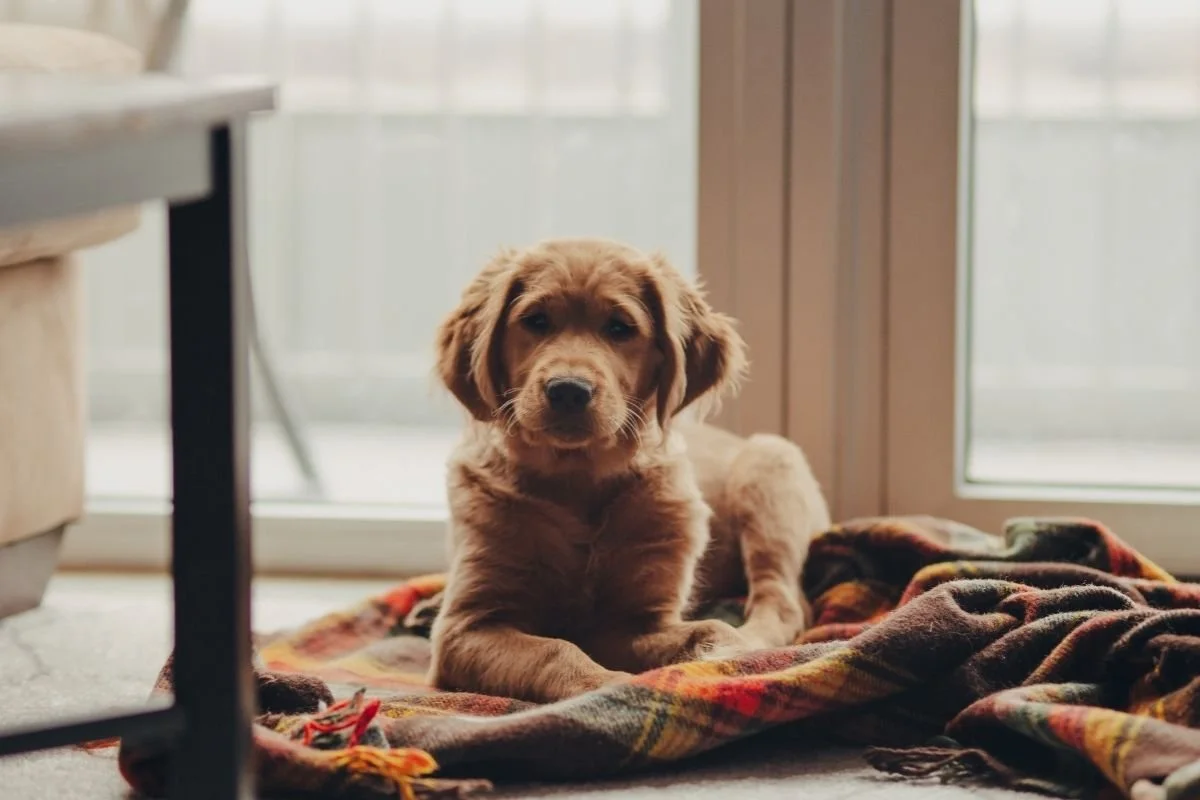
Your puppy might not like having a small confined space, and that’s not a problem at all. We can build independence without confinement.
If you’d like some support with training your puppy to be left alone, Walkies Dog Behaviour and Training can help. Book a discovery call to help you decide which puppy training programme would work best for you.
4. Build a Predictable Leaving Routine
Puppies tend to react to the process of you getting ready to leave, such as when you put on your shoes or grab your keys. This is because they’ve learned those things mean separation.
It’s key to make these leaving cues neutral and predictable.
Try things like putting your shoes on and sitting back down, or picking up your keys and making a cup of tea.
Also, keep your exits calm. It’s best not to do big goodbyes or talk to them anxiously, as this helps your puppy learn that leaving is normal, safe, and not a huge emotional event.
5. Increase Alone Time Slowly
It’s important to remember that your puppy’s progress likely won’t be linear. Some days will be easier, and some will be harder, especially if they’re teething or it’s a busy day.
A great way to support your puppy is by training them on a gentle timeline.
Increase your puppy’s alone time very slowly and watch for feelings of relaxation before you move up an interval.
Begin with being away for a few seconds, then a few minutes and increase this gradually to 10 minutes, 20 minutes, 40 minutes and so on.
Remain at each interval until your puppy is relaxed the majority of the time.
Signs You’re Going Too Fast:
Frantic barking or howling
Scratching doors or trying to escape
Pacing, panting or drooling
Refusing food they love
Toileting from stress
If you notice these signs, don’t worry, just go back to the last “easy win” and rebuild from there.
Ready to Train Your Puppy to Be Alone?
If you’re ready to teach your puppy some independence, I’d love to help you.
I’m Vivienne, an Accredited Canine Behaviourist & Trainer (ACB-KSA, PCT-A) and a Member of the UK Dog Behaviour & Training Charter, so you can feel confident that your puppy’s training is in safe, professional hands.
My puppy training programmes are designed to guide you through all the early stages, including gentle alone-time training, settling calmly, building confidence, valuable life skills, and real-world socialisation.
Sessions are flexible and can happen at home, in my private paddock, or out in your local area, with practical support where you need it most.
You’ll also get 12 months’ access to the Zigzag puppy training app for extra support between sessions, so you never feel like you’re doing this on your own.
If you’re not sure which option suits your puppy best, you’re very welcome to book a free discovery call, and we’ll find the right path together.
