Have you noticed your dog spending more time sniffing on autumn walks? With fallen leaves, damp ground and changing weather conditions, autumn can offer dogs a fascinating variety of scents to investigate.
But does autumn actually make smells stronger? The answer isn't quite that simple. Temperature, humidity, wind and the environment all influence how scent moves and how easily dogs can detect it.
Here's what might be happening when your dog stops to investigate.
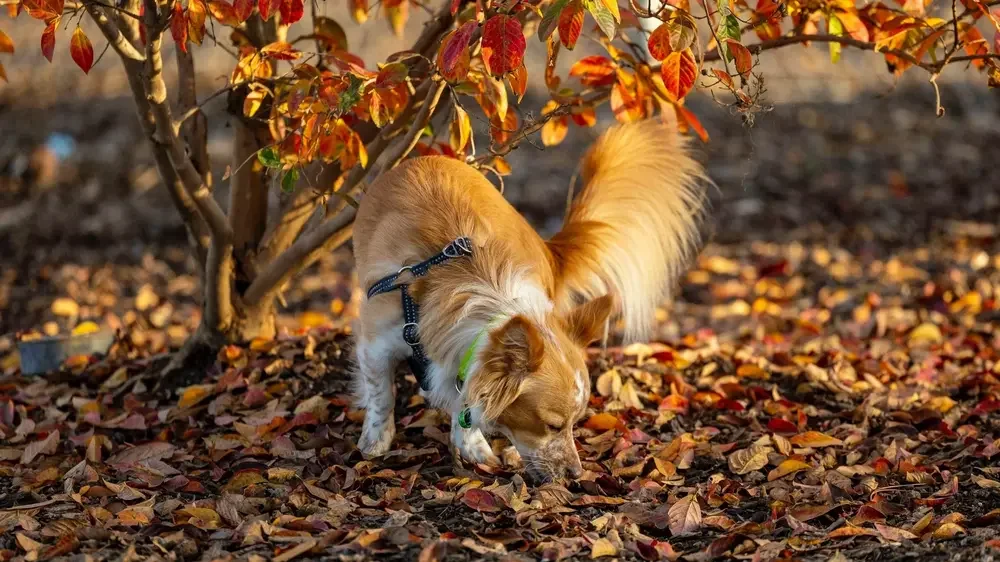
1) Cooler temperatures and damp conditions can change how scent travels
Temperature and humidity influence how scent molecules move through the environment. Cooler conditions may reduce the evaporation of some scent compounds, while moisture can affect how odours are released from surfaces.
However, wetter conditions don't automatically mean stronger scents. Heavy rain can also wash away or dilute scent traces.
For dogs, these changing conditions can alter the scent information available during a walk.
2) Fallen leaves create a changing scent environment
As leaves fall and begin to decompose, fungi and microorganisms break down organic material, releasing a variety of volatile compounds. Add damp soil, decaying vegetation and the scents left behind by wildlife, and woodland paths can offer dogs plenty to investigate.
What looks like an ordinary pile of leaves to us may contain a wealth of information for a dog's nose.
3) Still autumn mornings can influence scent dispersal
Wind plays an important role in how scents travel. On calmer mornings, some odours may remain more concentrated around their source rather than being carried away quickly.
Temperature and atmospheric conditions can also influence whether scents remain closer to the ground or disperse into the surrounding air. This doesn't necessarily mean dogs can smell everything more strongly in autumn, but it does mean the scent environment may be different from one day to the next.
4) Wildlife activity brings different scents
Autumn brings seasonal changes in wildlife behaviour. Some animals are preparing for winter, others are searching for food, and species such as deer may be particularly active during their breeding season.
Dogs can investigate scent traces left by animals that passed through an area long before them. It's one of the reasons a familiar woodland walk can still provide something new to explore.

How dogs experience the world through scent
A dog's sense of smell is extraordinarily sophisticated. Dogs have a much larger olfactory system than humans, and their noses are adapted to collect and analyse scent information as they breathe and sniff.
Sniffing allows dogs to gather information about their surroundings, including the presence of other animals, people and changes in their environment.
Research has also explored the relationship between nosework and canine emotional wellbeing. A 2019 study by Duranton and Horowitz found that dogs participating in regular nosework activities showed a more positive judgement bias, suggesting potential benefits for their emotional state. This is one reason I encourage owners to think of sniffing as an important part of a walk, rather than something that interrupts it.
What this means for your autumn walks
You don't need to organise special scent activities for your dog to benefit from using their nose. Ordinary walks can offer plenty of opportunities!
Allow time for sniffing. Rather than expecting your dog to walk continuously, give them opportunities to stop and investigate interesting scents.
Offer some choice. Where it's safe, allow your dog to choose which direction to explore or which patch of grass deserves a closer look.
Try a slower walk. You don't always need to cover a particular distance. Sometimes a short, relaxed walk with plenty of sniffing can be more rewarding than a longer walk at a brisk pace.
Notice your dog's responses. Sniffing can be part of relaxed exploration, but it can also occur when dogs are uncertain or trying to gather information. Consider their overall body language rather than assuming every sniff means they're enjoying themselves.
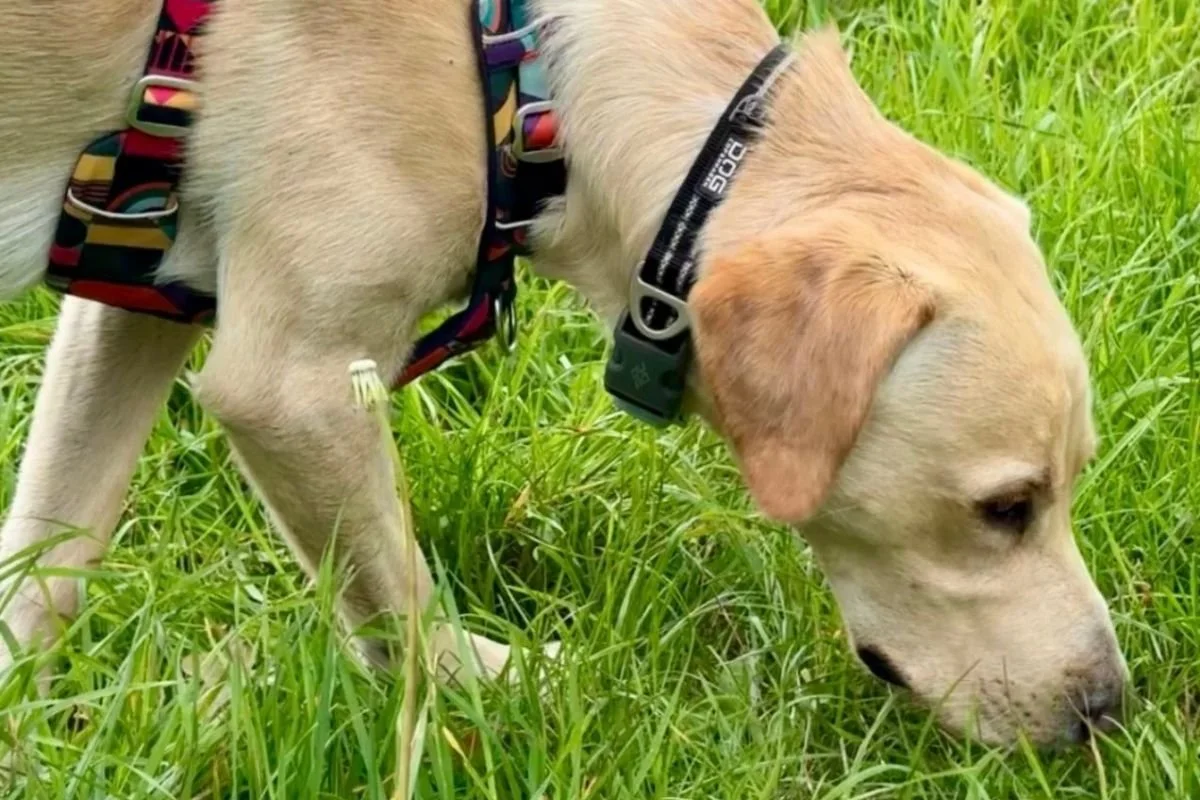
Having opportunities to sniff and explore is an important part of a dog's wellbeing.
Let your dog enjoy the autumn scents
Next time your dog stops to investigate a patch of leaves or an interesting scent along the path, give them a little extra time.
Sniffing is an important part of how dogs explore and understand their surroundings. Allowing dogs opportunities to investigate at their own pace supports natural behaviour and can make everyday walks more enriching. And remember, the aim isn't to encourage constant sniffing regardless of the circumstances. It's to recognise that exploring through scent is an important part of being a dog.
References
Duranton, C., & Horowitz, A. (2019). Let me sniff! Nosework induces positive judgment bias in pet dogs. Applied Animal Behaviour Science, 211, 61–66.
About the Author
Vivienne Moore ACB-KSA, PCT-A
Accredited Canine Behaviourist & Trainer
Vivienne is the founder of Walkies Dog Behaviour & Training, based in Norfolk. She specialises in working with dogs experiencing reactivity, fear, anxiety and other behavioural difficulties.
Her approach combines behavioural science with practical, individualised support, taking into account each dog's emotional and physical wellbeing.